
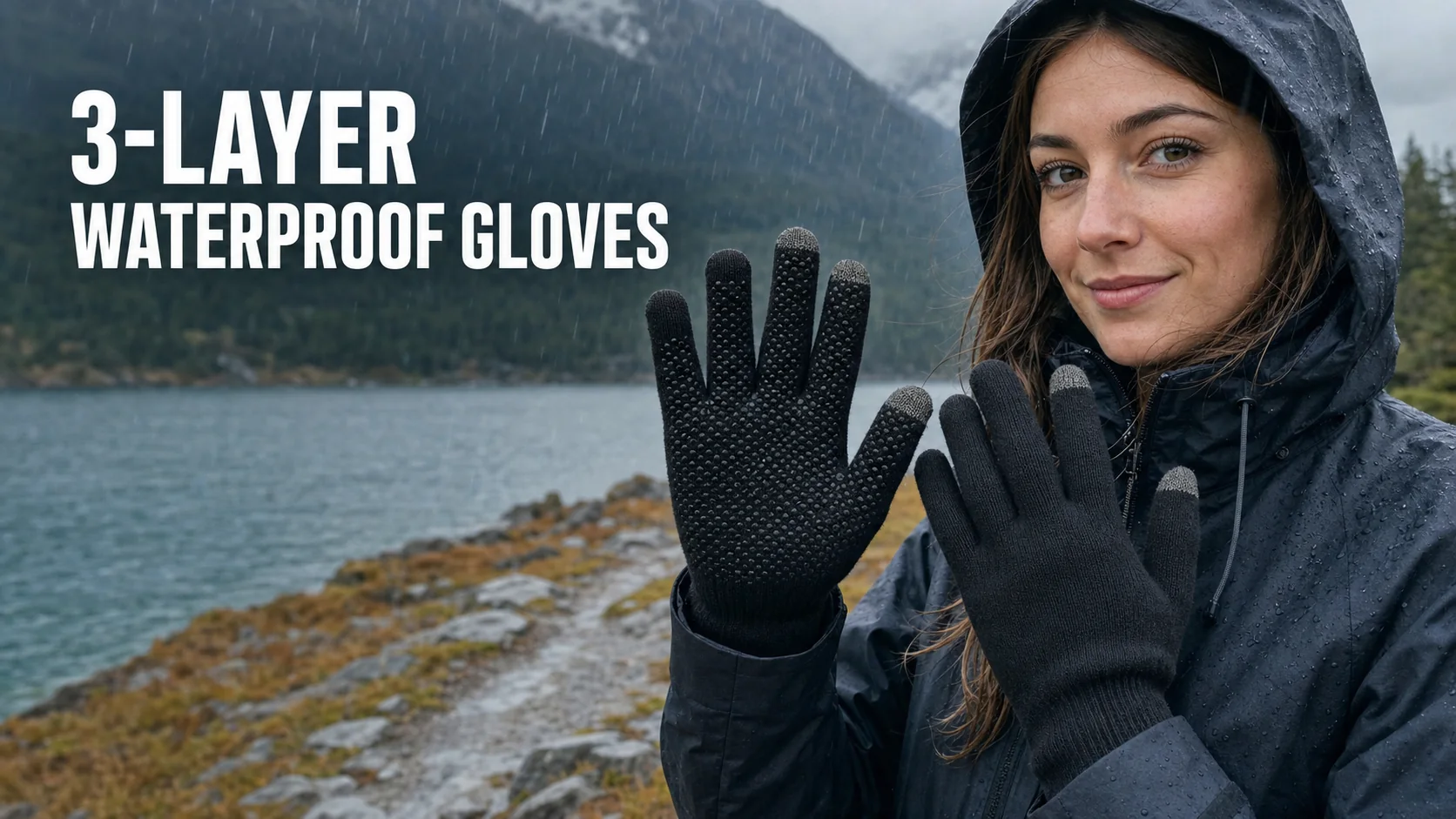
What should buyers check when sourcing 3-layer waterproof gloves?
A 3-layer waterproof glove combines a knitted outer layer, a waterproof membrane and a soft inner layer. For a successful OEM program, buyers should also verify touchscreen response, palm grip, finger length, cuff fit, warmth, waterproof test conditions, logo placement and retail packaging on an approved sample.
How the three layers work
The outer knit gives the glove its appearance, stretch and first level of abrasion protection. The middle membrane forms the waterproof barrier. The inner layer affects skin feel, warmth and moisture management. These layers must move together without making the fingers too stiff for the intended activity.
A thicker or warmer glove is not automatically better. Cycling and active outdoor channels often need more dexterity, while winter retail may prioritize insulation. Ask the supplier to build the sample around one primary use case instead of trying to make one specification serve every climate and activity.
Match grip and touchscreen features to the sales channel
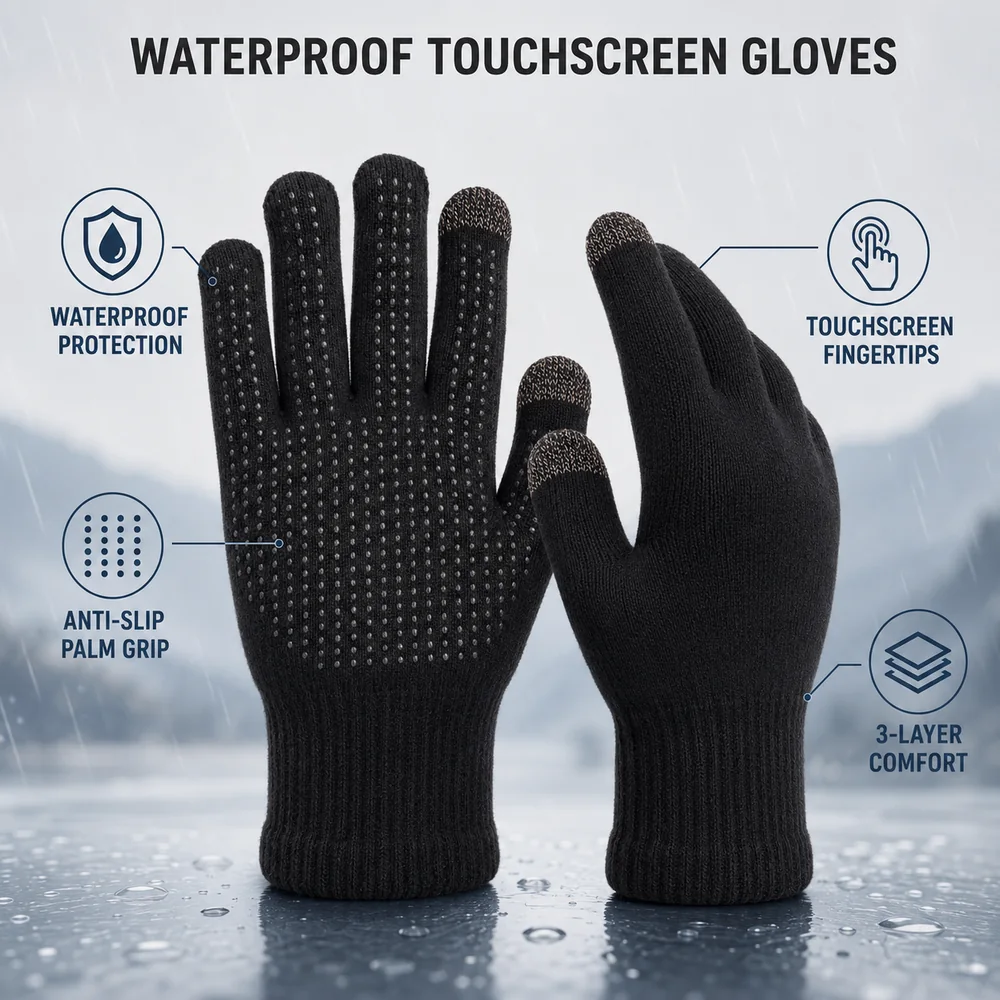
Waterproof touchscreen gloves may use conductive yarn or conductive fingertip areas. Buyers should test common phone actions with dry and damp glove surfaces. Touchscreen performance can change with fingertip fit, material placement and device sensitivity, so a sample test is more useful than a general feature claim.
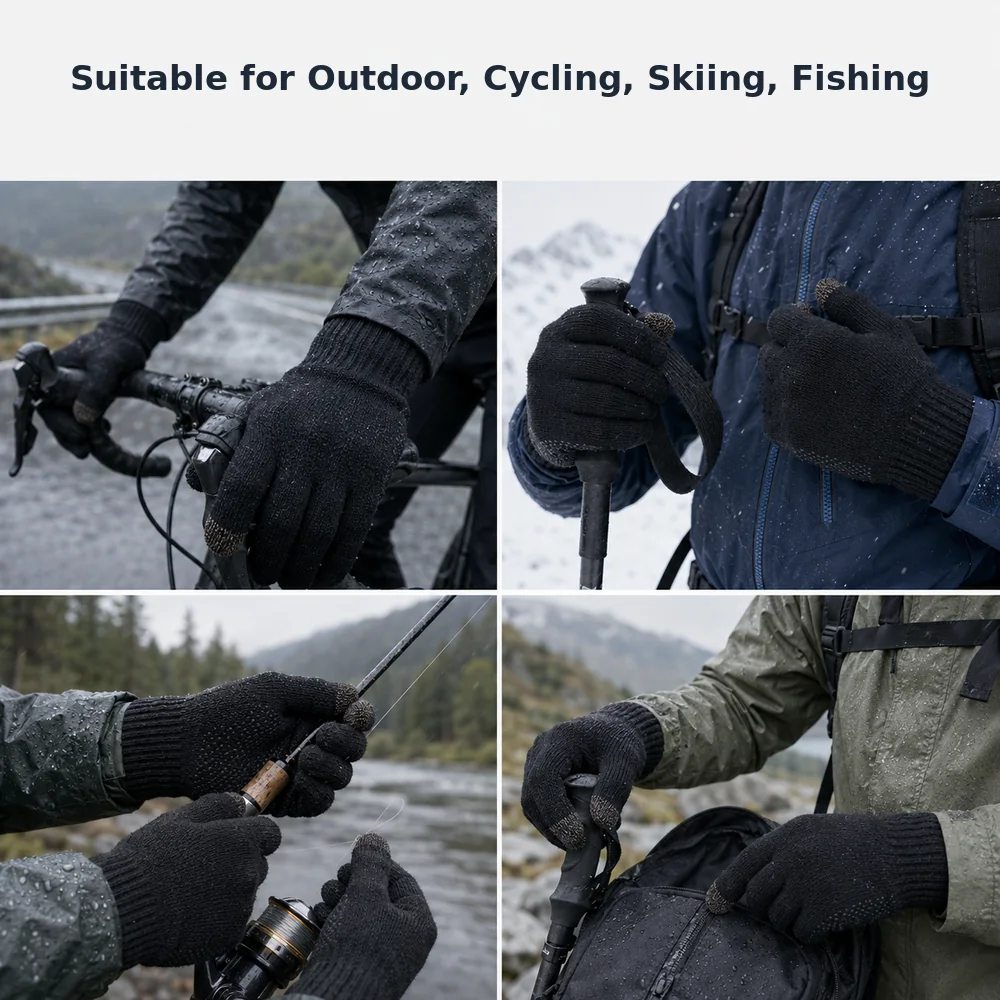
Palm grip should also match the activity. Cycling, trekking and fishing programs may need different grip coverage and flexibility. Check whether the grip pattern remains comfortable when holding handlebars, trekking poles, fishing rods or outdoor tools for an extended period.
Use a glove sample checklist before bulk production
Wear-test the full size range rather than approving only the color and logo. Finger length, thumb position and cuff tension have a direct effect on comfort and control. A glove that looks correct on a table can still feel tight at the finger joints or loose at the fingertips.
- Confirm size grading, finger length, thumb movement and wrist-cuff comfort.
- Test touchscreen response and palm grip with the target equipment.
- Review waterproofness using an agreed test method and exposure time.
- Check lining movement, seam comfort, color, logo and care-label accuracy.
- Approve the packaging proof, barcode, size mark and carton information.
Prepare complete information for an accurate quotation
A useful waterproof glove quotation needs more than an estimated quantity. Send the target country, sales channel, size range, color count, warmth level, touchscreen requirement, grip pattern, logo method and packaging type. Material changes and complex packaging can affect both unit price and development time.
Stock waterproof gloves can be ordered without a custom-production MOQ. For custom projects, the normal starting point is 50 pairs per color and size, subject to the approved specification and material availability. A first custom sample normally takes about 3-5 days after the development details are confirmed.
Keep waterproof claims accurate
Three-layer knitted waterproof gloves are intended for rain, wet equipment, snow, splashes and similar outdoor exposure. They are not diving gloves. Water can enter through the open cuff during deep or prolonged immersion, and damage to the outer knit or membrane may reduce performance.
Product pages and packages should state the intended conditions, care method and cuff limitation clearly. Honest instructions help distributors and private label brands reduce unsuitable-use complaints while giving customers a more realistic reason to choose the product.
Plan private label packaging around the buyer
Outdoor stores may need a hanging package with visible size and feature icons. Marketplace sellers may need clear online images, compact packaging and reliable SKU labels. Distributors may need mixed sizes, repeatable carton marks and local language instructions. Confirm these requirements before the final quotation.
Private label options can include custom color, woven or printed branding, care labels, hang tags, polybags and retail boxes. The package should explain the three-layer structure, touchscreen areas, grip feature, size and waterproof-use boundary without making claims that the approved sample cannot support.
Frequently asked sourcing questions
What are 3-layer waterproof gloves?
They are knitted gloves built with an outer knit, a waterproof membrane and a
comfort inner layer.
Can waterproof gloves support touchscreen use?
Yes, conductive fingertips can be added, but buyers should confirm response and
fingertip fit on the approved sample.
What is the MOQ for custom waterproof gloves?
The normal custom starting point is 50 pairs per color and size. Stock styles can
be ordered without a custom-production MOQ.
What should be tested before a bulk order?
Test waterproofness, sizing, finger movement, touchscreen response, wet grip,
lining comfort, logo accuracy and packaging.
Final buyer note
The best 3-layer waterproof glove program is built around a defined customer and an approved testable specification. Start with the activity, climate, size range and retail channel, then confirm the construction and branding on samples before bulk production.