
3-layer waterproof socks material guide: membrane, lining and outer layer options
3-layer waterproof socks are different from regular outdoor socks because the performance comes from a bonded material structure.
Start with the material structure
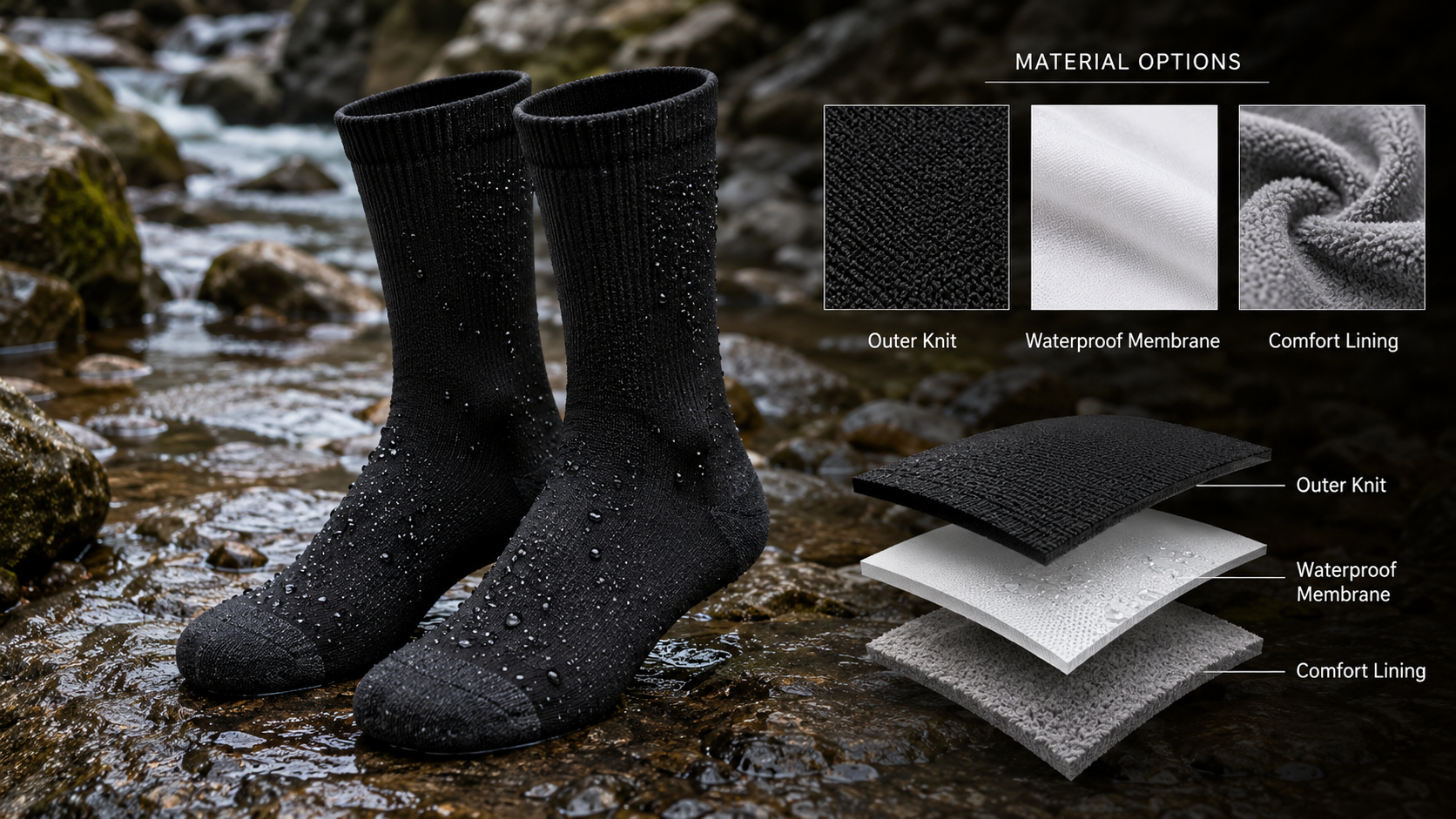
A typical 3-layer waterproof sock includes an outer layer, a waterproof breathable membrane and an inner comfort lining. These layers work together, but each one has a different job. For OEM buyers, private label brands and wholesale distributors, understanding each layer helps with comfort, durability, cost and target use.
Outer layer options
The outer layer is the first contact point with shoes, rocks, mud, grass and outdoor surfaces. It should provide abrasion resistance, stretch and a stable shape. For hiking, fishing, cycling and workwear channels, buyers often need a stronger outer layer with reinforced heel and toe areas.
Waterproof membrane planning
The middle membrane is the key waterproof layer. Its role is to block water from passing through the sock body while allowing some moisture vapor to move outward. This is why many buyers describe the product as waterproof and breathable.
Inner lining choices
The inner lining affects skin comfort. A moisture-managing synthetic lining may be suitable for cycling, hiking and warmer conditions. Bamboo fiber can offer a softer hand feel for comfort-focused buyers. Merino wool can be considered for colder markets where warmth is important.
Thickness and shoe fit
A thicker 3-layer waterproof sock may feel more protective and warmer, but it can also make shoes feel tight. A thinner structure may be better for cycling shoes, travel shoes and daily footwear. Before bulk production, buyers should test samples with actual shoes and use scenarios.
Match materials to the target use
Fishing and wet grass use may need higher cuff options and stronger durability. Cycling programs may need a slimmer structure. Camping and hiking products may need a balance between comfort, warmth and breathability. Workwear channels may focus on durability, stable sizing and easy care.
FAQ
What are the three layers in waterproof socks?
Most 3-layer waterproof socks include an outer layer, a waterproof breathable
membrane and an inner comfort lining.
Does the membrane make the sock fully waterproof?
The membrane helps block water through the sock body, but water can still enter
from the top opening if the sock is submerged above the cuff.
Which inner lining is best for OEM waterproof socks?
It depends on the market. Moisture-managing synthetic lining is useful for active
outdoor use, bamboo fiber can feel softer, and merino wool can support colder
weather programs.