Thin vs thick waterproof socks for B2B buyers
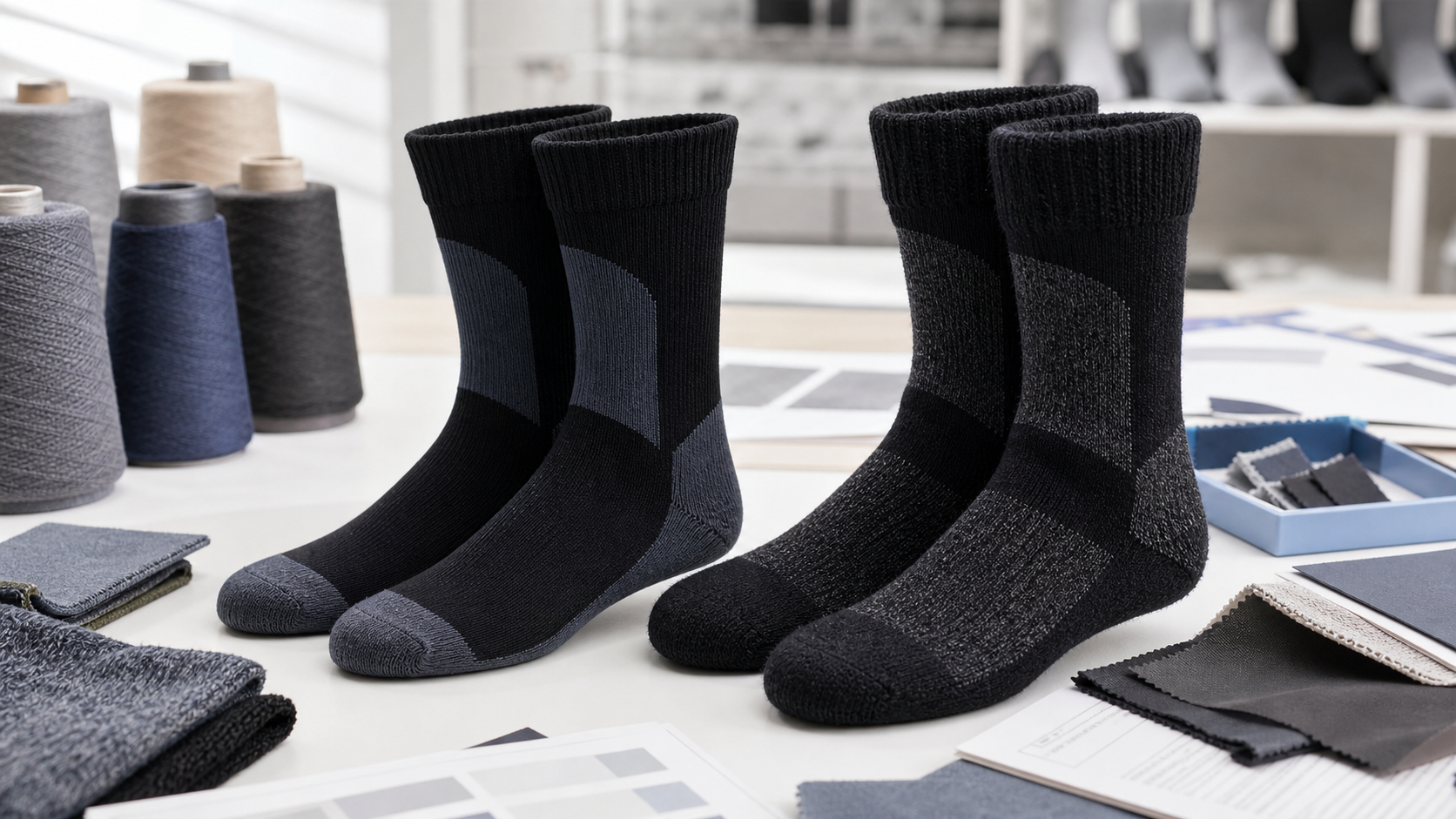
Thin and thick waterproof socks can both use a 3-layer waterproof structure, but they serve different customers. Thin waterproof socks focus on shoe fit, warmer-weather comfort and packability. Thick waterproof socks focus on warmth, cushioning and cold outdoor use. The right sourcing decision depends on channel, footwear, season and price position.
1. Start with the target channel
A cycling brand, travel seller or rainy commute retailer may need a thinner waterproof sock that fits inside close footwear. A hunting, camping, fishing or winter distributor may need thicker socks with warmer lining. Before asking a waterproof socks factory for price, define the customer scene and footwear type.
2. Thin waterproof socks
Thin 3-layer waterproof socks are useful for cycling shoes, walking shoes, travel footwear, lighter hiking shoes and daily rain. They can support OEM programs where customers want waterproof protection without too much bulk.
The tradeoff is warmth and cushioning. Thin versions may not be the best choice for cold snow, static outdoor use or buyers who expect a winter sock feel.
3. Thick waterproof socks
Thick waterproof socks can use warmer lining, terry cushioning or merino blend options. They fit cold-weather outdoor retail, hunting, fishing, winter hiking, camping and workwear channels. They are easier to position as premium winter accessories.
The tradeoff is shoe fit. If the customer's footwear is already tight, a thick sock can create pressure and reduce comfort. Bulk order testing should include real shoes.
4. Both types still need true 3-layer construction
Thickness is not the same as waterproof performance. Both thin and thick waterproof socks should use a knitted outer shell, waterproof breathable membrane and inner lining. The factory should provide samples so buyers can test waterproof performance, stretch, cuff comfort and after-wash stability.
5. B2B keywords that match real sourcing
Natural SEO terms for this article include thin waterproof socks, thick waterproof socks, OEM waterproof socks, private label waterproof socks, waterproof socks factory, waterproof sock manufacturer, wholesale waterproof socks, MOQ, sample testing and bulk order. These words should connect to real sourcing decisions.
6. Recommended SKU strategy
Many private label buyers start with one core mid-calf waterproof sock, then add a lightweight quick-dry version and a warm winter version. This gives the buyer a simple good-better-seasonal structure without making inventory too complex.
Buyer conclusion
Source thin waterproof socks when the channel values fit, mobility and warmer weather comfort. Source thick waterproof socks when the channel values warmth, cushioning and cold-weather positioning. A good waterproof socks factory can help match thickness, lining, height, packaging and MOQ to your target market.