
Waterproof socks are technical socks, so the use instructions matter
Waterproof socks are built to protect feet in wet outdoor conditions, but they are not rubber boots, diving socks or shower socks. Clear care instructions help reduce misunderstanding, improve customer reviews and protect the waterproof membrane during real use.
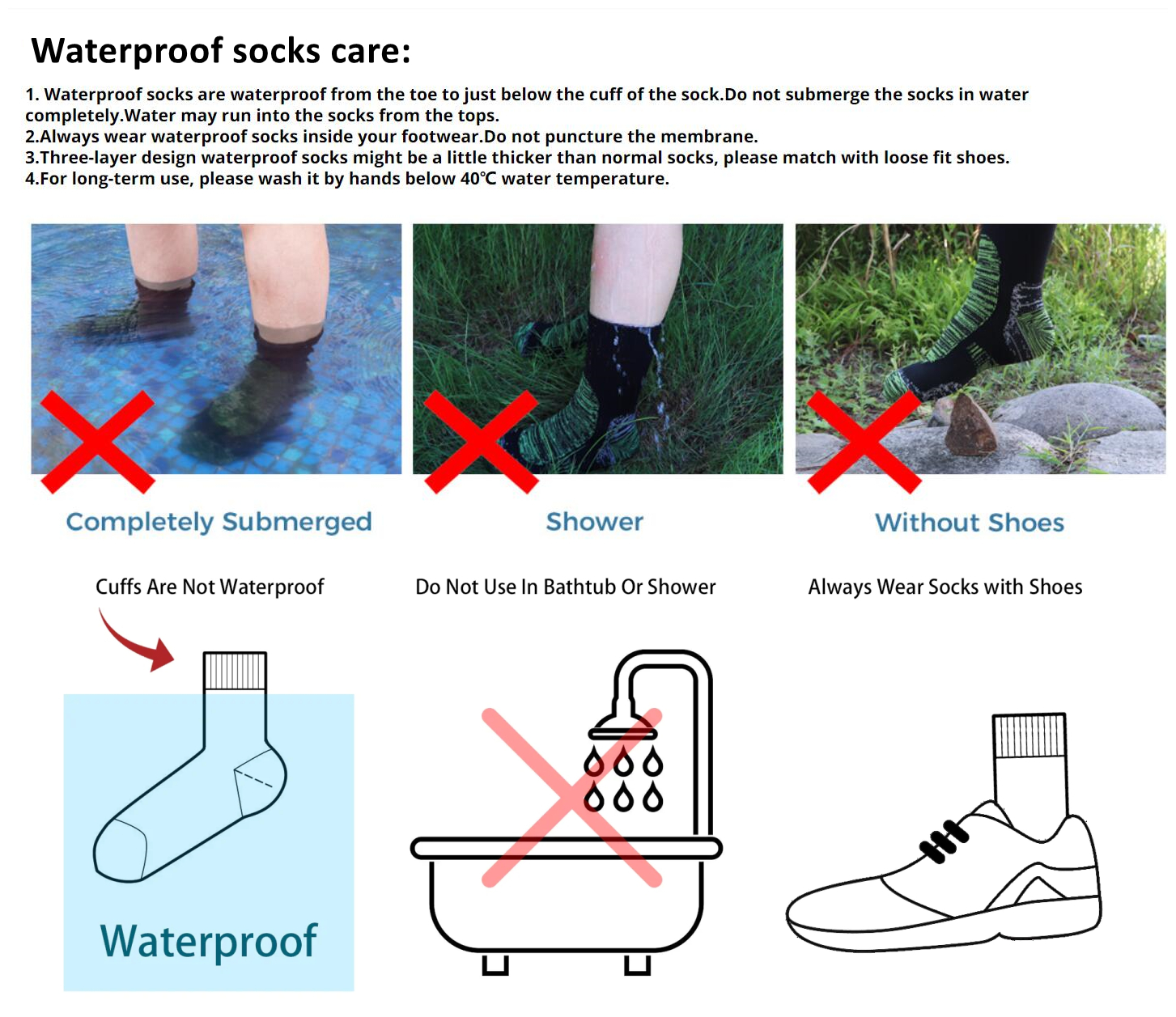
1. Keep water below the cuff height
Waterproof protection is designed for the sock body, from the toe area to just below the cuff. The top opening is not sealed. If water goes over the cuff, water can enter from the opening and the inside of the sock may become wet.
This is why product pages and packaging should avoid saying that waterproof socks can be completely submerged. Better wording is: waterproof for rain, wet grass, splash, puddles, fishing banks, cycling, hiking and wet outdoor work when water stays below the cuff.
2. Do not use waterproof socks in a shower, bathtub or swimming pool
Waterproof socks are made for footwear-based outdoor activities. They are not designed for showers, bathtubs, swimming, diving or deep wading above the cuff height. In those conditions, water can enter from the top and stay inside the sock.
For B2B buyers, this point should be printed clearly on package inserts, Amazon images, product detail pages and after-sales FAQ content. It helps customers choose the right product and reduces returns caused by incorrect use.
3. Always wear waterproof socks inside footwear
Waterproof socks should be worn inside shoes, boots, cycling shoes, fishing boots or other suitable footwear. Walking directly on stones, branches, rough ground or sharp surfaces can damage the outer layer and may puncture the waterproof membrane.
The membrane is the functional waterproof layer. Once it is punctured, the sock may leak. For outdoor users, the right instruction is simple: treat waterproof socks as technical socks, not as outdoor footwear.
4. Choose roomy shoes because three-layer socks are thicker
Most waterproof socks use a three-layer structure: outer layer, waterproof breathable membrane and inner lining. This makes them thicker than ordinary socks. If the customer's shoes are already tight, waterproof socks can feel compressed and uncomfortable.
Buyers should test samples with the target footwear type before bulk orders. For cycling, travel and daily commuting, a lighter construction may be better. For cold fishing, camping or hunting channels, a warmer and thicker lining may be accepted because customers often wear boots.
5. Wash gently below 40 C
For long-term use, hand washing below 40 C is recommended. Use mild detergent and avoid bleach, fabric softener, ironing, tumble drying, dry cleaning and high heat. Strong chemicals and heat can shorten the life of the membrane and reduce comfort.
For private label programs, care labels should be easy to understand. A simple label can say: hand wash below 40 C, do not bleach, do not iron, do not tumble dry, line dry naturally and keep away from sharp objects.
6. Use clear warning images on product pages
Buyers selling online should show clear visual instructions. Images that explain "not for complete submersion", "not for shower use" and "always wear with shoes" help customers understand the product faster than text alone.
These images are also useful for distributors, Amazon sellers, Shopify stores and retail packages because waterproof socks are still a technical category in many markets.
Waterproof sock cuff FAQ
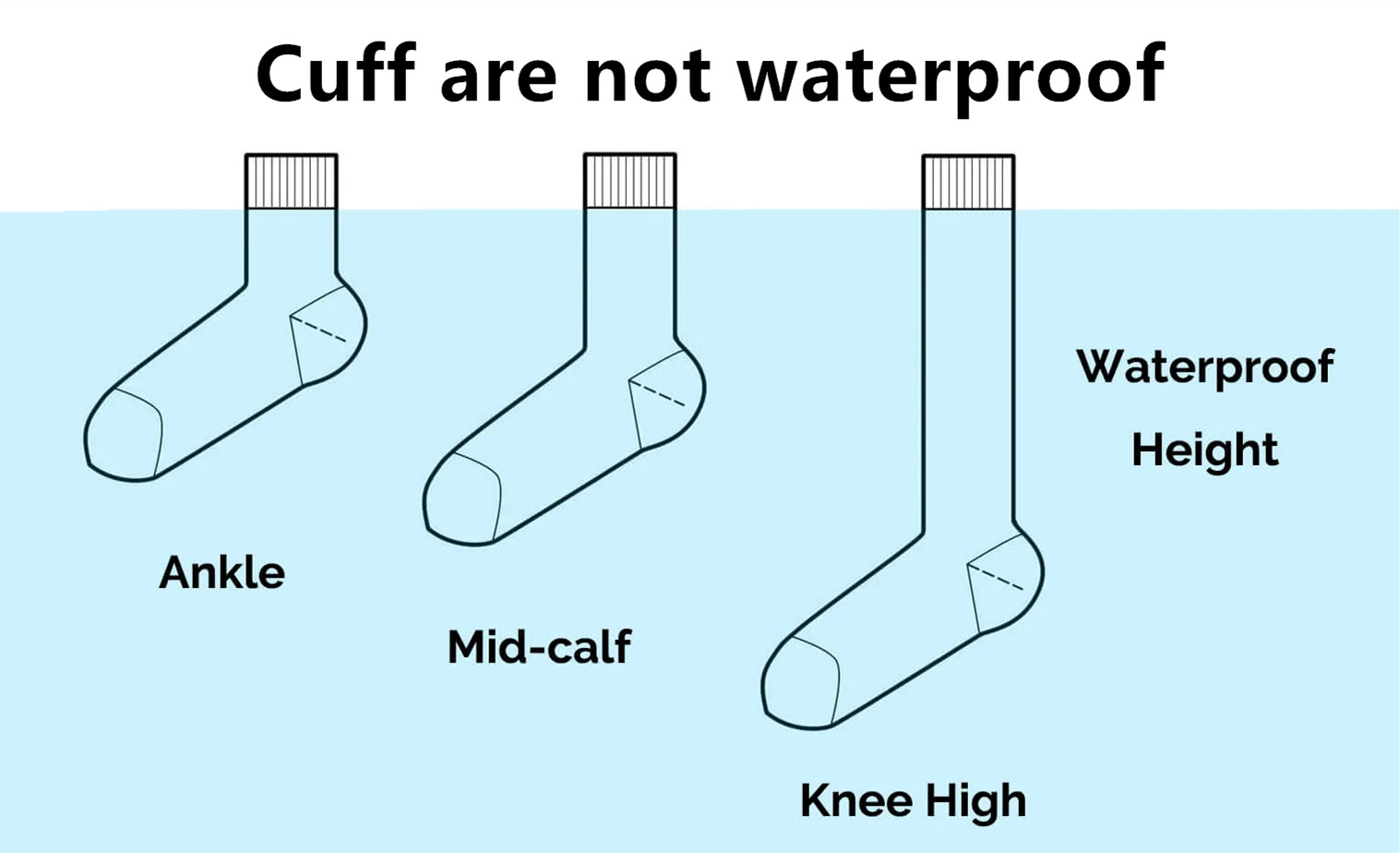
Are waterproof sock cuffs waterproof?
No. The cuff and top opening are not waterproof sealed areas. The waterproof area
is the sock body below the cuff. If water rises above the cuff or enters from the
top opening, the inside of the sock can become wet.
How should buyers explain cuff height?
Explain that ankle, mid-calf and knee-high waterproof socks provide different
water coverage. A higher sock can protect in deeper splash and wet grass
conditions, but even knee-high socks should not be submerged above the cuff.
Can waterproof socks be worn without shoes?
No. They should be worn inside suitable footwear to protect the membrane and avoid
punctures.
What is the best simple care message for packaging?
Keep water below the cuff, wear inside shoes, avoid sharp objects, use roomy
footwear and wash gently below 40 C.