B2B product planning
Trail runners need a different waterproof sock brief.
Trail running combines repeated impact, rapid ankle movement, sweat and changing ground conditions. A waterproof sock developed for slow hiking can feel too bulky inside a close-fitting running shoe. Buyers therefore need to evaluate protection, fit and moisture control as one system rather than selecting a product by its waterproof claim alone.
Wet trails create several problems at the same time
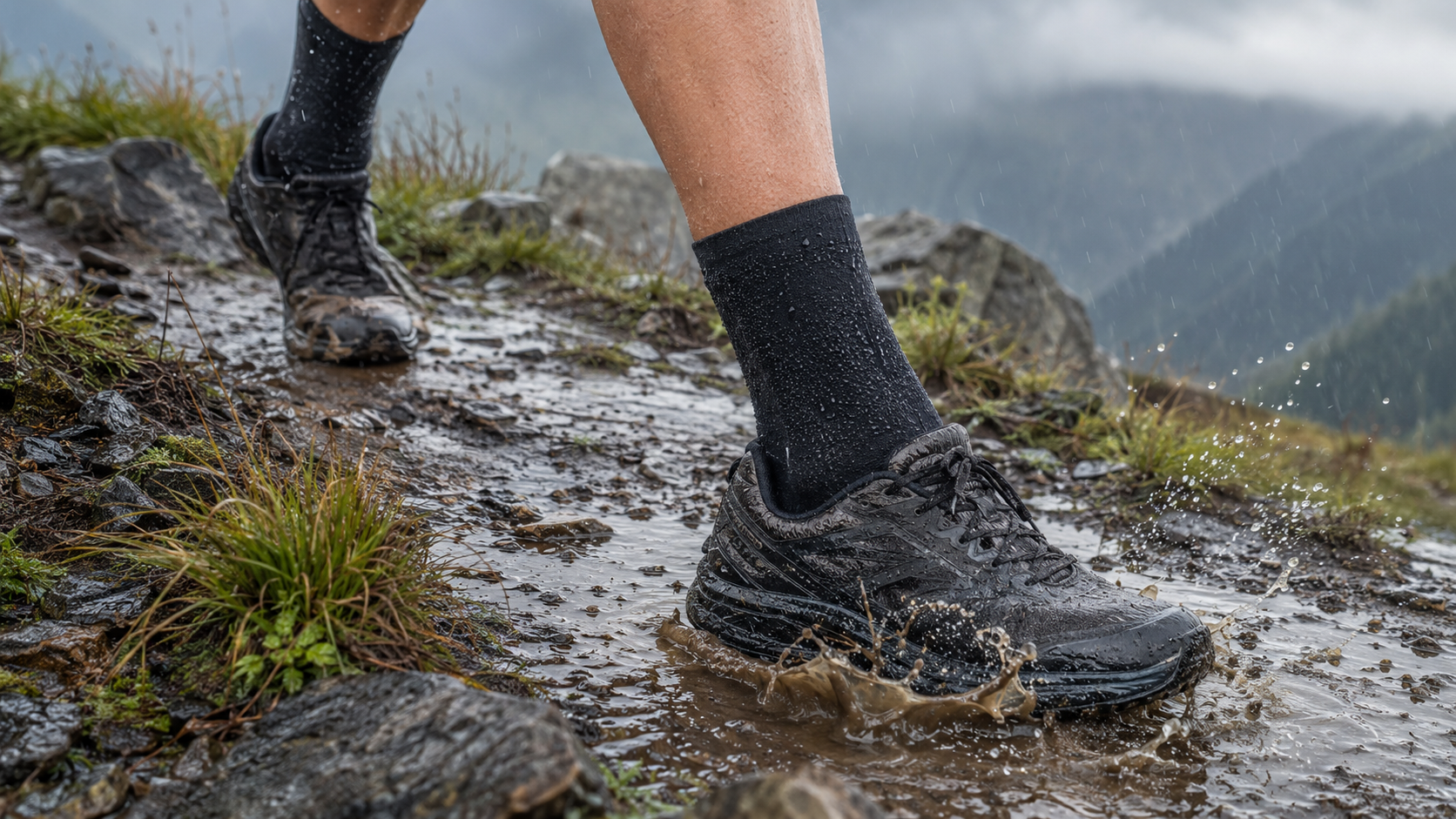
Rainy outdoor training exposes feet to puddle splash, wet grass, mud, shallow crossings and water entering through breathable shoe uppers. At the same time, the runner generates heat and perspiration. A suitable waterproof sock program should block external water while limiting the clammy feeling caused by trapped internal moisture.
The product is intended for wet-weather movement in footwear. It is not a diving product, and the cuff opening is not a permanently sealed barrier. Water can still enter from the top during deep or prolonged submersion.
Prioritize a lightweight three-layer construction
Most technical waterproof socks use an outer layer, a waterproof breathable membrane and a comfort lining. For trail running, each layer should be specified with lower bulk and flexible movement in mind. The outer yarn package must handle abrasion, the membrane must flex repeatedly without damage, and the lining should move moisture away from the skin.
Buyers should compare total thickness under the forefoot, around the heel and at the ankle. A product that looks thin while flat may still create pressure after it is stretched inside a running shoe.
Close fit matters inside trail running shoes
Running footwear usually has less spare volume than walking boots. Excess material can fold at the instep, move at the heel or create friction during descents. A good sample should stay close to the foot without restricting toe movement or leaving a deep cuff mark after training.
Include the intended shoe type in the development brief. Testing the same sock in a roomy hiking boot does not confirm that it will work in a low-volume trail shoe.
Quick-dry comfort is part of the waterproof value
Waterproof protection keeps rain and surface water outside, but runners also need sweat management from the inner layer. Coolmax-style yarns, fine synthetic blends and other moisture-wicking linings can support warmer-weather training. Merino blends may be considered for cooler conditions where odor control and warmth are more important.
Ask the supplier to identify the lining composition, target season and drying method. Avoid presenting any waterproof sock as completely sweat-free; the better claim is balanced protection and comfort for the intended pace and climate.
Reinforce flex and wear zones
Trail runners repeatedly bend the forefoot and ankle while loading the heel and toe. These movements can expose weak knitting, membrane or bonding points faster than casual walking. Reinforced heel and toe areas, stable arch fit and controlled stretch should be included in sample review.
Durability must be evaluated after washing as well as when the sample is new. Check for lining movement, delamination, seam discomfort, loss of elasticity and changes in waterproof performance.
Select crew or mid-calf height by the running environment
Crew and mid-calf heights can help protect the ankle from wet grass, trail debris and low splash while remaining compatible with running shoes. Higher cuffs add coverage but can also increase warmth. The correct choice depends on climate, vegetation, shoe collar and the amount of water expected on the route.
Test samples during real movement
A static water test does not reveal running comfort. Before a bulk order, conduct a 60 to 90 minute trial on wet ground with the intended shoes. Include rain, mud, puddle splash, inclines and repeated flex where possible.
Record heel movement, toe pressure, cuff stability, internal moisture feeling and any hot spots. Repeat the waterproof check after several wash cycles. Use at least two sizes and more than one tester so that the decision is not based on a single foot shape.
Build the private-label program around a clear channel
Custom trail running waterproof socks can serve specialist running brands, outdoor retailers, event merchandise, training clubs, distributors and marketplace sellers. Each channel may need a different combination of thickness, color, packaging, price and educational content.
For an OEM or private-label inquiry, provide the target market, season, shoe type, preferred height, size range, lining, logo method, packaging format and expected order quantity. This allows the factory to prepare a focused sample instead of a generic waterproof sock.
Buyer conclusion
The best waterproof socks for trail running are not simply the thinnest option. They balance low bulk, stable fit, flexible waterproof protection, quick-dry comfort and durability under repeated movement. Validate those factors in the buyer's actual running shoe before confirming production.
Develop a running sock program