What buyers should know about cooling fabric waterproof socks
Cooling fabric waterproof socks are three-layer waterproof socks that use a cool-touch or warm-weather comfort textile on the skin-facing side. The lining can change the first-touch sensation and moisture profile, but it is not the waterproof barrier. Waterproof protection still comes from the membrane in the middle layer.
Cool touch, moisture wicking and breathability are different
Buyers often use the words cooling, quick dry, breathable and moisture wicking as if they describe one property. They do not. Cool touch describes how quickly heat initially moves away from the skin when it contacts the textile. Moisture wicking describes how liquid moisture spreads through a fabric. Drying speed describes how quickly that moisture leaves the material, while breathability concerns moisture vapor movement through the complete sock structure.
A lining may perform well in one area without leading in every other area. For accurate product development, the quotation and sample approval should identify which property matters most instead of relying only on the word cooling.
The three-layer structure does not change
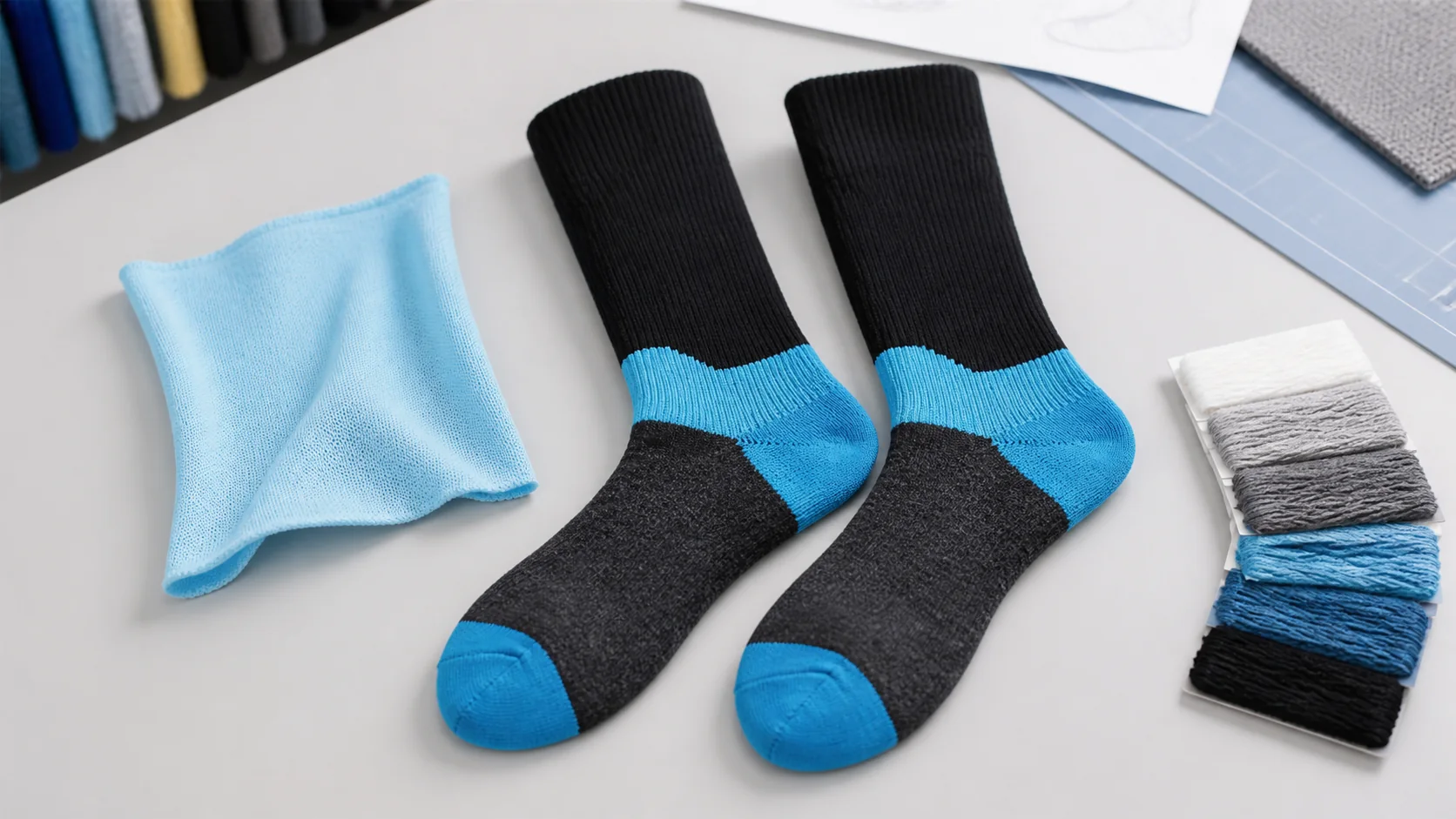
A typical product still contains a knitted outer layer, a waterproof breathable membrane and an inner comfort lining. The outer knit protects the sock and carries the color and pattern. The membrane helps prevent rain, puddles and wet grass from reaching the foot. The cooling fabric sits inside the sock and affects skin feel.
This distinction should also appear on packaging. A clear claim is “three-layer waterproof socks with a cool-touch inner lining.” Calling the lining itself a waterproof cooling material can confuse customers about how the product works.
Possible cooling lining routes
A buyer may request a smooth polyamide-rich lining, a specialized cool-touch yarn, a moisture-management polyester lining or another engineered blend. Some material suppliers use fiber shape, mineral additives or surface treatments to change heat transfer and hand feel. The exact fiber content and performance basis should be confirmed from the selected yarn or fabric specification.
A chemical or surface finish may give an initial sensation but can change after washing. An inherent yarn property may behave differently. Neither route should be described as permanently cooling unless suitable test data and wash-durability evidence support that wording for the finished product.
Coolmax is not automatically the same as cool-touch fabric
Coolmax is commonly selected for moisture transport and active-use positioning. A buyer may perceive a drier, more comfortable wearing environment when sweat is managed well, but this does not automatically prove a measurable contact-cooling effect. If a retail brief specifically requires a cool-touch claim, buyers should request the relevant material specification and agree on a test method.
The practical choice depends on the sales story. A cycling or trail-running range may prioritize moisture movement and reduced bulk. A warm-climate commuting range may prioritize a smooth initial touch. The approved sample should match the actual customer expectation.
Warm-weather waterproof socks still have practical limits
A three-layer waterproof sock normally feels warmer and less ventilated than an ordinary single-layer summer sock because it contains a membrane and bonded structure. A cooling lining can improve the product direction, but it cannot turn the sock into an air-conditioned product or remove heat generated by tight shoes.
Thickness, shoe volume, activity level, temperature and humidity all influence comfort. For summer programs, buyers should normally evaluate a lighter outer knit, a lower-bulk lining and footwear compatibility together rather than changing only the lining fiber.
Suitable retail and activity programs
Cooling fabric waterproof socks may suit rainy cycling, urban commuting, travel, dog walking, golf, light hiking and warm-season outdoor retail. Crew and mid-calf heights offer broad use, while a lower-profile construction may fit shoes with limited internal space. Knee-high products provide more wet-condition coverage but also use more material and cover more of the leg.
The cuff must remain above the expected water line. A cooling lining does not seal the top opening, so water can still enter from above when the wearer stands in water deeper than the sock height.
Sample tests for a cooling waterproof sock program
First confirm whether the cooling result is being evaluated on a loose lining swatch or on the completed three-layer sock. Finished-sock testing gives buyers a more realistic understanding because the membrane, outer knit, thickness and fit all affect the wearing experience.
Compare first-touch sensation, moisture handling, drying behavior, shoe fit, toe comfort and cuff pressure. Repeat the evaluation after washing to check whether the cooling effect, color, stretch and bonding remain acceptable. Waterproof testing should be completed separately to confirm membrane and seam integrity.
Claims and labeling need evidence
Avoid unsupported terms such as instant cooling, permanent cooling, temperature reduction or all-day cold feeling. These phrases may require a defined test method, measured result and destination-market review. Safer wording can describe the approved material, such as cool-touch lining, lightweight lining or moisture-management lining, when the specification supports it.
Fiber content on the label must match the final blend. Brand names, cooling technologies and sustainability statements should only be used when the buyer has the required authorization and supporting documents.
OEM quantities, samples and pricing
Custom waterproof socks generally start from 50 pairs per color and per size. The first sample version normally takes 3-5 days after the height, lining, outer knit, membrane, colors, logo and packaging requirements are confirmed. Sample fees can be refunded after a bulk order under the agreed terms.
Price depends on sock height, order quantity, size and color breakdown, cooling yarn or finish, lining density, outer knit, membrane, logo method, packaging and testing requirements. A specialized performance yarn may cost more than a standard lining, especially when documentation or a smaller material lot is required.
Information to send for a useful quotation
Tell the waterproof socks factory the target country, activity, season, sock height, expected pairs per color and size, preferred cooling property, material composition, logo and packaging. Also state whether the cooling claim must be supported by a specific test report. This allows the factory to recommend a sample route instead of quoting a generic lightweight sock.