
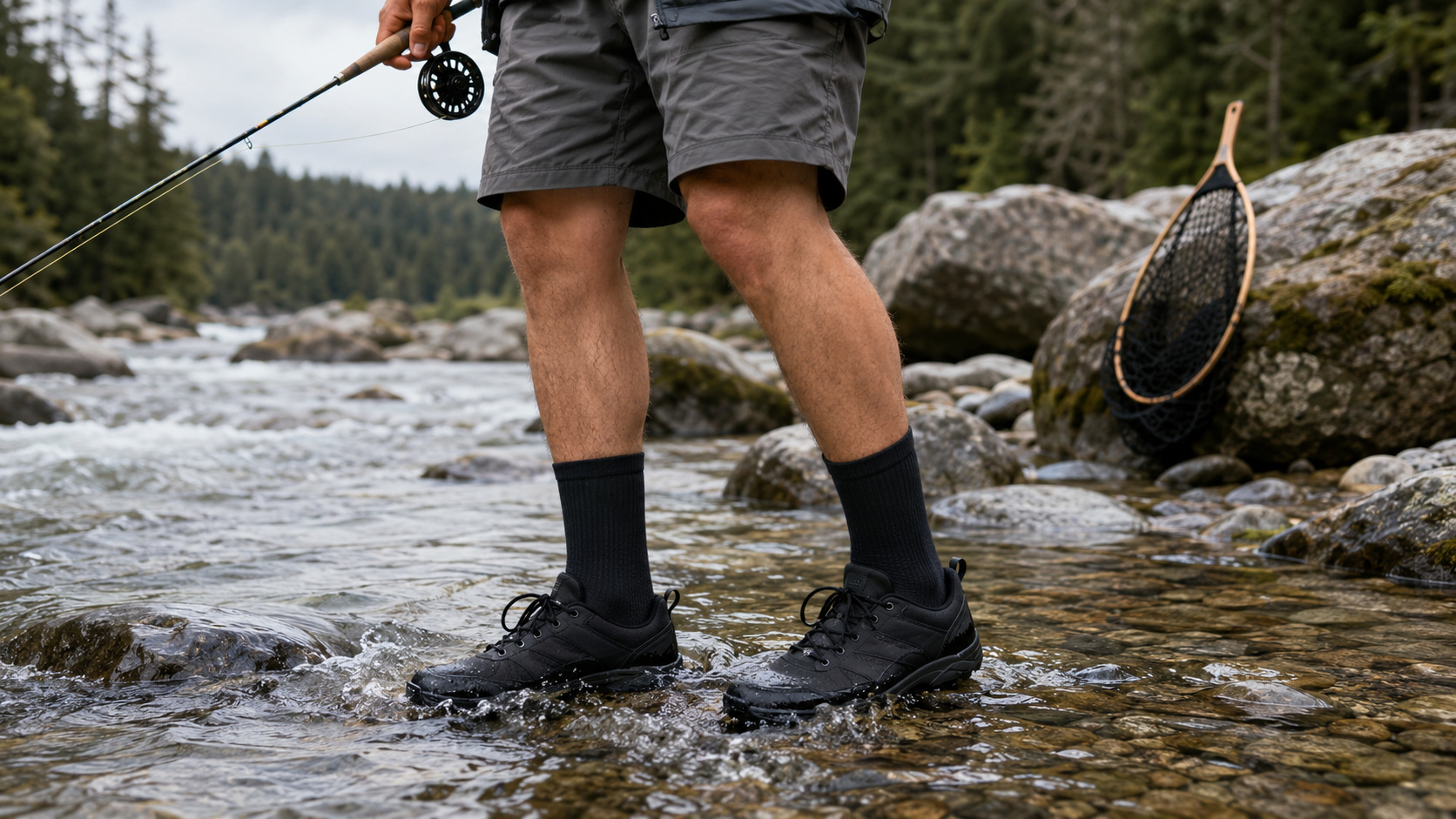
Build the waterproof sock around real water exposure
For fishing and wading programs, the buyer question is not simply whether the sock is waterproof. The better question is where the water line will be, how long the user stays in wet ground and what footwear will be worn with the sock.
Match sock height to the fishing scenario
Mid-calf waterproof socks work well for light shore fishing, camping, travel and wet grass. They are easier to sell as a broad outdoor accessory because they fit many shoes and boots. For deeper grass, stream edges and longer wet-condition use, knee-high waterproof socks give the buyer a clearer specialist product.
The key message should be honest: waterproof socks protect the covered area, but water can enter if it goes over the cuff opening. This point should be included in product instructions, packaging copy and customer service training.
Review cuff tension and comfort
Fishing users may stand, squat, walk on stones or wear boots for long periods. If the cuff is too loose, the sock may slide. If it is too tight, it may feel uncomfortable after several hours. For OEM programs, cuff tension should be tested together with the target height and size range.
Buyers can request different cuff structures, yarn blends and thickness options. A good sample review should include pull-on feel, calf pressure, stretch recovery and whether the sock remains comfortable inside the intended footwear.
Select lining by season
Warm terry or merino-blend linings suit colder fishing and winter camping. Lighter linings are better for transitional weather, rainy travel and general outdoor use. The lining choice also changes the hand feel and perceived value of the product.
If one distributor wants to serve multiple seasons, a two-tier program can work: a mid-weight waterproof sock for broad use and a warmer knee-high version for fishing, hunting and cold-weather channels.
Prepare sample tests before production
Before confirming bulk orders, test the sock in the intended shoe or boot, check seam comfort, review waterproof performance and confirm packaging instructions. A simple test image or short field video can also help retail buyers understand the waterproof and breathable membrane story quickly.