Waterproof socks for hiking and wet trail buyers
Waterproof socks for hiking are a practical product category because the buyer need is easy to understand: keep feet dry and comfortable when trails are wet, muddy or cold. For OEM and private label buyers, the key is not only waterproof performance. The program also needs the right height, lining, thickness, shoe fit, packaging claims and clear use instructions.
1. Why hiking is a strong waterproof sock category
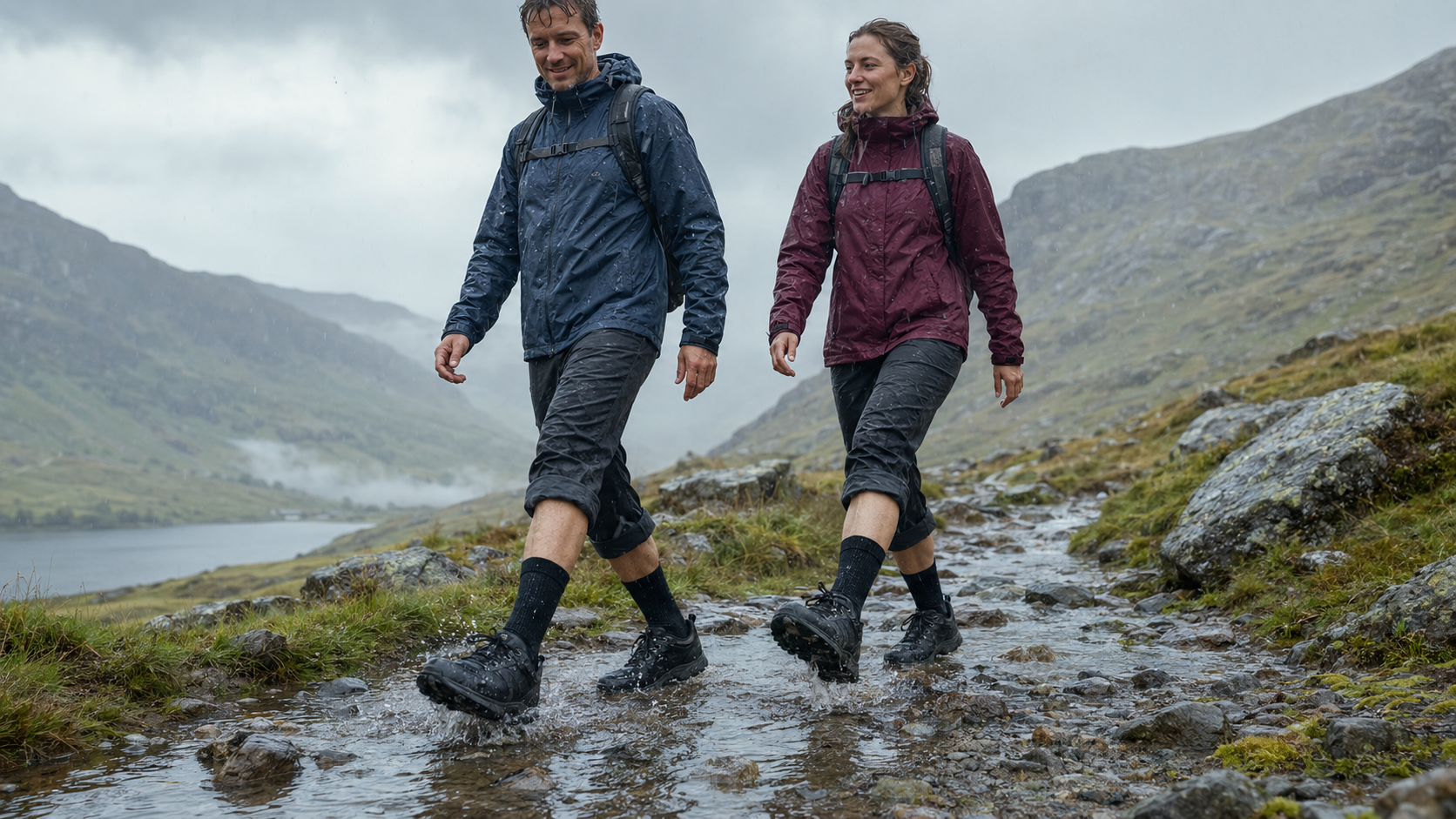
Hiking and wet trail use are among the clearest selling scenarios for waterproof socks. Trail users may start in dry weather and then meet rain, wet grass, mud, stream splash, puddles or cold wind. Once shoes and ordinary socks become wet, feet can feel heavy, cold and uncomfortable.
This makes waterproof hiking socks easy for outdoor stores, marketplace sellers and distributors to explain. The product gives buyers a focused message: dry feet inside hiking shoes, walking boots and trail footwear during wet outdoor use.
2. Wet trail problems buyers need to solve
Hiking buyers usually care about more than simple water blocking. A good waterproof hiking sock program should answer several trail problems:
Rain and puddles: the waterproof membrane helps keep outside water from reaching the foot.
Wet grass and muddy paths: the sock protects against moisture that can enter shoes during long walks.
Cold damp conditions: warm lining or seasonal yarn options can improve comfort when trails are wet and temperatures drop.
Long walking time: lining, stretch and shoe fit must support comfort over several hours, not only a short waterproof test.
3. Choose the right height for hiking programs
For broad hiking and wet trail retail, mid-calf waterproof socks are often the easiest starting point. They work with many hiking shoes, low boots and trail shoes, and they are practical for general walking, travel and everyday outdoor use.
Knee-high waterproof socks can be useful when buyers need more leg coverage for wet grass, deeper mud, fishing paths, hunting, camping or winter outdoor work. For most hiking retail programs, a buyer can offer mid-calf as the core range and knee-high as the extended wet-weather option.
4. Thickness and shoe fit matter
Waterproof socks normally use a three-layer structure: outer layer, waterproof breathable membrane and inner lining. This structure can feel thicker than a normal walking sock. If the shoe is already tight, the user may feel pressure, reduced breathability or toe discomfort.
Buyers should test samples inside real hiking shoes and walking boots. For retail packaging, the message should be simple: waterproof socks work best inside shoes with enough room for the sock structure.
5. Lining choices for hiking waterproof socks
The inner lining controls skin feel and comfort. Different channels may need different lining stories:
Coolmax or quick-dry lining can support active walking, warmer weather and travel use where sweat management matters.
Bamboo or soft comfort lining is useful for buyers who want a smoother everyday feel.
Merino blend lining can help position the sock for colder hiking, winter walking and premium outdoor programs.
Terry or warm lining is better for cold-weather channels, but it may increase thickness, so shoe fit should be tested carefully.
6. Breathability and quick-dry comfort
Hiking customers often walk for long periods, so breathability matters. Waterproof socks should not be described only as water barriers. A better buyer message is waterproof protection plus breathable comfort for wet trails.
Ultra-thin quick-dry waterproof socks can be useful for warmer hiking seasons, travel, cycling and active walking. They are easier to wear inside tighter shoes, while thicker warm waterproof socks are better for cold weather and slower outdoor use.
7. Explain cuff limits clearly
A waterproof sock is waterproof from the toe area to just below the cuff. The cuff opening is not sealed. If water enters from the top, the sock can feel wet inside even when the membrane is working correctly.
For hiking and wet trail customers, this should be explained in packaging, product pages and buyer training. The sock is suitable for rain, puddles, wet grass and splash-heavy paths, but it should not be marketed as a product for long-time underwater use or full submersion.
8. Packaging claims for outdoor retail
Hiking waterproof sock packaging should be clear and practical. Strong claims can include:
Waterproof breathable membrane, three-layer construction, suitable for hiking and wet trails, comfort lining, custom logo support, private label packaging and MOQ support for trial programs.
Avoid confusing claims such as "fully waterproof in all water conditions" unless the cuff limitation is explained. Clear use instructions reduce complaints and help retailers sell the product responsibly.
9. Sample testing checklist before bulk orders
Before placing a bulk order, hiking buyers should test:
Waterproof performance in rain, puddles and wet grass; comfort during longer walking; shoe fit with common hiking footwear; cuff comfort; stretch recovery; lining feel; size range; packaging copy; label placement; and color consistency.
These checks are especially important for private label waterproof socks because the final product must match both performance expectations and the buyer's retail brand positioning.
Final buyer note
Waterproof socks for hiking and wet trail buyers are a strong B2B category because the use case is obvious, repeatable and easy to explain. The best program combines waterproof protection with practical comfort details: correct height, suitable lining, reasonable thickness, shoe compatibility and clear care instructions.
Zhuji Routing Knitting Co., Ltd. can support hiking waterproof sock projects with OEM development, private label packaging, custom logo, color options, sample planning and wholesale supply for outdoor retail channels.