How to plan waterproof socks for wet outdoor programs
Hunting, camping and outdoor workwear customers often wear waterproof socks for long periods, not only for a short rain shower. For B2B buyers, the product should be planned around boot fit, cuff coverage, lining warmth, durability and clear private label packaging. A well-defined specification helps the supplier prepare useful samples and prevents one sock from trying to serve every climate, boot and activity.
Start with boot height and water exposure
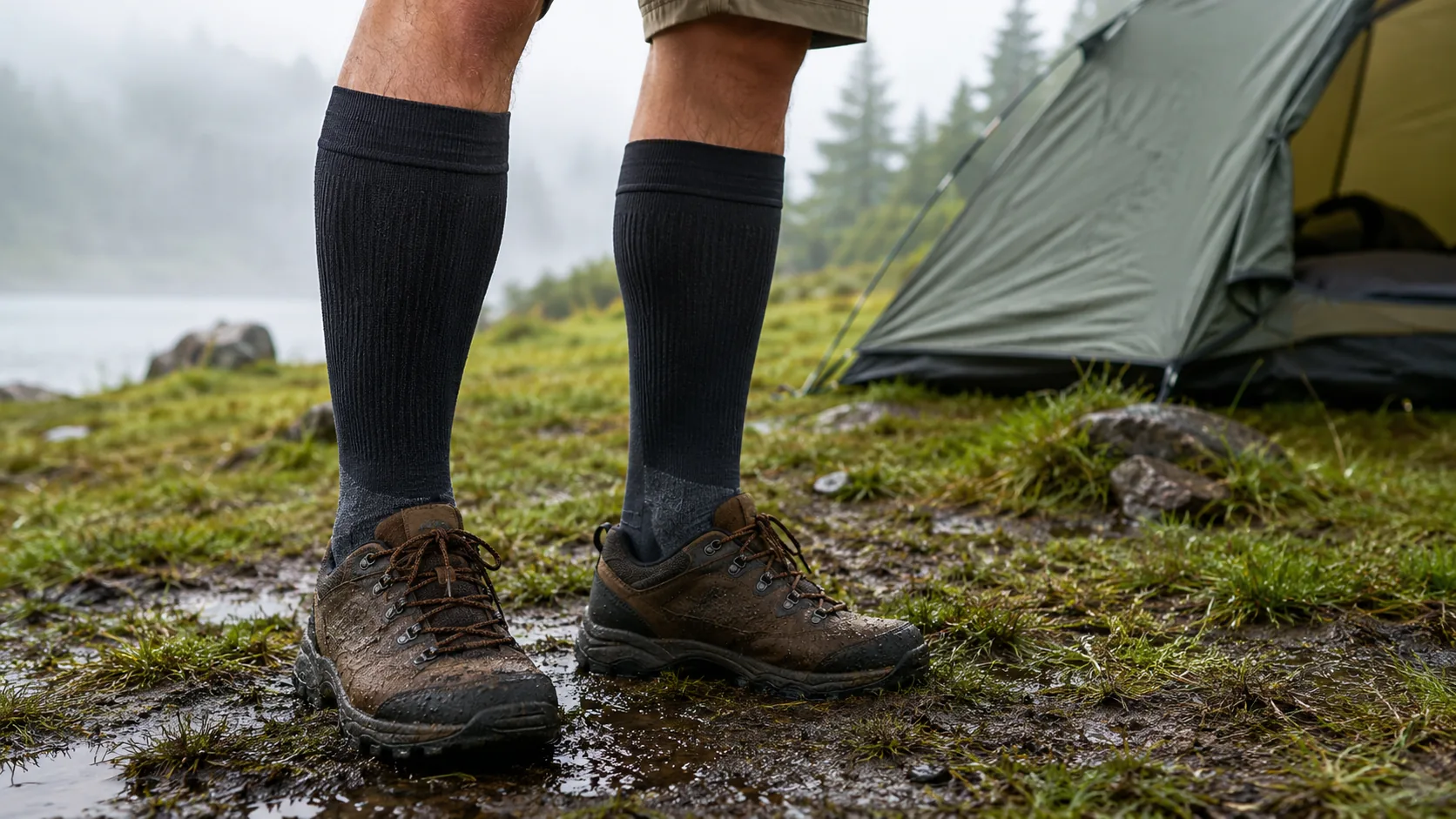
Hunting and camping buyers should first define how deep the expected wet condition is. Wet grass, muddy campsites and rain-soaked trails may only require mid-calf waterproof socks, while wading, high grass and colder outdoor use often benefit from knee-high coverage. The cuff should sit above the likely water line, because water can still enter from the opening if the wearer steps too deep.
For boot users, fit matters as much as waterproof protection. A thick waterproof sock may feel warm and protective, but it can create pressure if the buyer's target footwear is narrow. Sample testing should include the real boot type used by the target customer.
Choose lining by season
A lightweight lining can work for spring and fall camping, while terry or merino blend linings are more suitable for colder markets. Buyers should avoid using one warm winter lining for every channel, because a sock that feels excellent in cold weather may feel too warm for active hiking or mild-weather camping.
The lining also changes product positioning. A soft comfort lining supports daily outdoor retail, while a warmer lining can support hunting, winter camping and workwear messages. Packaging should explain the intended season honestly and avoid broad claims that the product cannot support.
Check durability and care instructions
Camping and hunting socks may face rough boot interiors, mud, branches and repeated washing. Buyers should review abrasion resistance, toe and heel reinforcement, cuff recovery and care label instructions before bulk production. Clear washing guidance helps protect the waterproof membrane and reduces after-sales confusion.
Prepare private label details early
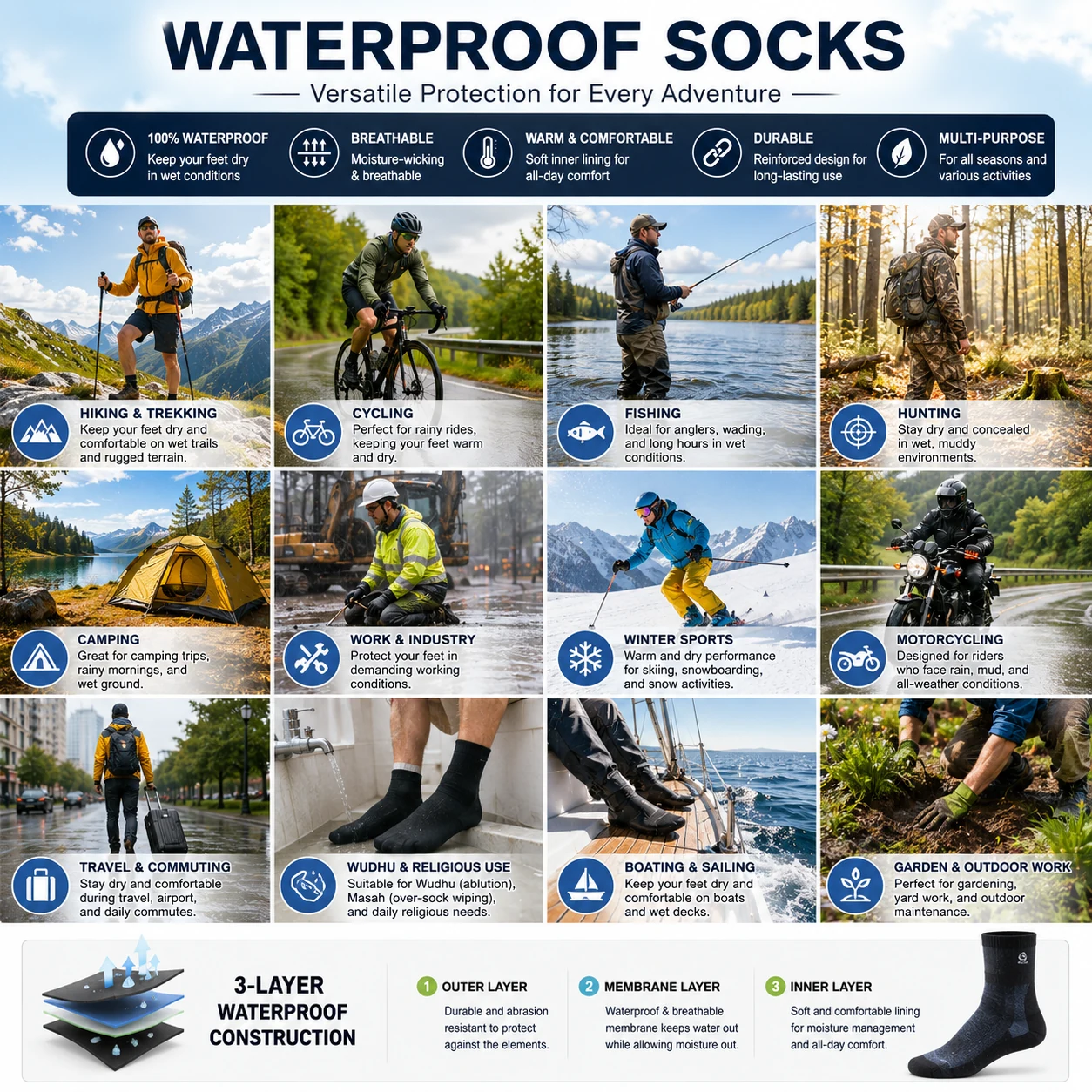
Before confirming bulk orders, prepare size range, color options, logo placement, hangtag claims, barcode requirements and carton marks. For online sales, product images should show the sock height, boot use, wet outdoor scenarios and the three-layer waterproof structure so customers understand why the sock is different from ordinary outdoor socks.