What buyers should know about bamboo waterproof socks
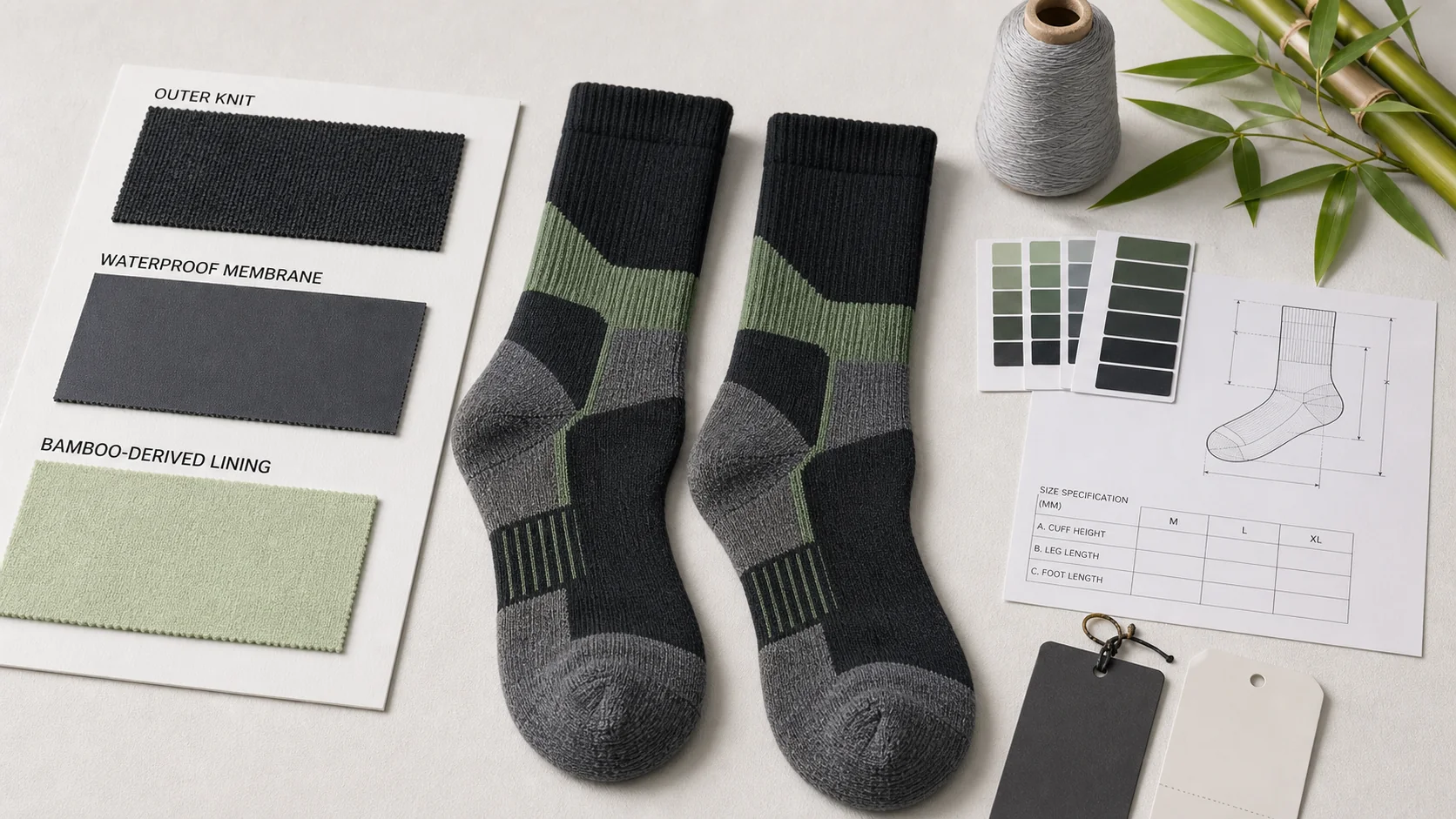
Bamboo waterproof socks are three-layer waterproof socks that use a bamboo-derived textile in the inner lining. The bamboo lining is selected for the skin-facing feel and moisture-handling profile; the waterproof breathable membrane in the middle is the component that blocks external water.
Bamboo lining is not the waterproof barrier
A common waterproof sock construction includes a knitted outer layer, a waterproof breathable membrane and a comfort lining. The outer knit helps protect the product from abrasion, the membrane controls water penetration, and the inner lining sits against the foot. A bamboo-derived lining can change softness, moisture absorption and overall hand feel, but it does not replace the membrane.
This distinction matters for product pages and packaging. Describing the lining as “bamboo waterproof material” may confuse customers. A more accurate description is “three-layer waterproof socks with a bamboo-derived inner lining.”
What “bamboo” can mean in a sock specification
Many textiles sold as bamboo are regenerated cellulose fibers made from bamboo feedstock, often identified as bamboo viscose or bamboo rayon depending on the destination market and labeling rules. The exact fiber name, blend percentage and care language should be confirmed from the yarn specification instead of relying only on the word bamboo.
Bamboo-derived yarn may be blended with nylon, polyester, elastane or other fibers to improve knitting stability, stretch recovery, durability and fit. For an OEM bamboo waterproof socks program, buyers should request the final composition and confirm that the packaging label matches the approved material.
Why buyers choose a bamboo-derived inner lining
Buyers often consider bamboo-derived linings when they want a smooth, soft and comfortable skin-facing surface for daily wear, travel, commuting, walking or lighter outdoor programs. The lining can absorb moisture inside the sock, while the membrane is designed to protect the foot from external wet conditions.
Actual comfort depends on more than the fiber name. Yarn blend, knit density, lining thickness, toe construction, seam placement, membrane bonding and final size all influence the wearing experience. A bamboo label cannot compensate for a poorly fitted or overly bulky waterproof sock.
Bamboo lining compared with Coolmax and merino wool
Bamboo-derived lining: useful when the buyer values a soft hand, moisture absorption and an everyday comfort story. It should be tested for drying behavior rather than automatically promoted as the fastest-drying option.
Coolmax lining: commonly selected for active, lightweight and quicker moisture-transport positioning in cycling, hiking, commuting and warmer weather programs. The exact yarn and knit construction still need confirmation.
Merino wool lining: often chosen for warmth, cooler conditions and premium outdoor positioning. Fiber content, wool quality, hand feel and care instructions affect the final product and price.
Warm terry lining: provides a thicker and warmer product direction for winter, snow and cold outdoor use, but it also takes more room inside footwear.
Select the right height and end use
Bamboo lining waterproof socks can be developed in no-show, mid-calf and knee-high heights. No-show or lower profiles may suit daily shoes and travel positioning. Mid-calf waterproof socks are useful for broad outdoor retail, rainy commuting, cycling, dog walking and hiking. Knee-high waterproof socks provide more leg coverage for fishing, wet grass, hunting, camping, workwear and cold conditions.
The cuff should remain above the expected water line. The sock body can resist external water penetration, but the top opening is not sealed. Water can enter from above when the user stands in water deeper than the sock height.
Important sample checks for bamboo waterproof socks
Confirm the lining composition: review the exact bamboo-derived fiber term and blend instead of approving only a marketing name. Check hand feel: wear the sock long enough to evaluate softness, toe seam comfort, cuff pressure and skin feel.
Test shoe compatibility: waterproof socks are normally thicker than ordinary socks. Confirm fit in the intended hiking, cycling, work or daily footwear. Test moisture and drying behavior: compare the approved bamboo lining sample with other lining choices after wear and washing.
Test waterproof performance: check the finished sock body and membrane integrity under the intended use condition. Check recovery and durability: inspect stretch recovery, pilling, color consistency and the lining-to-membrane structure after repeated handling and washing.
Avoid unsupported bamboo marketing claims
Bamboo origin does not automatically prove that a finished sock is antibacterial, odor resistant, environmentally certified or more sustainable than every other material. Do not place these claims on product pages or packaging unless the exact finished material and claim are supported by suitable documentation or testing for the destination market.
Buyers should also avoid calling every bamboo lining “quick dry.” Bamboo-derived viscose can absorb moisture, and actual drying speed depends on the blend, knit, weight and complete three-layer structure. Comparative sample testing creates a more reliable claim than a generic fiber description.
OEM and private label development options
A waterproof socks factory can help buyers develop bamboo lining waterproof socks with custom height, lining blend, outer knit design, colors, logo placement, size labels, hang tags, polybags or retail boxes. The product specification should state the outer layer, membrane, inner lining, size range and target use.
The typical custom MOQ is 50 pairs per color per size. The first sample version normally takes 3-5 days after material, construction, color, size, logo and packaging requirements are confirmed. Sample fees can be refunded after an order is placed.
What changes the price of bamboo waterproof socks
Final pricing depends on sock height, order quantity, size and color breakdown, bamboo-derived yarn blend, lining density, outer knit, membrane construction, packaging type, logo method and inspection requirements. No-show, mid-calf and knee-high products use different amounts of material and should not share one assumed price.
For a useful quotation, provide the destination country, target use, sock height, expected quantity per color and size, requested bamboo composition, packaging, barcode and delivery plan. A complete brief allows the factory to quote the actual product instead of a generic bamboo sock.
Care information and customer education
Product instructions should explain that waterproof socks are designed to be worn inside suitable footwear and should not be promoted for swimming or prolonged deep submersion. Gentle washing, low temperatures and avoiding harsh treatment help protect the membrane and bonded structure. Final care instructions should match the approved material blend.
A clear size chart, shoe-fit note, cuff limitation and material description can reduce avoidable returns for retailers, distributors, Amazon sellers and private label brands.
Work with a bamboo waterproof socks factory
Summitdry is a waterproof socks factory in Zhuji, Zhejiang, China. We welcome OEM, ODM, wholesale, private label and cross-border ecommerce buyers who want to develop three-layer waterproof socks with bamboo-derived linings.
Start with the target market, product height, intended use, material specification, size range, colors, quantity, logo and packaging. Sample confirmation should come before bulk production so that the approved hand feel, fit, composition and waterproof performance become the reference for the order.
Bamboo waterproof socks FAQ
Is bamboo fiber itself the waterproof layer?
No. The bamboo-derived textile is used in the inner lining. The middle waterproof
breathable membrane is the main barrier against external water.
What does bamboo lining mean?
It commonly means a regenerated cellulose textile made from bamboo feedstock,
often blended with other fibers. The exact fiber name and composition should be
confirmed for the destination market.
Can bamboo lining waterproof socks be customized?
Yes. Buyers can discuss height, lining blend, outer design, colors, logo, size
labels and packaging. The typical custom MOQ is 50 pairs per color per size.
How long does the first custom sample take?
The first version normally takes 3-5 days after the material, construction, color,
size, logo and packaging details are confirmed.
Are bamboo waterproof socks always quick drying or antibacterial?
No. These claims should not be assumed from the bamboo name. Drying behavior and
any antibacterial claim require appropriate material evidence or finished-product
testing.
What affects the price?
Height, quantity, bamboo-derived yarn blend, lining density, outer knit, membrane,
logo, packaging and inspection requirements all affect the final quotation.