How to develop waterproof socks for cycling shoes and wet rides
Waterproof cycling socks must solve two moisture problems. A waterproof breathable membrane helps block rain, tire spray and water from wet roads, while the inner lining manages perspiration generated during pedaling. For road and commuter footwear with limited internal space, an ultra-thin construction and a Coolmax lining can provide a practical product direction when they are tested as part of the complete three-layer sock.
Why cycling waterproof socks need a lower-bulk design
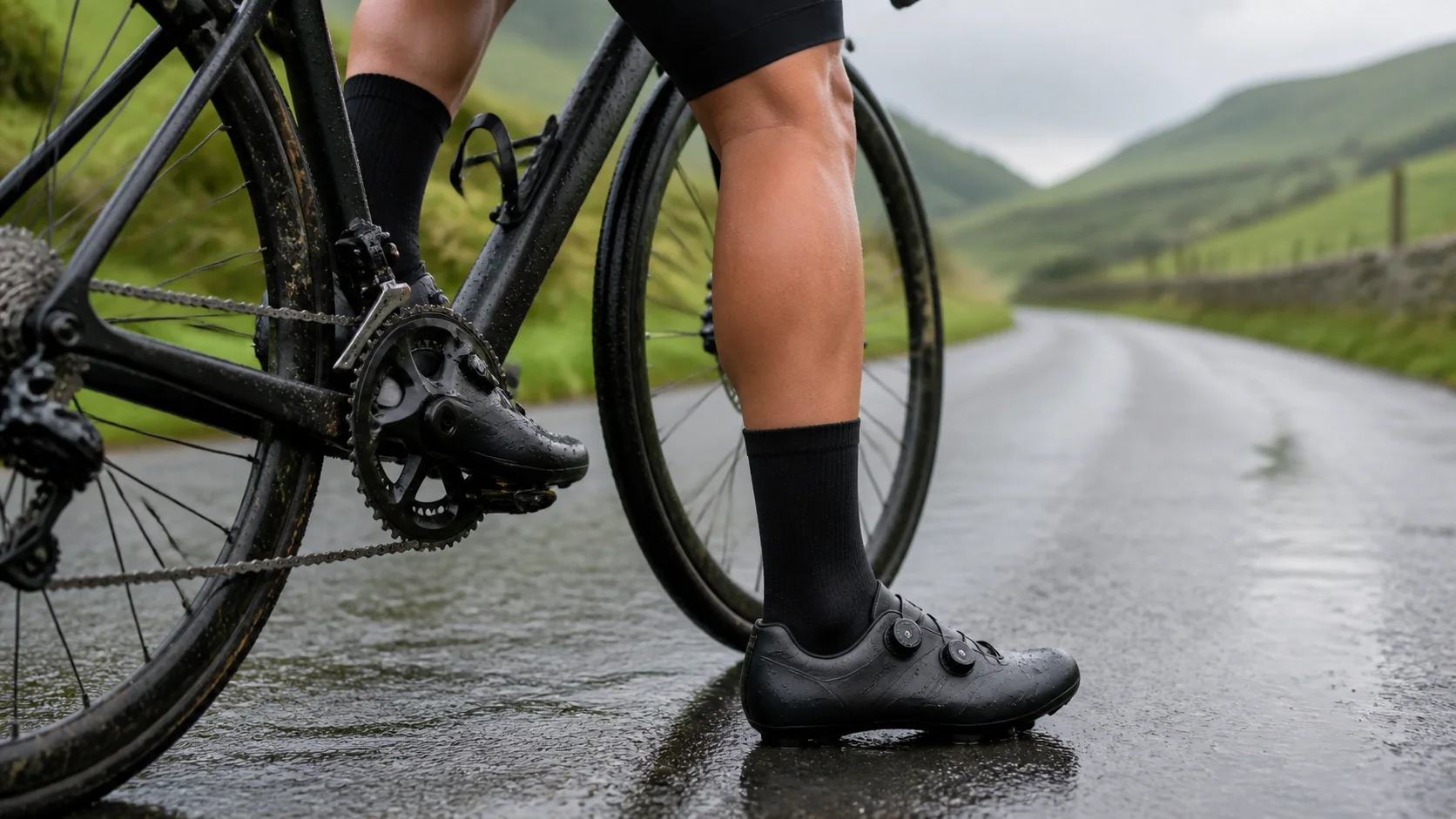
Cycling shoes usually fit more closely than hiking shoes. A thick waterproof sock can take up too much volume, compress the forefoot or make the toe area restrictive. Pressure becomes more noticeable during long rides because the foot repeatedly flexes at the ankle and forefoot.
An ultra-thin waterproof cycling sock should reduce unnecessary knit bulk while retaining enough structure to protect the membrane. Low bulk does not mean removing an essential layer. Buyers should evaluate the finished sock inside the intended road, gravel, mountain bike or commuter shoe instead of approving thickness from a loose material swatch.
Three-layer construction separates rain protection from sweat management
The outer knitted layer supplies stretch, abrasion resistance, color and pattern. The middle waterproof breathable membrane is the barrier that helps prevent outside water from reaching the foot. The skin-facing inner layer affects softness, moisture movement and wearing comfort.
Coolmax is an inner-lining option; it is not the waterproof layer. The membrane blocks outside water, while the lining helps move perspiration away from the skin. Water can still enter over the open cuff if rain runs down an uncovered leg or if the rider steps into water above the sock height.
Why buyers consider Coolmax for waterproof cycling socks
Coolmax fiber is engineered for moisture-wicking and fast-drying comfort and is used in socks and activewear. Its channels help move perspiration toward the fabric surface, where moisture can spread and evaporate. This makes it relevant to active cycling programs in which riders generate heat inside less ventilated footwear. The Coolmax brand material guide explains its fiber mechanism and certification requirements.
Performance still depends on the complete sock. The membrane, lamination, shoe ventilation, humidity and riding intensity all affect moisture vapor movement. Confirm the selected yarn, supporting documents and permission to use branded Coolmax claims before printing retail packaging.
Ultra-thin and Fast Dry are product directions, not automatic guarantees
For a Fast Dry cycling program, buyers can specify a low-density outer knit, a smooth moisture-management lining and a membrane construction selected for the intended use. The finished sample should then be compared with the target shoe and with an agreed reference sock.
Drying claims need a defined test method. A lining may dry quickly by itself while the complete three-layer sock takes longer after washing. Avoid publishing an exact drying time unless the finished product has been tested under stated conditions.
Choose height according to spray, footwear and leg coverage
Crew or mid-calf waterproof socks are common starting points for cycling because they cover the gap above most shoes and sit below the calf muscle. Ankle styles can suit warm-weather commuting but provide less protection from road spray and water running down the leg. Knee-high versions provide more coverage for cold rain and off-road riding, but they use more material and feel warmer.
The cuff should remain in position without creating excessive pressure or interfering with tights. Waterproof over-trousers should overlap the cuff so water sheds over the outside rather than being directed into the sock opening.
Different cycling channels need different specifications
Road cycling prioritizes close shoe fit, low bulk and smooth contact around the toe. Gravel and mountain bike programs may require a more durable outer knit because of mud, trail debris and walking sections. Urban commuters may value neutral colors, easy care, reflective accents and clear rain-protection packaging.
One construction does not need to serve every season. A retailer can develop an ultra-thin Coolmax-lined SKU for mild and warm rain, then use a separate Merino or warm-terry version for winter. This creates clearer customer expectations than claiming one sock is ideal for all temperatures.
Sample testing should include real cycling shoes
First check the sample dry inside the intended shoe. Review toe length, forefoot pressure, heel placement, cuff comfort and whether the shoe closure needs to be loosened. Repeat the evaluation during a representative ride to identify bunching, sliding or pressure around the instep.
Waterproof testing and wearing trials answer different questions. Test the finished sock for leakage and membrane integrity, then conduct wet-road or spray trials for practical comfort. Repeat flexing around the toe, ankle and heel, and inspect the sock after washing. Final approval should cover waterproof performance, fit, moisture management, color, logo placement and packaging.
OEM specifications for an ultra-thin cycling program
- Primary use
- Road cycling, gravel, mountain biking or rainy commuting.
- Construction
- Knitted outer layer, waterproof breathable membrane and smooth inner lining.
- Lining option
- Coolmax, other moisture-management yarns or a project-specific Fast Dry lining.
- Height
- Ankle, crew, mid-calf or knee-high according to coverage and footwear.
- Branding
- Knitted jacquard, embroidery, woven label, heat transfer or another reviewed method.
- Packaging
- Header card, hook, belly band, gift box, pouch, barcode and custom retail packaging.
MOQ, sample time and pricing factors
In-stock waterproof socks have no MOQ and one pair can be ordered. Custom projects generally start from 50 pairs per color and per size. The first customized sample normally takes 3-5 days after the height, size range, yarn, lining, colors, logo and packaging details are confirmed.
Pricing depends on sock height, size and color breakdown, order quantity, Coolmax or alternative lining material, knit density, membrane, logo method, packaging and testing. Send the actual cycling shoe type and target season with the quotation request so the factory can recommend a suitable lower-bulk sample.
Information to send for a useful cycling sock quotation
Provide the destination market, cycling category, season, preferred height, sizes, pairs per color and size, target shoe type, lining preference, logo artwork and packaging. State whether branded Coolmax fiber is mandatory or whether another tested moisture-management lining is acceptable. Also identify any required waterproof, breathability, drying or wash-durability test standard.