Waterproof socks for daily commute, dog walking and travel
Waterproof socks are not only for hiking, fishing or heavy outdoor use. For many retail buyers, the more repeatable demand comes from everyday wet-weather routines: walking to work, standing on rainy platforms, crossing puddles, taking the dog out before sunrise, packing for travel and dealing with wet shoes during busy days.
1. Why everyday waterproof socks are easy to understand
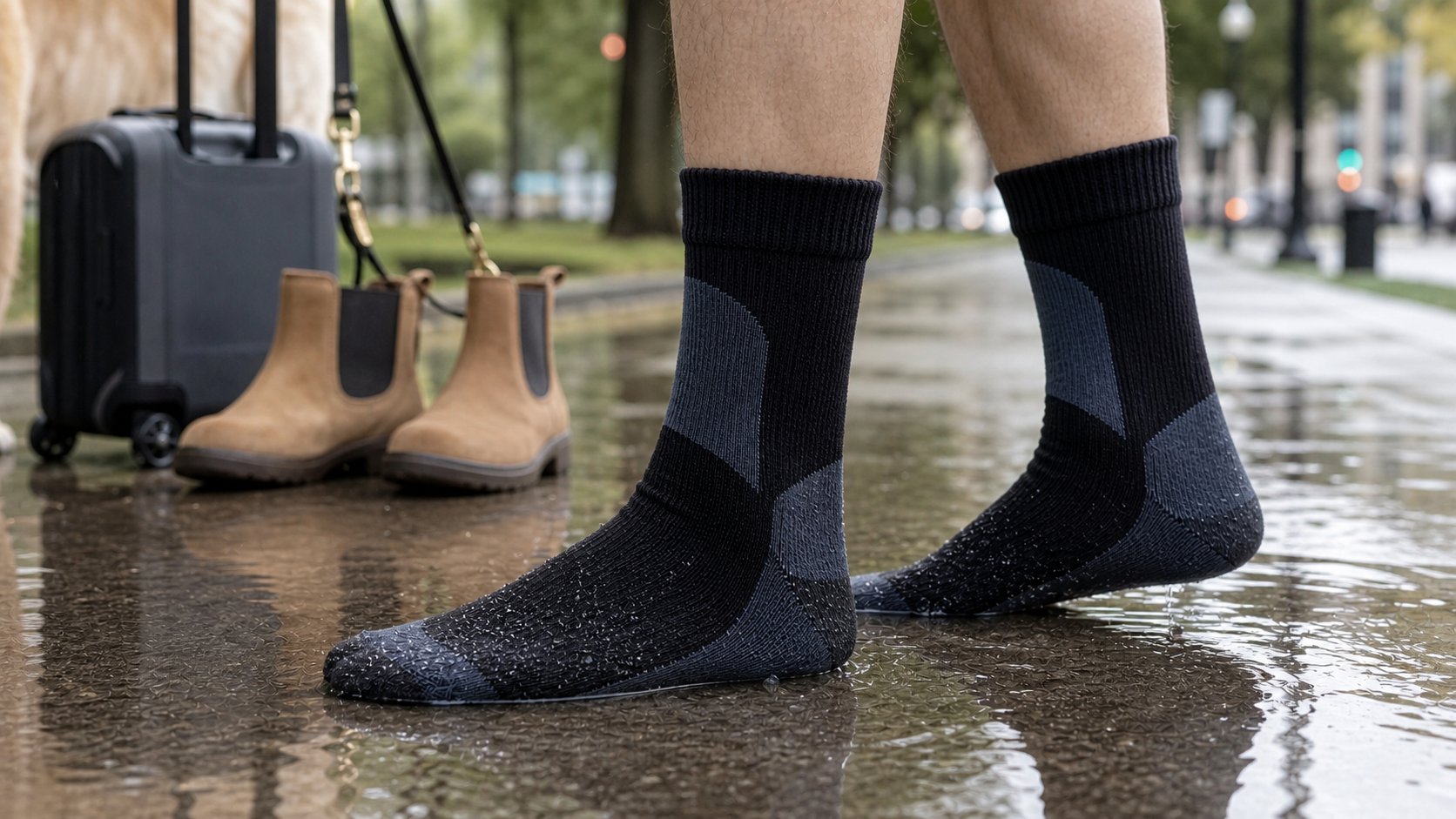
Daily commute, dog walking and travel are simple use cases for waterproof socks because the customer problem is familiar. Ordinary socks get wet when shoes meet rain, puddles, wet grass, slush, airport transfer weather or long walking days. Once the sock is wet, the user may stay uncomfortable for hours.
This makes the category useful for outdoor shops, travel retailers, pet accessory sellers, department stores, marketplace brands and gift programs. The product does not need an extreme-sport message. It can be positioned as practical dry-foot comfort for daily wet conditions.
2. Match the product brief to real daily scenarios
Everyday waterproof sock buyers should define the most common customer scenes before selecting thickness, height and lining. For commuting, the sock should fit inside walking shoes, casual boots or work shoes without feeling bulky. For dog walking, the sock should handle wet grass, muddy paths, drizzle and repeated short outings. For travel, the product should be easy to pack, comfortable over long walking days and useful across changing weather.
These scenarios are less technical than trail running or winter hunting, but they demand broad comfort. A successful everyday program should feel practical, soft, stable and simple to explain.
3. Choose crew or mid-calf height for daily use
Crew and mid-calf waterproof socks are usually the best starting points for daily commute, dog walking and travel. They offer more protection than low-cut socks when rain splashes around the ankle, but they still work with many casual shoes, walking shoes and light boots.
Knee-high waterproof socks can be added for wet grass, cold-weather dog walking, countryside travel and customers who need more leg coverage. For a first everyday retail range, however, crew or mid-calf options often feel easier to wear and easier to sell.
4. Keep thickness suitable for normal footwear
Waterproof socks use a 3-layer structure: a knitted outer shell, a waterproof breathable membrane and an inner comfort lining. This structure can feel thicker than ordinary socks, so shoe compatibility is especially important for commuter and travel channels.
Buyers should test samples inside the shoes customers actually wear: sneakers, walking shoes, casual boots, work shoes and travel footwear. If the shoe is tight, the user may feel pressure at the toe or instep. A lighter or ultra-thin option may be better for daily footwear, while thicker warm versions can serve winter programs.
5. Select lining by climate and channel
The inner lining changes the user's first impression. For daily commute and travel, buyers often need a comfortable lining that can support many hours of wear.
Coolmax or quick-dry lining is useful for active walking, travel days and warmer rainy seasons. Bamboo or soft comfort lining can create a smoother everyday feel for general retail. Merino blend lining may fit colder travel, winter commuting and premium outdoor lifestyle programs.
6. Dog walking creates repeat purchase potential
Dog walking is a strong everyday waterproof sock angle because the routine happens in all weather. Customers may step through wet grass, muddy sidewalks, park paths, puddles and light snow several times a day. The product can be positioned for short wet outings as well as longer weekend walks.
For this channel, packaging and product pages should avoid overcomplicated outdoor language. Clear phrases such as wet grass, rainy sidewalks, muddy paths, dog walking and daily outdoor routines can help customers understand the benefit quickly.
7. Travel buyers need packable wet-weather insurance
Travel customers may not know what weather they will meet. Waterproof socks can be packed as a small backup item for city breaks, walking tours, camping trips, train travel, business travel in rainy cities and outdoor sightseeing.
For travel retail or marketplace listings, buyers can emphasize lightweight packing, dry-foot comfort, use with walking shoes and suitability for rainy days. Avoid presenting the product as a replacement for waterproof shoes or boots. It works best as an additional layer of protection inside footwear.
8. Explain cuff limits before customers complain
A waterproof sock protects the foot through its waterproof membrane, but the top opening is still an opening. If water enters from above the cuff, the inside can become wet. This matters when customers step into deep water, heavy rain runs down the leg or wet trousers direct water into the sock.
The right everyday message is practical and honest: waterproof socks are suitable for rain, puddles, wet grass, muddy paths and travel wet-weather comfort, but they are not designed for long-time underwater use or full submersion.
9. Private label packaging should stay simple
Everyday waterproof sock packaging should use clear scenes rather than technical overload. Good front-of-pack messages can include waterproof breathable membrane, 3-layer construction, comfort lining, rainy commute, dog walking, travel, wet grass and puddle protection.
For private label programs, buyers should confirm logo placement, size range, hangtag or box structure, care instructions, barcode requirements, color names and carton marks before bulk production. Everyday channels often need simple education because many customers are buying waterproof socks for the first time.
Natural B2B terms for this article include waterproof socks factory, OEM waterproof socks, private label waterproof socks, wholesale waterproof socks, waterproof sock manufacturer, MOQ, sample testing and bulk order. These phrases should be used to explain sourcing choices, not repeated as empty keyword blocks.
10. Sample testing checklist for everyday programs
Before confirming an OEM order, test the samples during real daily movement. Walk for at least 60 minutes on wet pavement, wet grass and puddled paths. Try the sock inside common shoes, check toe pressure, cuff comfort, heel movement, breathability, lining feel and ease of washing.
Repeat the waterproof check after several wash cycles. Also review packaging copy to make sure the waterproof benefit, cuff limitation and footwear guidance are easy for a first-time customer to understand.
Buyer conclusion
Waterproof socks for daily commute, dog walking and travel are a practical B2B category because the use cases happen often and are easy to explain. The best programs balance waterproof protection with normal footwear fit, soft lining, packable comfort, clear packaging and honest use instructions.
Zhuji Routing Knitting Co., Ltd. can support everyday waterproof sock programs as a waterproof socks factory with OEM development, private label packaging, custom logo, color options, sample testing, MOQ planning and wholesale supply for outdoor, travel, pet lifestyle and daily retail channels.
Build an everyday waterproof sock range