How waterproof socks compare with shoes, boots and gaiters
Waterproof socks, waterproof shoes, boots and gaiters do not solve the same problem. For B2B buyers, the best product mix depends on price point, inventory risk, shipping weight, footwear compatibility, retail education and the customer's wet condition.
1. Waterproof socks are flexible accessories
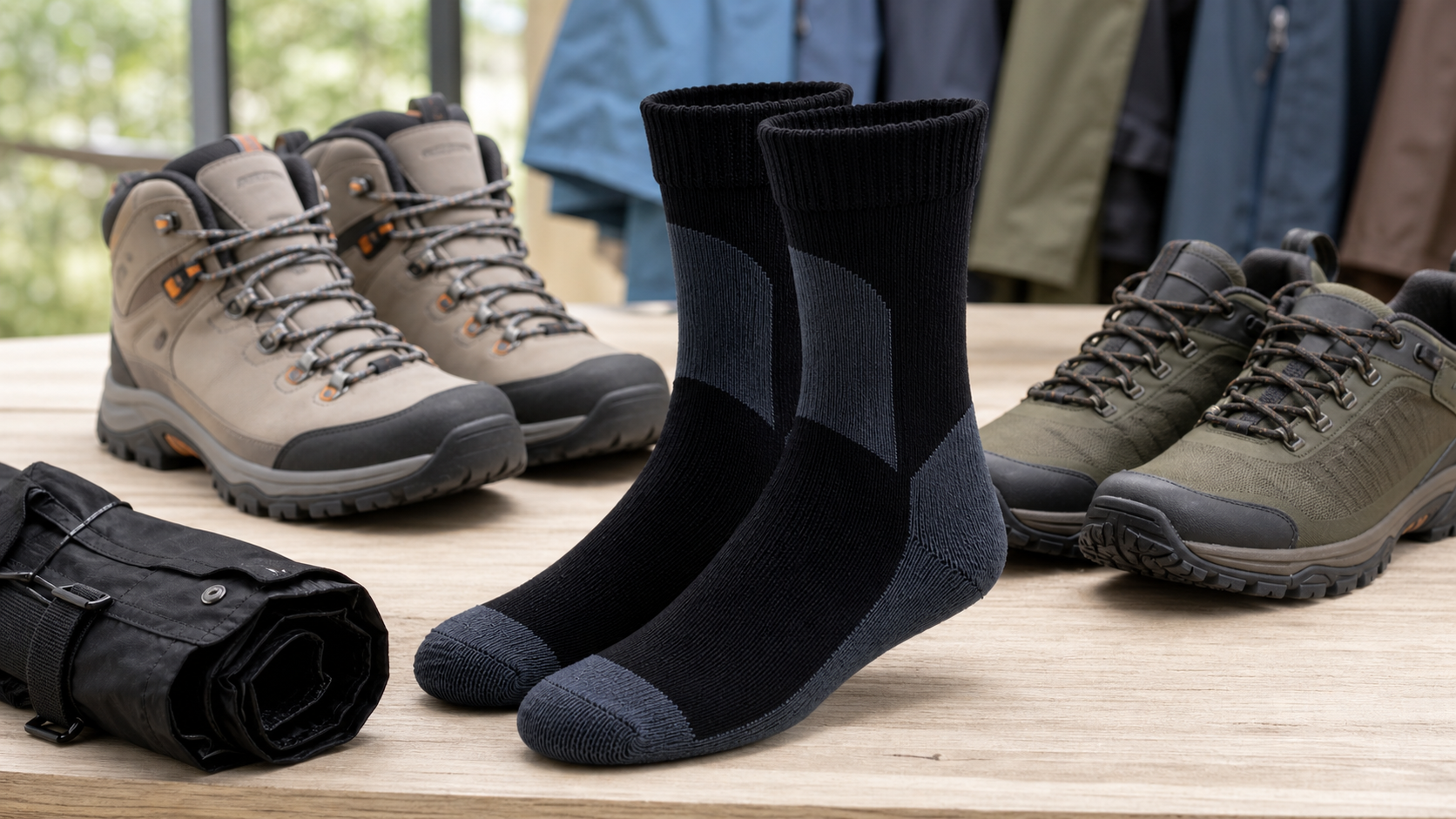
3-layer waterproof socks can be worn with different shoes, walking boots, cycling shoes or outdoor footwear. This makes them easier for distributors and importers to sell across hiking, fishing, commuting, dog walking, gardening and travel channels.
They are also lighter and easier to ship than shoes or boots, which can help wholesale waterproof socks fit marketplace and private label programs.
2. Waterproof shoes and boots offer structure
Waterproof shoes and boots provide outsole grip, foot protection and structure. They are essential for many outdoor conditions. However, they require more size inventory, higher freight cost and more complex fit management than socks.
Waterproof socks are not a replacement for protective footwear. They work best as an inner layer or accessory that adds dry-foot comfort in wet conditions.
3. Gaiters protect from above
Gaiters help stop water, mud, snow and debris from entering shoes from the top. Waterproof socks protect the foot through the sock membrane but still have a cuff opening. For deep grass, snow or heavy splash, socks and gaiters can be sold together.
4. Retail positioning
Waterproof socks are a good add-on product for outdoor retailers because they can sit beside shoes, boots, gaiters, gloves and hats. A waterproof socks factory can help private label buyers build packaging that explains the 3-layer structure and shows suitable use cases.
B2B terms that fit this comparison include waterproof sock manufacturer, OEM waterproof socks, waterproof socks factory, wholesale waterproof socks, outdoor accessory supplier and private label waterproof socks.
5. When buyers should choose waterproof socks
Choose waterproof socks when the market needs a light, packable, multi-use wet weather accessory. They are strong for wet grass, rain, shallow puddles, fishing paths, kayaking shorelines, commuting and travel.
6. When buyers should not overpromise
Do not market waterproof socks as waders, diving socks or a full replacement for waterproof boots. The sock membrane can block water through the fabric, but water can enter from the cuff if the opening is flooded.
Buyer conclusion
Waterproof socks work best as a flexible wet-weather accessory in a wider outdoor product range. Shoes, boots and gaiters still have important roles. For many private label buyers, the smartest strategy is to sell waterproof socks as a lightweight add-on beside existing footwear programs.