
Why cuff-strap waterproof socks are useful for creek crossing
Most waterproof socks protect the foot through a three-layer structure: outer layer, waterproof breathable membrane and comfort lining. This structure works well when water contacts the sock body. The weak point is the top opening. If water enters from the cuff, the waterproof sock loses its practical dry-foot function. Cuff-strap waterproof socks are designed to reduce that risk in short splash-heavy scenes.
The cuff is still the key limit
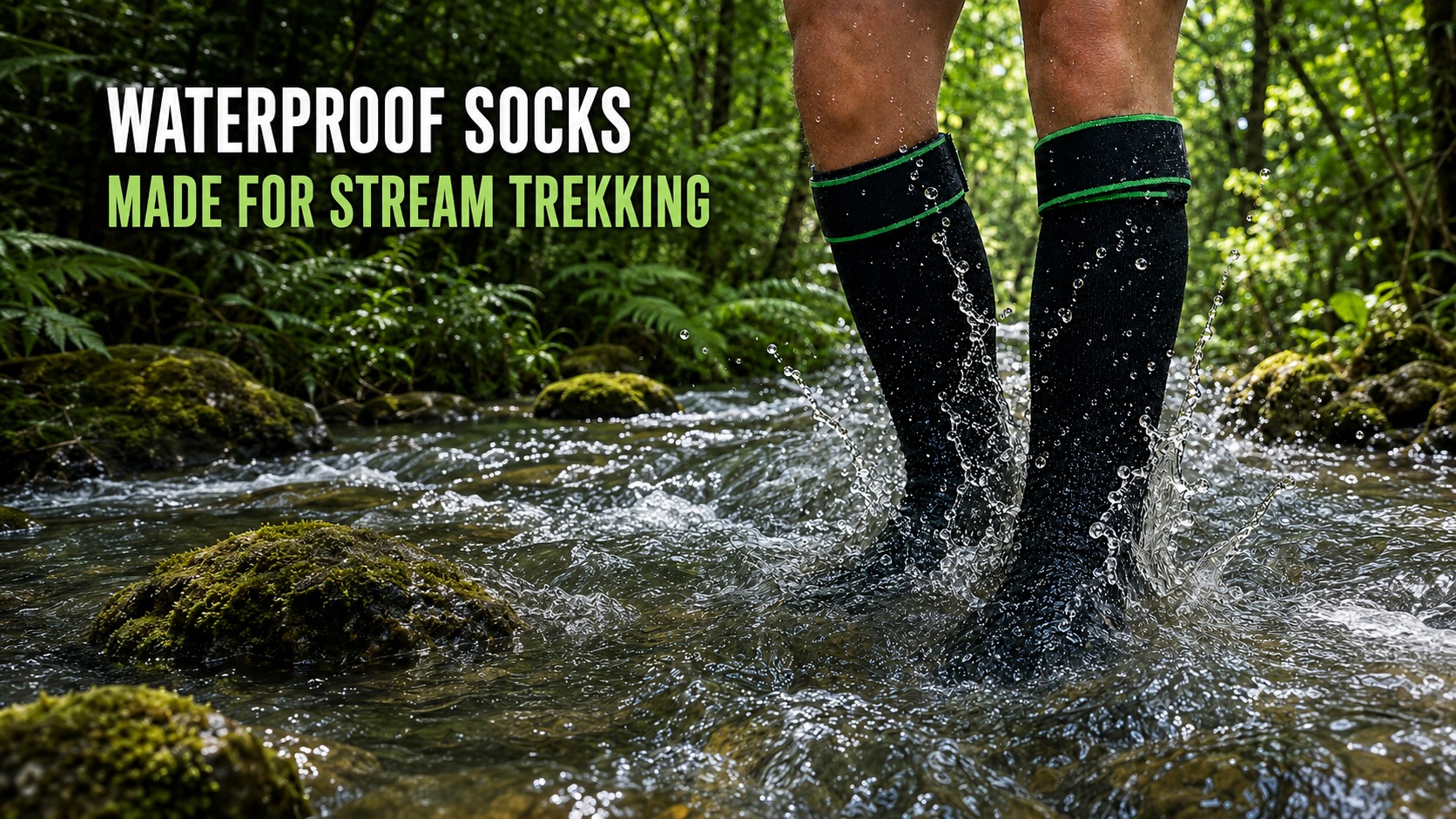
A waterproof sock membrane can block outside water, but the sock opening is not a sealed boot collar. When a user steps into water above the cuff, or when a strong splash rolls over the top, water can run inside from the opening. Once water gets inside the sock, the membrane can no longer keep the foot dry because the water is already on the inner side.
This is why cuff height and cuff control matter in real outdoor use. Mid-calf and knee-high waterproof socks give more coverage than ankle socks, but even a taller sock can take in water if the cuff is loose or hit directly by moving water.
What the strap does
The strap is a water stop seal belt worn around the upper sock area. Its purpose is not to make the sock permanently sealed like a diving product. Its practical role is to improve cuff contact around the leg, so sudden splashes, waves and stream movement are less likely to push water directly into the sock opening.
For B2B buyers, this is an easy feature to explain: the sock body provides waterproof protection, while the strap helps reduce accidental water entry at the cuff during short creek crossing, stream trekking, fishing bank, wet grass and splash-heavy outdoor scenes.
Best use scenarios
Stream trekking and creek crossing:
When the user crosses shallow moving water, a wave can hit the lower leg and run
toward the cuff. A strap helps keep the opening closer to the leg for short
exposure.
Fishing and wet banks:
Bank fishing, boat edges and slippery stream areas often create unpredictable
splashes. A cuff-strap waterproof sock gives buyers a more specialized option than
a regular waterproof sock.
Hiking after rain:
Wet grass, puddles, mud and stream crossings can all wet the lower leg. The strap
can help reduce top-entry risk when the sock is used with proper footwear.
Outdoor work and camping:
Short wet-ground tasks, campsite setup and water-edge activities may benefit from
extra cuff control, especially when the user is not wearing tall waterproof boots.
What the product should not promise
Cuff-strap waterproof socks should not be described as fully sealed socks for swimming, shower use, bathtub use, deep wading or long-time soaking. The strap reduces top-entry risk, but it does not remove the basic cuff limitation. If the user stands in water above the cuff for a long time, water may still enter.
Clear use limits are better for long-term customer trust. Product pages, Amazon listings, packaging and instruction cards should explain that the sock is intended for short splash-heavy outdoor scenes, not continuous underwater use.
OEM and private label decisions
For OEM waterproof sock projects, buyers should confirm sock height, cuff stretch, strap width, hook-and-loop strength, strap edge comfort, color matching and packaging artwork before production. The strap should feel secure without creating painful pressure around the leg.
Private label buyers can position cuff-strap waterproof socks as a specialized product for creek crossing and stream trekking, or as an add-on option in a broader waterproof sock line. The product can sit beside mid-calf waterproof socks, knee-high waterproof socks and ultra-thin quick-dry waterproof socks as a more scenario-specific style.
Sampling checklist for buyers
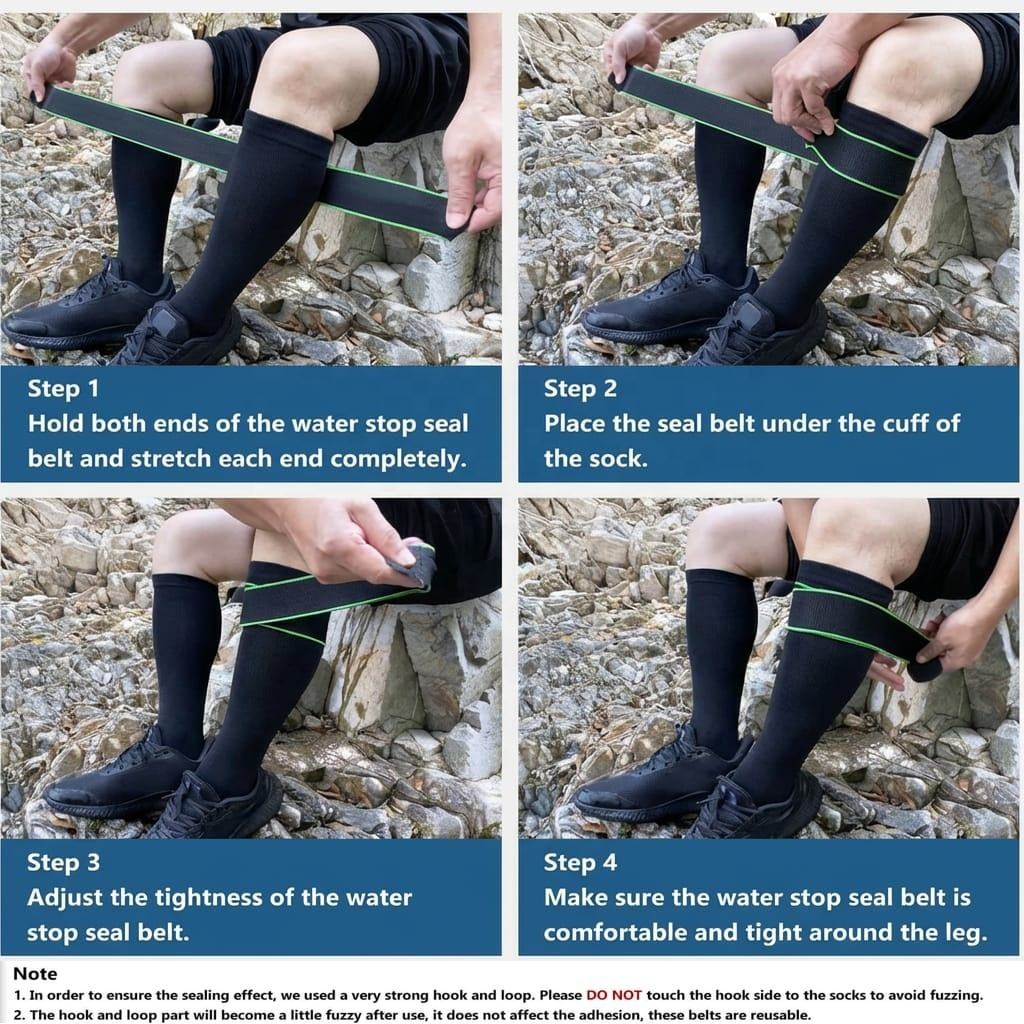
During sample approval, test the sock with real footwear. Check whether the strap stays in place while walking, whether it rubs the leg, whether the hook side causes fuzzing, and whether the user can adjust the tightness easily. Also confirm that the instruction image clearly shows how to place the seal belt under or around the cuff.
Buyers should also test the product in realistic splash conditions instead of only simple static water tests. The key question is not whether the strap makes the sock impossible to flood. The key question is whether it reduces sudden cuff water entry in the target scene.
Buyer conclusion
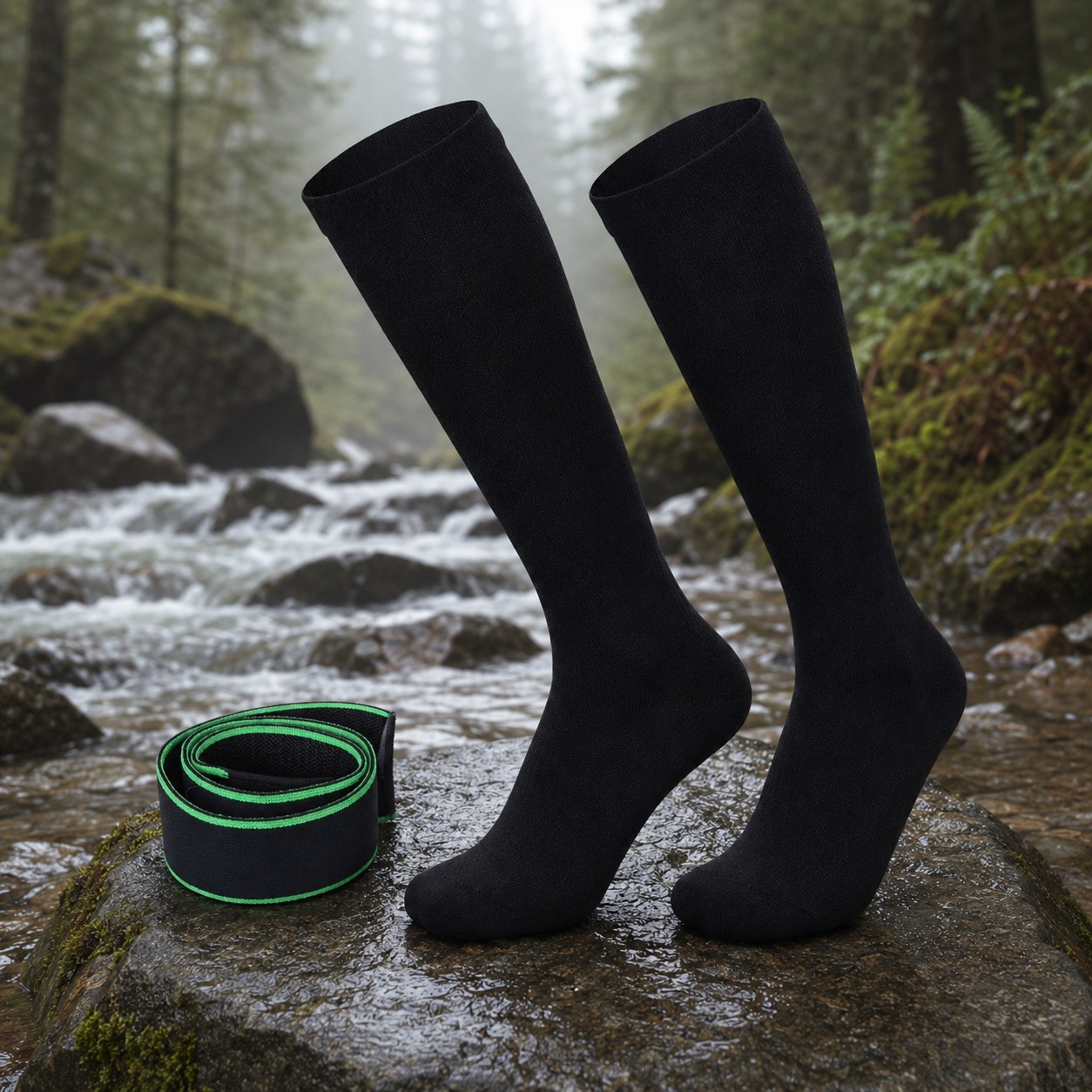
Cuff-strap waterproof socks solve a practical problem that regular waterproof socks cannot fully address: sudden water entering from the top. For shallow creek crossing, stream trekking and splash-heavy outdoor use, the strap gives the product a clearer function and an easier sales story.
The best product communication is balanced. Explain that the sock body is waterproof, the strap helps reduce cuff water entry, and the product is designed for short outdoor splash scenarios rather than long-time underwater wear. This gives OEM, private label and wholesale buyers a stronger, more trustworthy product page for serious outdoor customers.