How should buyers choose a logo method for waterproof socks?
The best logo method is the one that fits the sock construction, artwork, position, order quantity and retail goal. Waterproof socks stretch around the leg and often contain a functional membrane, so a decoration that works on a T-shirt cannot be added automatically. Every proposal needs a factory feasibility review, followed by an approved sample made on the intended sock construction.
- Artwork
- Logo shape, fine lines, text size, colors and whether simplification is acceptable.
- Construction
- Outer knit, stretch, membrane route, lining, reinforcement and finished thickness.
- Placement
- Cuff or leg visibility, stretch direction, footwear coverage and pressure zones.
- Performance
- Comfort, flex, wash resistance, abrasion, adhesion and waterproof integrity.
- Order plan
- Quantity per design, color and size plus setup, material and packaging minimums.
- Approval
- Artwork proof, physical sample, test scope and signed production reference.
Start with the sock, not the decoration catalog
A three-layer waterproof sock typically combines a knitted outer, a waterproof breathable membrane and a comfort lining. The logo usually appears on the outer surface, but the application sequence can still affect stretch, hand feel and the layers below it. Needle penetration, excessive heat, aggressive pressure or an unsuitable adhesive may create a risk that must be reviewed before production.
Give the supplier the complete product brief rather than a logo file alone. State the sock height, yarn direction, target use, footwear, size range and construction. A logo choice should be evaluated as part of the waterproof socks tech pack, not treated as an isolated graphic decision.
1. Knitted or jacquard logo: integrated and sock-like
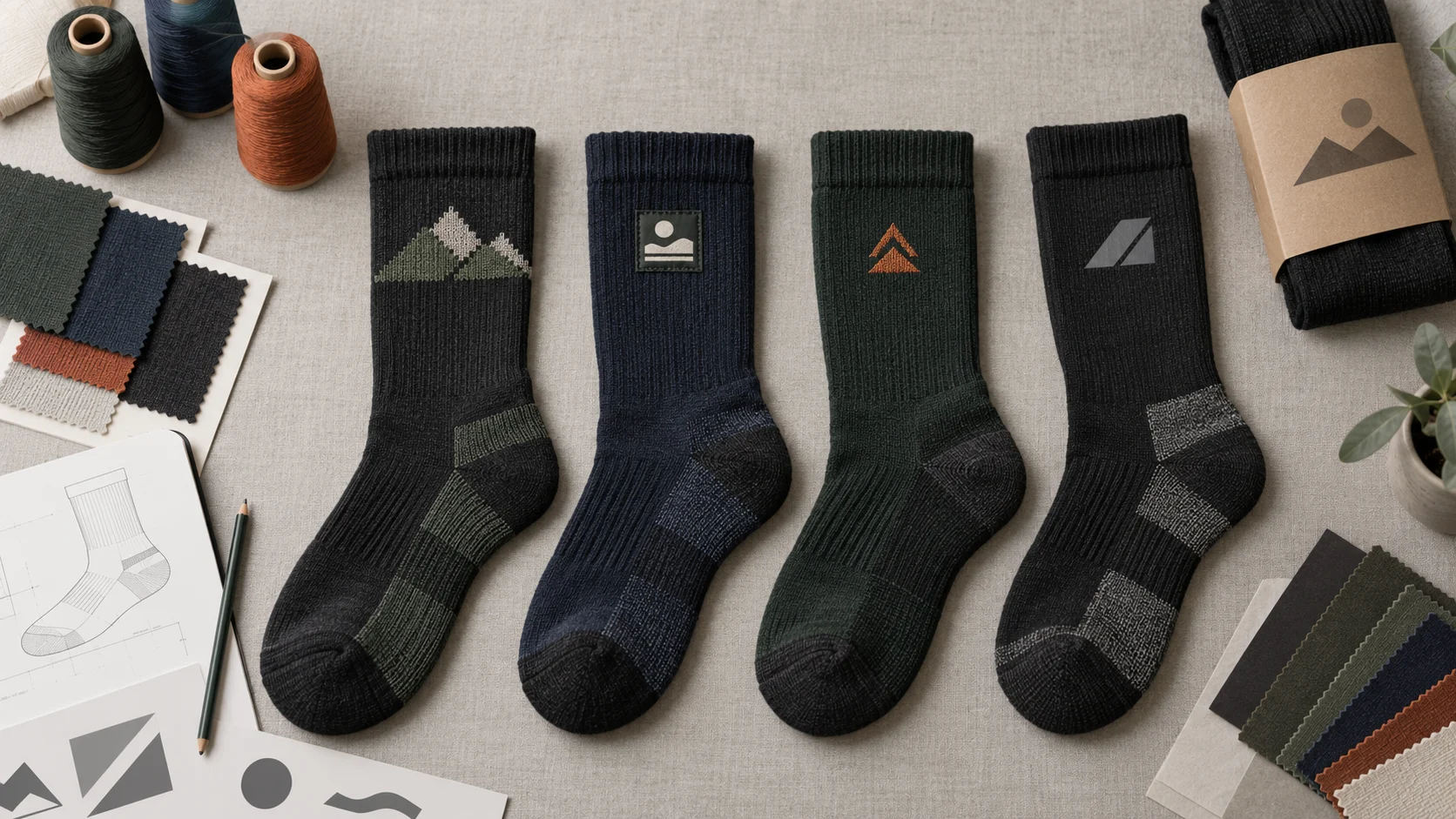
A knitted or jacquard logo is formed as part of the outer sock fabric. It can create a clean, durable look without attaching a separate badge. This direction works best for bold symbols, short names and artwork that remains recognizable with limited stitch resolution. It also keeps the decoration visually connected to the product.
The trade-off is detail. Very small lettering, thin outlines, gradients and many colors may need to be simplified. The logo also changes when the sock stretches on the leg, so the artwork proof should not be judged only while flat. Yarn choices, knitting capability and quantity per color can affect feasibility and MOQ. Approve both the relaxed appearance and the appearance on the intended size range.
2. Woven label: crisp detail with controlled placement
A woven label can reproduce compact text and consistent brand colors more clearly than some knitted logos. It is commonly considered for the cuff or upper leg, where it can remain visible above a shoe or boot. A folded or edge-finished label may also support a familiar apparel-brand presentation.
The label material, dimensions, edge finish and attachment method matter. A stiff label or rough corner can feel uncomfortable against the leg, while a label placed on a high-stretch zone may pull or distort. Stitching must be planned around the actual layered construction; it should never be assumed that a label can be sewn anywhere without affecting the membrane. Review the proposed position and seam path, then check the finished sample for comfort and waterproof integrity.
3. Embroidery: dimensional but construction-sensitive
Embroidery provides texture and a premium, dimensional appearance. It can suit a simple icon or wordmark on a stable, reinforced outer area. Thread color can be matched within available ranges, and the raised surface may help a private-label product look distinct from an ordinary knitted sock.
Waterproof socks make embroidery more sensitive than standard apparel. Dense stitching adds weight and local stiffness, while backing and thread tails can affect comfort. Needle paths must not be allowed to compromise a functional membrane. Depending on the construction and production sequence, the factory may recommend a restricted position, a lighter stitch plan or a different logo method. Buyers should never approve embroidery from a digital mockup alone.
4. Heat transfer or printed transfer: useful for fine graphics
A transfer can support fine artwork, small text or more graphic color treatment than a knitted logo. It may also be practical for a pilot program when an appropriate transfer type and setup are available. For a flexible sock, the decoration must flex with the outer material instead of cracking, lifting or creating an uncomfortable hard patch.
Temperature, pressure, dwell time, surface texture and adhesive compatibility all influence the result. Heat settings that are acceptable for one fabric can be unsuitable for another laminated construction. Test adhesion after repeated stretch, washing and drying, and inspect the edges for peeling. The supplier should validate the process on the actual product, not only on a loose fabric swatch.
5. Silicone or rubber badge and print: a technical visual direction
Silicone or rubber branding can create a tactile, outdoor-oriented appearance. A molded badge may carry raised detail, while a suitable printed treatment can produce a cleaner, lower-profile mark. These options can work well when a brand wants a technical cue rather than a traditional apparel label.
Added weight, thickness, flexibility and bonding area must be controlled. A heavy badge on a stretchy leg can sag or pull, and a rigid edge can catch on footwear. Bond strength should be checked after flexing, abrasion and care cycles. Mold or setup charges, available colors and minimum quantities may make this direction more suitable for a developed program than a very small exploratory order.
6. Packaging-first branding: a lower-risk pilot route
Product decoration is not the only way to launch a branded range. A buyer can pair an approved sock construction with a branded sleeve, hang tag, pouch, size sticker or care card. This approach may protect the clarity of a complex logo and can reduce the risk of changing a technical sock before market demand is proven.
Packaging-first does not mean generic presentation. Color, copy, barcode, material claims, sizing and channel requirements can create a strong private-label offer. Review the private-label packaging guide and confirm packaging minimums separately from the sock quantity.
Quick comparison of custom logo methods
- Knitted or jacquardIntegrated appearance and good everyday durability; best with simplified artwork and reviewed yarn-color limits.
- Woven labelCrisp details and controlled colors; requires comfortable edges, suitable placement and a reviewed attachment route.
- EmbroideryPremium raised texture; needs careful stitch density, backing, position and membrane-risk review.
- Heat transferUseful for fine or multicolor graphics; flexibility, adhesion and process temperature must be validated.
- Silicone or rubberTactile technical look; check weight, flex, bonding, mold cost and quantity feasibility.
- Packaging-firstStrong option for pilots or complex artwork; brands the retail offer without forcing unsuitable sock decoration.
Where should the logo be placed?
The cuff and upper leg are common starting points because they can remain visible above footwear and avoid high-pressure areas under the foot. The outer ankle may work for some constructions, but a boot can cover or rub it. Toe, heel and sole zones face repeated flex, abrasion or pressure and therefore need especially careful evaluation.
Provide the placement in millimeters from a clear reference point, not with an arrow on a lifestyle photo. Ask for left/right orientation, size-specific scaling and the logo’s direction when worn. Put the sample on a foot and inside the intended footwear: stretch can widen artwork, and a seemingly safe edge can become a pressure point.
Prepare artwork the factory can use
Supply vector artwork in AI, EPS, SVG or editable PDF when possible. Include logo dimensions in millimeters, color references such as Pantone targets, placement, background requirement and any minimum clear space. Identify which parts may be simplified and which brand details cannot change.
Request a production-oriented artwork proof showing the real method, color count and dimensions. Screen colors are not physical yarn, thread, ink or silicone standards, so an approved color reference should be defined. For multiple sock colors, state whether the logo color changes by SKU; every variation can affect sampling, setup and packing control.
Approve the sample with a repeatable test plan
A logo sample should be reviewed as a finished sock, not only as a decoration. Use the same checklist for supplier approval and incoming inspection so production is compared against a clear reference.
- AppearanceCompare size, position, orientation, line quality and color with the approved proof.
- On-foot stretchCheck distortion and legibility in the intended sizes while relaxed and worn.
- ComfortFeel for stiff patches, rough edges, backing, pressure points and footwear interference.
- Care and flexReview cracking, peeling, loose threads, curling or color change after agreed cycles.
- AbrasionEvaluate exposed edges and surfaces according to the product’s use and footwear contact.
- Waterproof integrityPerform the agreed finished-product check after decoration and compare with the approved standard.
Keep one signed or sealed reference sample and record any accepted tolerances. The private-label sample checklist provides a broader framework for approving the whole product.
How logo choices affect cost and MOQ
Cost is influenced by method, artwork complexity, dimensions, color count, placement, setup, molds, special materials and inspection. MOQ can be driven by yarn, label or transfer production as well as the sock itself. A total order may look sufficient while each logo-color and sock-color combination remains too small for an efficient run.
Send quantity by size, sock color and logo version. Ask the quote to separate any one-time setup, mold, artwork, sample and packaging charges from the unit price. If the preferred method is not feasible for a pilot, request two alternatives: a simplified product logo and a packaging-first route. See the OEM pricing guide for the other variables that shape a complete quotation.
Include these details in your logo RFQ
- Product briefSock height, construction, outer material, sizes, colors, use, season and footwear.
- Artwork filesVector logo, dimensions, color targets, permitted simplification and visual reference.
- Method requestPreferred logo treatment plus permission for the factory to recommend a safer alternative.
- PlacementMeasured position, orientation, left/right requirements and visibility goal.
- Order breakdownQuantity by sock color, size, logo color and packaging language or version.
- Approval scopePhysical sample, appearance, stretch, comfort, care, adhesion and waterproof checks.
- PackagingHang tag, sleeve, pouch, barcode, care text and any packaging-first branding option.
Custom Waterproof Socks Logo FAQ
What is the best logo method for custom waterproof socks?
There is no universal best method. The right choice depends on the artwork, sock
construction, stretch, placement, quantity and retail goal, and it should be
confirmed through a factory feasibility review and approved sample.
Can a logo damage the waterproof membrane?
An unsuitable needle, heat, pressure or attachment route can create risk. The factory
should review the decoration sequence and position, then verify the finished sample
with the agreed waterproof check.
Is jacquard better than embroidery?
Jacquard offers an integrated sock-like result and suits simplified artwork.
Embroidery provides a raised premium texture but can add stiffness and needs closer
construction review. The product brief determines which is more appropriate.
Which logo method is suitable for fine details?
A woven label or suitable transfer may reproduce fine detail more clearly than a
knitted logo, but comfort, stretch, adhesion and process compatibility still need
physical-sample approval.
Can the logo be placed on the sole?
Sole placement faces pressure, abrasion and footwear contact. It is not automatically
suitable; the exact construction, method and use must be reviewed and tested.
What files should I send for a custom logo?
Send vector artwork where possible, physical dimensions, color references, placement,
order quantities and any details that may or may not be simplified.
Can I use branded packaging instead of a logo on the sock?
Yes. Packaging-first branding can be practical for a pilot, complex artwork or a
proven sock platform, subject to packaging quantity and artwork approval.