What shapes an OEM waterproof socks quotation?
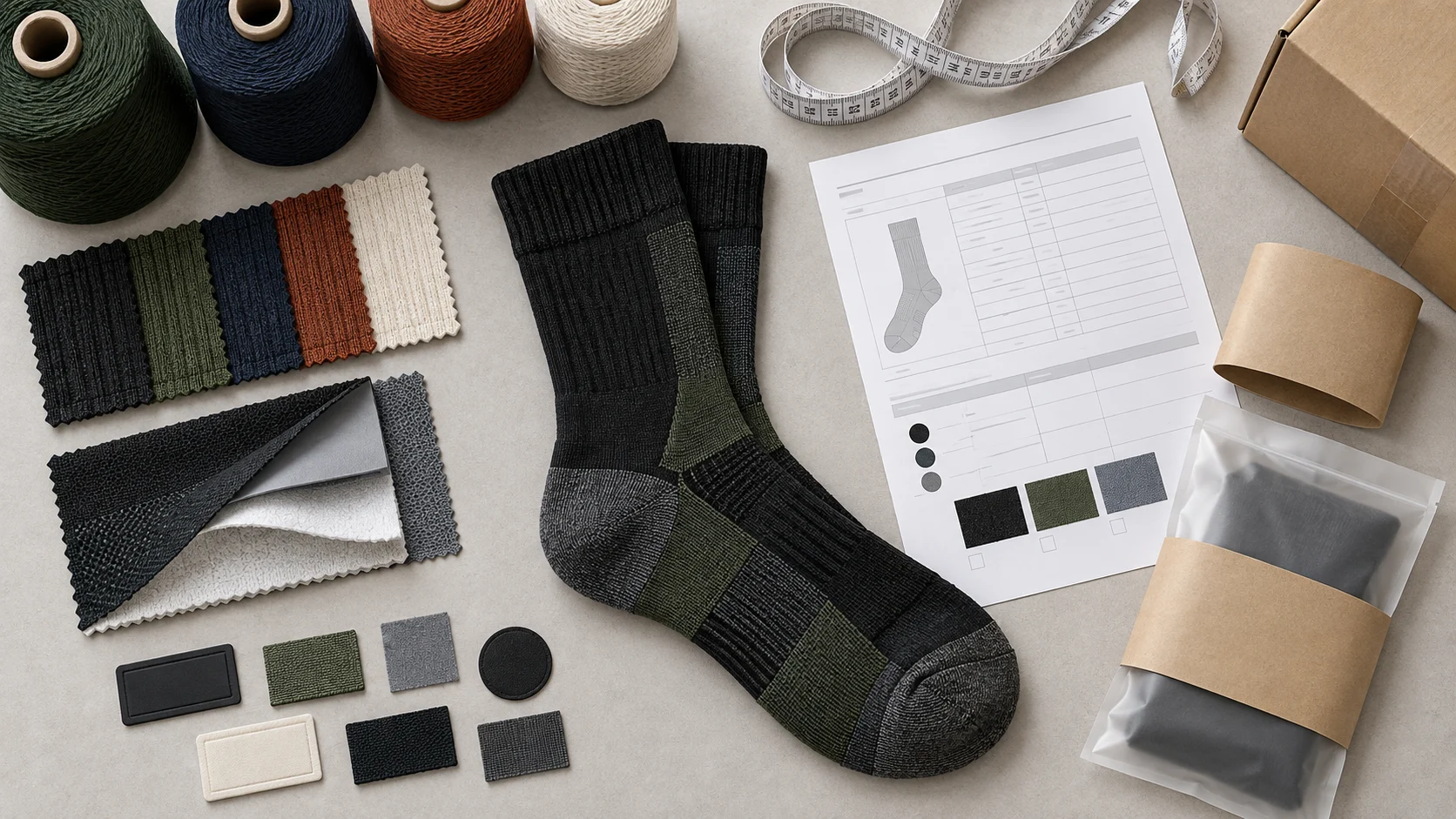
There is no reliable one-price answer for custom waterproof socks. A factory quote changes with sock height, three-layer construction, lining, size and color breakdown, logo method, packaging, testing, order quantity and delivery terms. Buyers receive more comparable quotations when every supplier prices the same written specification.
- Product construction
- Sock height, outer knit, membrane route, lining, thickness and reinforcement.
- SKU breakdown
- Quantity by size and color, not only the combined number of pairs.
- Branding
- Logo method, artwork size, colors, placement, labels and brand approvals.
- Packaging
- Polybag, sleeve, hang tag, pouch, box, barcode, care text and carton marks.
- Quality scope
- Samples, agreed tests, inspection level, reference standard and documentation.
- Delivery basis
- Destination, shipment method, trade term and which charges the quote includes.
Why custom waterproof socks do not have one standard price
“Waterproof sock” describes a category, not a finished specification. Two products can look similar in a photo while using different heights, yarn weights, lining constructions, membrane systems, reinforcement zones and packaging. A lightweight cycling sock and a warm knee-high winter sock should not be compared as if they are the same product.
The practical quotation formula is simple: product specification + branding + packaging + SKU quantities + quality requirements + delivery basis. If one part is missing, the supplier must make an assumption. Different assumptions create prices that look comparable but describe different products. A factory-ready waterproof socks tech pack gives every supplier the same starting point.
1. Sock height changes material use and positioning
Ankle, crew, mid-calf and knee-high socks do not use the same amount of knitted and laminated material. Height can also change the cuff construction, knitting time, packaging size and shipping volume. A taller product may support fishing, wet grass or workwear positioning, while a lower-volume style can fit closer footwear.
State the required height and finished measurements rather than asking only for a “standard waterproof sock.” If more than one height is needed, request separate quotations so the cost of each SKU remains visible.
2. Three-layer construction, thickness and warmth matter
A typical three-layer waterproof sock combines a knitted outer layer, a waterproof breathable membrane and a comfort lining. The complete construction—not one material name alone—determines the finished feel, stretch, footwear fit and performance direction. A thinner technical sock and a warmer terry-lined product require different materials and processes.
Buyers should define the target activity, season, footwear and thickness before comparing prices. Review the three-layer material guide when the outer yarn, membrane and lining still need to be selected.
3. Lining material affects both cost and product story
Coolmax, bamboo-derived textiles, merino wool blends, polyester and warmer terry constructions serve different customer needs. The fiber name is only the beginning: content percentage, yarn specification, lining density and target warmth should also be confirmed. A premium material claim must match the approved production material and labeling.
If the lining has not been chosen, tell the supplier whether moisture management, warmth, soft hand feel or lower bulk is the priority. The waterproof sock lining guide helps buyers compare the main directions before sampling.
4. Sizes, colors and SKU fragmentation change the economics
A total order of 500 pairs can be simple or highly fragmented. Five hundred pairs in one color and a concentrated size range are operationally different from the same total split across five colors, several sizes and multiple packaging languages. Smaller quantities per SKU can add material preparation, changeover, labeling, sorting and packing work.
Send quantity by color and size in the first request. This lets the factory review material minimums, size ratios and production feasibility instead of pricing only an attractive total quantity that does not reflect the real order.
5. Logo method, size and placement must be specified
Custom branding can include knitted or jacquard artwork, embroidery, a woven label, printed transfer, silicone detail or another reviewed method. These options do not have the same setup, production time or appearance after stretch. The number of colors, logo dimensions, placement and required durability all matter.
Supply a vector logo when available and show its intended position on the sock. Request one approved branding method rather than asking suppliers to price an undefined “custom logo.” For a broader brand plan, see the private-label branding guide.
6. Private-label packaging can be basic or retail-ready
A clear bag with a size sticker has a different cost structure from a printed sleeve, hang tag, reusable pouch or retail box. Barcodes, care labels, multilingual copy, marketplace labels and carton marks add useful selling and logistics functions, but they also add artwork, printing and packing requirements.
Ask the quotation to show what is included: individual packaging, printed materials, barcode application, inner packs and export cartons. The private-label packaging guide can help match the package to the sales channel without overbuilding the first order.
7. Order quantity and small-order economics
Stock products can be evaluated from one pair, while the workable starting quantity for a custom project depends on materials, colors, sizes, logo and packaging. Summitdry welcomes trial, small and large orders, but not every special material or packaging method is feasible at every quantity. A supplier should confirm the route after reviewing the complete brief.
Small pilot orders can reduce first-inventory risk and provide real feedback on fit, colors and size demand. Their unit cost may be higher because sample work, artwork, setup and material preparation are distributed across fewer pairs. Buyers should compare unit price, total cash commitment and unsold-inventory risk together.
8. Samples, testing and inspection are part of the buying cost
An in-stock sample helps evaluate the general structure and fit direction. A custom sample confirms the selected material, colors, logo and construction. A packaging sample may also be required before printing a bulk run. The first custom sample normally takes about 3–5 days after the specification is confirmed; special materials, complex artwork, testing and shipping can add time.
Define the agreed finished-sock waterproof check, measurement tolerances, visual standard and inspection scope before production. These controls are not simply extra costs; they reduce the much larger risk of approving the wrong product. Use the sample approval checklist to document the decision.
9. Shipping terms determine whether prices are truly comparable
Product price is not the same as landed cost. Confirm the destination, shipment method and trade term for every quote. EXW, FOB, CIF and DDP divide freight, customs and risk responsibilities differently. Express, air, sea, rail and other routes also suit different order sizes and delivery windows.
Ask whether sample freight, export cartons, origin charges, inspection and destination charges are included. Import duties, taxes and regulatory obligations depend on the destination and should be confirmed with a qualified local adviser. A low product price can become a poor buying decision when the delivery scope is unclear.
Choose the right route: stock sample, custom sample, pilot or bulk
- In-stock sample Check general sizing, thickness, comfort and the basic product direction before customization.
- Custom sample Approve materials, color, logo, dimensions and construction against the written brief.
- Small pilot order Test sales, reviews and the real size mix while controlling first-inventory exposure.
- Bulk production Scale an approved SKU after the product, channel and replenishment plan have been validated.
How to reduce cost without weakening the product
- Concentrate the first rangeLaunch the colors and sizes the channel actually needs instead of fragmenting the opening order.
- Start from a proven constructionUse an established platform where it fits, then add special materials after demand is clearer.
- Choose one main logo treatmentAvoid stacking several decoration methods on a first production run.
- Match packaging to the channelDo not choose a complex retail box when a sleeve, pouch or simple bag will do the job.
- Provide the full breakdown onceSizes, colors, quantities and artwork supplied together reduce repeated quotation and sampling work.
- Approve before scalingConfirm the finished sock and packaging files before materials and printing are committed.
Use this checklist to request a comparable quotation
Send the same information to every potential supplier. If one item is not decided, write “supplier recommendation requested” so the factory knows to propose an option rather than make an invisible assumption.
- Market and useCountry, sales channel, activity, season and intended footwear.
- ProductHeight, three-layer construction, lining, thickness, warmth and reinforcement.
- SKUsSize range, colors and quantity by each color-size combination.
- BrandingLogo file, method, colors, dimensions, placement and label requirements.
- PackagingPackage type, artwork, barcode, care copy, language and carton marks.
- ApprovalSample route, required tests, inspection scope and approved reference.
- DeliveryDestination, target date, shipment preference and requested trade term.
- ReferencesPhotos, tech pack, size chart and any performance documents to review.
How to compare two waterproof socks quotations
Check that both prices cover the same height, construction, lining, sizes, colors and quantity breakdown. Then compare logo method, packaging, sample work, testing, inspection, payment terms, trade terms and delivery scope. Also review quote validity and material availability. If any item differs, ask for a revised like-for-like quote before selecting a supplier.
The lowest visible unit price is not always the lowest total purchasing risk. A clear specification, responsive development process, approved sample and documented quality plan can be more valuable than a small price difference that depends on missing requirements. Buyers can also compare OEM, ODM and white-label routes before deciding how much development the first order needs.
Custom Waterproof Socks Pricing FAQ
How much do custom waterproof socks cost?
There is no universal price per pair. An accurate quote requires the height,
materials, size and color quantities, logo, packaging, testing and delivery basis.
Can I order custom waterproof socks in a small quantity?
Trial, small and large orders are welcome, but feasibility depends on the selected
construction, materials, colors, sizes, logo and packaging. Stock products can be
evaluated from one pair.
Does adding a logo increase the price?
The effect depends on the logo method, dimensions, number of colors, placement and
order quantity. Jacquard, embroidery, labels, transfers and silicone details should
be quoted against the same artwork requirement.
Does custom packaging cost more?
Packaging cost varies with the format, material, printing area, labels, barcode,
language versions and quantity. A simple bag and a printed retail box are not the
same quotation scope.
How long does a custom waterproof sock sample take?
The first custom sample normally takes about 3–5 days after requirements are
confirmed. Special materials, complex designs, testing and shipping may add time.
How can buyers lower first-order risk?
Evaluate an in-stock sample, approve a custom sample, concentrate the opening size
and color range, and use a small pilot order when appropriate before scaling.
What is the best way to compare supplier prices?
Ask every supplier to quote the same written specification, SKU quantities,
packaging, quality scope, payment conditions and trade term.