Choose the right development route for a waterproof sock brand
OEM, ODM, private label and white label are often used loosely, but they imply different levels of customization, development work and inventory commitment. Buyers should define the required product changes instead of relying only on a business-model label.
White label starts with an existing product
A white label route normally uses an existing waterproof sock construction with limited changes such as packaging, labels or selected available colors. It can shorten development time and reduce technical risk because the underlying product has already been made. The buyer should still test fit and performance before selling it under a new brand.
Ready-stock products can support very small market tests and have no MOQ when purchased as available stock. Adding custom packaging or relabeling creates a separate work scope and may require practical minimum quantities. Confirm which elements can change without moving the project into custom production.
Private label focuses on brand presentation
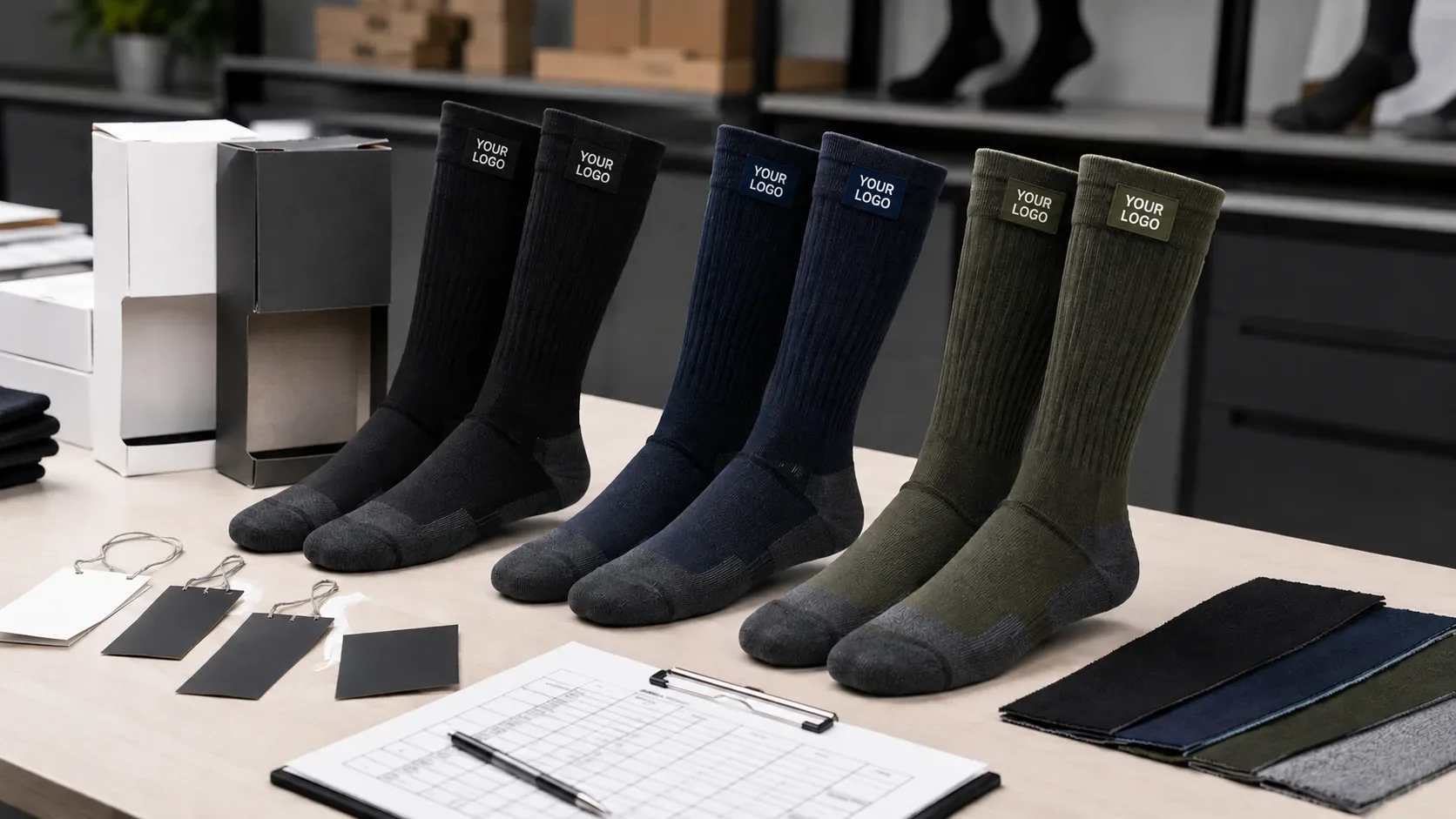
Private label waterproof socks may keep a proven base construction while adding buyer-selected colors, logos, labels, barcodes and retail packaging. This route suits outdoor retailers, marketplace sellers and distributors that need a consistent branded offer without developing every technical layer from the beginning.
Brand ownership does not remove the need for accurate product information. Packaging should explain the three-layer structure, the open cuff boundary, materials, sizing and care. Claims should match the actual product and supporting evidence rather than a competitor listing.
OEM follows the buyer's specification
In an OEM project, the buyer supplies or approves detailed requirements for height, size, outer design, membrane route, lining, reinforcement, color, logo and packaging. The waterproof socks factory develops samples to meet that specification and produces the approved version.
A strong OEM brief includes the target use and footwear, not only artwork. Technical decisions affect thickness, warmth, stretch and water performance. The first sample normally takes 3-5 days after details are confirmed, but complex materials or revisions can change the schedule.
ODM includes more supplier-led development
ODM can involve the supplier proposing a product direction based on the buyer's channel, price position and use case. The factory may recommend an existing platform, material combination, height and feature package, which the buyer then reviews and brands.
The parties should clarify which design files, molds, artwork, test reports and specifications can be reused or shared. Do not assume that the term ODM automatically transfers exclusive ownership. Any exclusivity, territory or confidentiality requirement should be agreed in writing before development.
Compare MOQ and cost by actual customization
The custom MOQ is typically 50 pairs per color per size. A logo color change, unique yarn color, special lining, knee-high construction or retail box can each affect the practical order quantity and cost. A white label project using available stock may start much smaller.
Quotation should separate the sock, logo method, labels, packaging, sample work and delivery terms where useful. Final price depends on height, quantities, materials and packaging. Sample fees can be refunded after an order is placed under the agreed project terms.
Protect brand and artwork accuracy
Send logo files in usable formats and provide color references, safe areas and minimum size rules. Check how the logo looks on the unstretched sock and when worn. Small lettering may lose clarity in knitting, while a thick applied label may affect comfort or packaging.
Approve each artwork item separately: sock logo, size mark, care label, hang tag, bag, box, barcode and carton mark. Keep version numbers so an older file is not packed with a new product. The buyer remains responsible for confirming rights to supplied trademarks and artwork.
Use samples to decide the route
A buyer unsure between white label and OEM can first review available stock and existing constructions. If the fit, performance and market position already work, branding changes may be enough. If the footwear, climate or target price requires a different thickness, lining or height, custom development is more appropriate.
Compare samples using the same checklist: foot fit, shoe compatibility, cuff comfort, stretch recovery, water performance, wash response and packaging clarity. This keeps the decision focused on the product rather than on whichever business label sounds more advanced.
Send a decision-ready brief
Tell the factory whether the priority is speed, low initial quantity, unique branding, exclusive construction or a target cost. Include sizes, colors, quantity by SKU, material preferences, logo, packaging, destination and launch timing. These facts allow the supplier to recommend a realistic route.
Zhuji Routing Knitting Co., Ltd. supports stock, wholesale, white label, private label, OEM and ODM waterproof accessory programs. We manufacture three-layer waterproof socks in Zhuji, Zhejiang and can develop matching waterproof hats and gloves for broader outdoor product ranges.
OEM vs ODM vs White Label Waterproof Socks FAQ
What are white label waterproof socks?
They normally use an existing product with limited branding or packaging changes, allowing a faster and lower-risk launch.
What is an OEM waterproof sock project?
The factory produces a product according to buyer-supplied or buyer-approved specifications and samples.
What is the typical custom MOQ?
Custom production typically starts at 50 pairs per color per size, while available stock has no MOQ.
Does ODM automatically give the buyer exclusive ownership?
No. Ownership, exclusivity, territory and confidentiality should be agreed in writing for the specific project.
Can sample fees be refunded?
Sample fees can be refunded after an order is placed under the agreed project terms.