
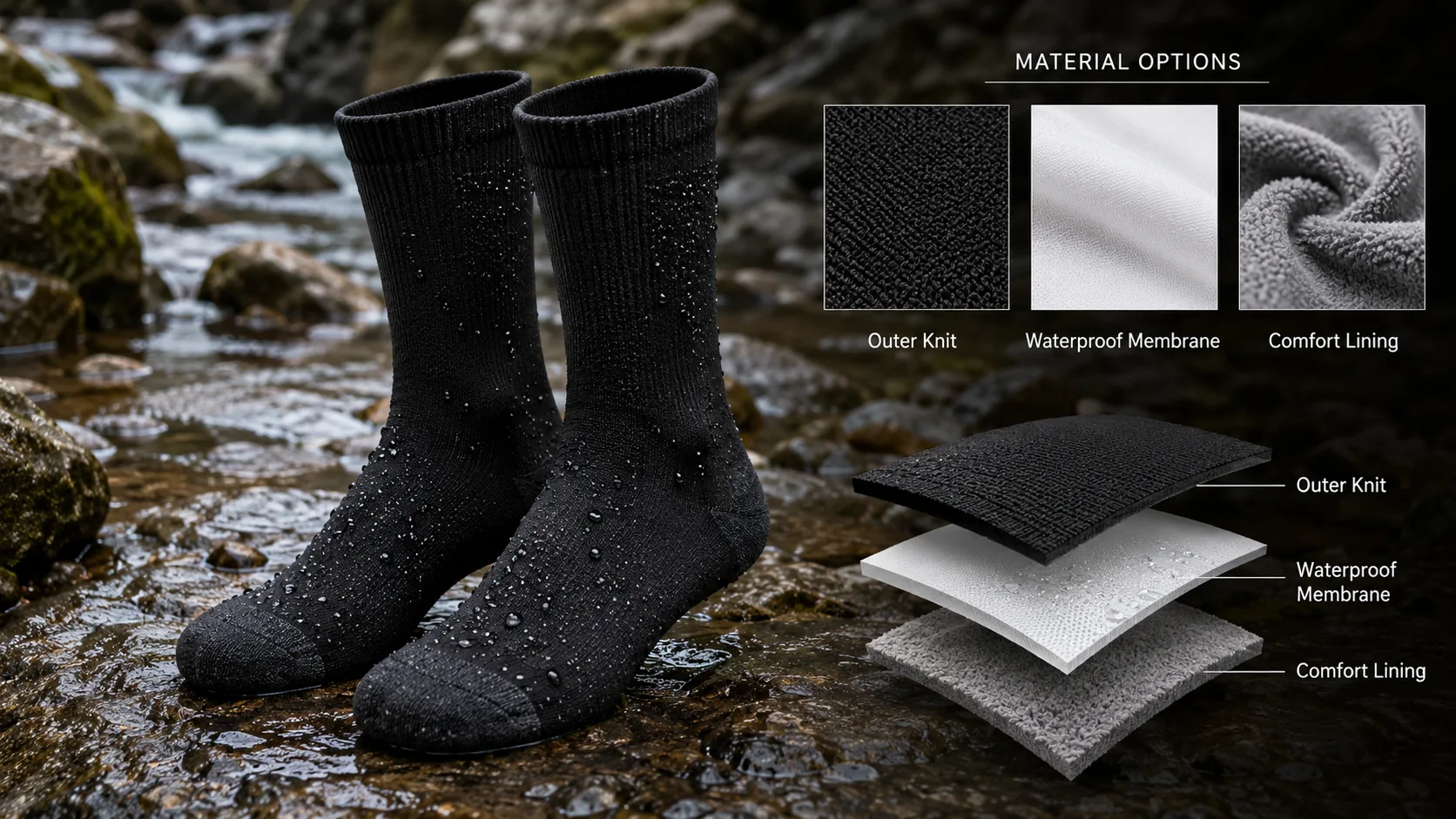
From separate materials to a finished waterproof sock
Three-layer waterproof socks require more than ordinary sock knitting. The outer textile, waterproof breathable membrane and lining must be selected, bonded, shaped and finished as one wearable product. Each stage affects stretch, seam feel, waterproof performance and repeat-order consistency.
Start with the target product brief
Manufacturing decisions begin with the end use. A slim cycling sock, a warm hunting sock and a knee-high fishing sock may all use three layers, but they require different thickness, stretch, reinforcement and lining choices. The buyer should define the target user, footwear, climate, height and sales channel before materials are finalized.
The brief should also include quantities by color and size, logo method, packaging and destination country. These details affect yarn preparation, labeling, sample construction and inspection. A vague request for a waterproof sock can create repeated sampling because the factory has no basis for choosing among several workable constructions.
Select the outer knit, membrane and lining
The outer layer needs stretch, recovery and abrasion resistance. Reinforced heel and toe zones can support outdoor and workwear use. The middle membrane provides the water barrier, while the inner lining controls skin feel, warmth and moisture handling. Coolmax, bamboo-derived blends, merino wool and warm terry each create a different product direction.
The three components must be compatible. A lining that feels soft as a separate fabric may become bulky after bonding. An outer knit with aggressive stretch may place stress on the membrane. Material approval should therefore use the combined structure, not only separate swatches.
Control lamination conditions
Lamination joins the textile layers into a stable composite. The bonding route must distribute adhesion without creating hard areas, wrinkles or blocked stretch. Heat, pressure, time and adhesive behavior need to suit the selected materials. The correct settings are production knowledge that should be controlled for repeat orders.
After bonding, the material should be checked for evenness, hand feel, elasticity and visible defects. Small inconsistencies can become more noticeable after the material is shaped around the heel, toe and ankle. Buyers do not need to specify factory machine settings, but they should approve the feel and performance of the finished sample produced by the intended route.
Shape the sock for foot movement
A foot is not a flat tube. The finished construction needs room at the toe, a stable heel pocket, stretch across the instep and controlled tension at the ankle and cuff. Layer alignment during shaping affects whether the sock feels natural or creates pressure and folds inside footwear.
Size grading must preserve these relationships from the smallest to the largest size. Simply enlarging every measurement by the same percentage can produce a loose heel or tight cuff. A custom sample should be tested on feet within the intended size range and with the shoes or boots planned for the market.
Manage seams and stress points
Toe and closure areas require careful workmanship because the wearer feels them during every step. A rough, thick or poorly positioned seam can create discomfort even when the membrane remains waterproof. Heel, toe and flex zones also experience repeated abrasion and bending.
Inspection should check for skipped stitches, loose threads, uneven joining, membrane exposure, hard adhesive areas and inconsistent reinforcement. The goal is not only to pass a short water check; it is to deliver a sock that remains comfortable enough for the intended activity and footwear.
Test the finished construction
Material reports are useful, but finished socks require their own checks. Factories and buyers can evaluate dimensions, weight, stretch recovery, appearance, seam feel, cuff comfort and water penetration through the sock body. Samples should also be washed and dried according to the planned care instructions.
Wear trials reveal issues that a bench test cannot show, such as tight shoes, heel movement or moisture accumulation during activity. Record the size, footwear, duration and conditions of the trial. A repeatable test record gives the buyer a better approval basis than a photograph of the sock standing in water.
Approve logos and packaging as part of production
Logo placement must remain legible after the sock stretches. Woven labels, jacquard details, printed packaging, size stickers and barcodes should all match the approved SKU. Material composition and care wording should reflect the actual production materials rather than an early development concept.
Before bulk packing, confirm pair matching, folding method, insert cards, bags or boxes, carton quantity and shipping marks. Packaging is part of the production system because a correct sock in the wrong size bag or with the wrong barcode can still be rejected by a retailer or marketplace warehouse.
Keep a repeatable production record
The waterproof socks factory should connect each order with an approved sample, bill of materials, size measurements, color references, artwork and packing instructions. This record helps control reorders and makes it easier to identify the source of a difference if a customer reports a problem.
Zhuji Routing Knitting Co., Ltd. supports OEM and private label development in Zhuji, Zhejiang. The first custom sample normally takes 3-5 days after specifications are confirmed, and the typical custom MOQ is 50 pairs per color per size. Final timing and price depend on the selected construction and order details.
How 3-Layer Waterproof Socks Are Made FAQ
What are the three layers in waterproof socks?
They are a protective knitted outer layer, a waterproof breathable membrane and a comfort lining.
Why is lamination important?
Lamination keeps the layers aligned and stable while preserving the stretch and feel needed for a wearable sock.
Are waterproof socks made like ordinary socks?
They include sock-forming skills, but the membrane, bonding, layer alignment and finished-product testing add technical steps.
How long does the first OEM sample take?
The first version normally takes 3-5 days after materials, construction, size, color, logo and packaging are confirmed.
What should buyers approve before bulk production?
Approve the combined material structure, fit, dimensions, seam feel, water performance, logo, labels, packaging and carton details.