
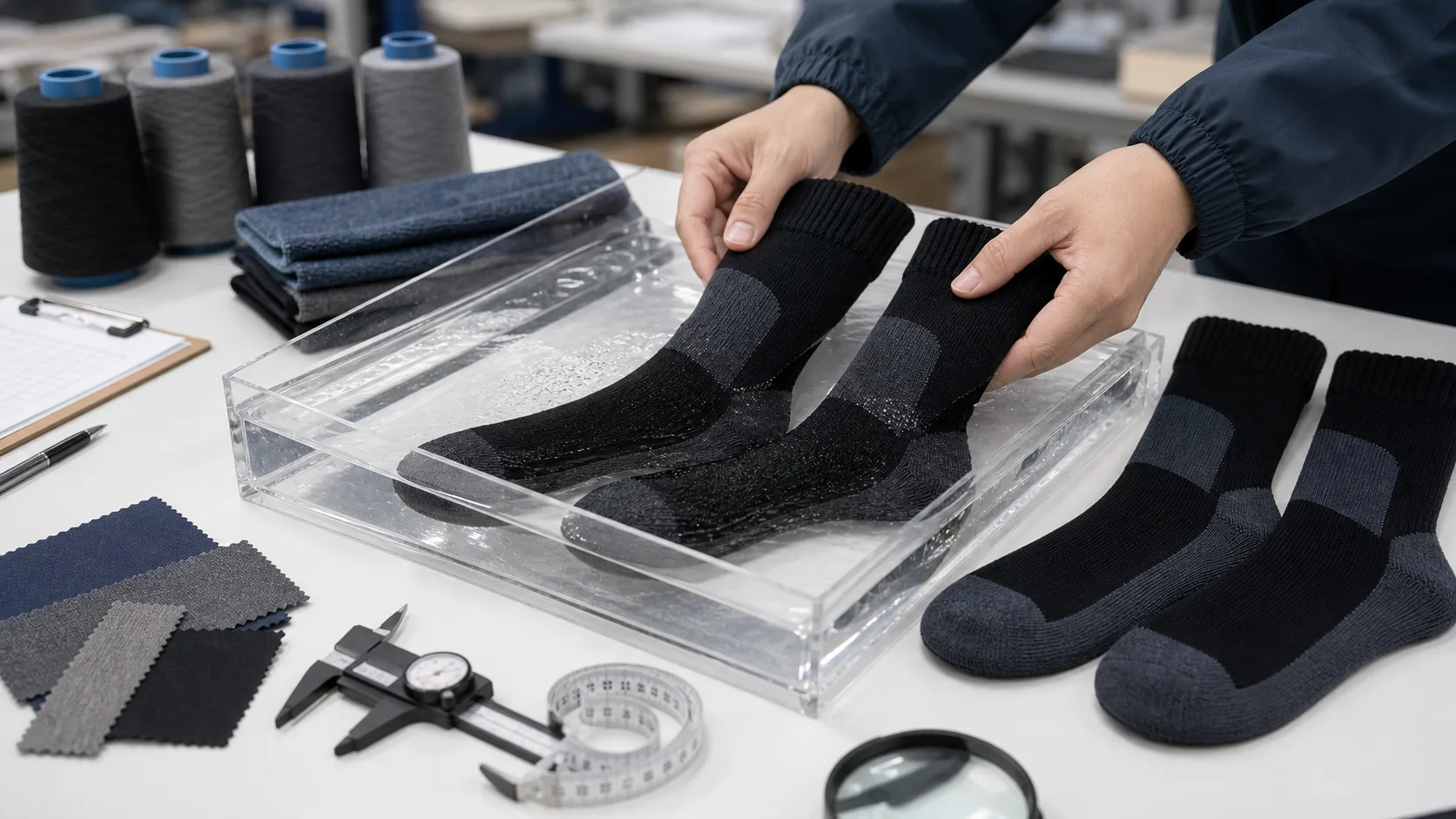
A practical inspection plan for three-layer waterproof socks
Waterproof socks quality control should compare the bulk order with an approved sample and written specification. Inspection needs to cover the complete product: materials, dimensions, stretch, construction, waterproof performance, appearance, pair matching, labels, packaging and carton information.
Create an approval standard before production
Quality control starts before the bulk order. The buyer and supplier should agree on the three-layer construction, size measurements, weight or thickness direction, colors, logo position, packaging and functional checks. An approved physical sample is useful, but it should be supported by written details so hidden differences are not overlooked.
Photograph the approval sample from consistent angles and record the date and version. If a later change is accepted, update the record rather than relying on chat history. One clear standard prevents the factory, inspector and buyer from comparing the bulk goods with different development samples.
Verify materials and layer construction
Confirm that the bulk socks use the approved outer knit, membrane and lining. Check yarn color, hand feel, visible reinforcement, lining character and overall thickness against the sample. A material with a similar color can still change stretch, warmth, drying behavior or shoe fit.
The membrane is hidden, so traceability and performance checks matter. Ask the factory to maintain material records and notify the buyer before substitutions. Inspection can compare finished water performance and construction feel, while supporting documents help confirm that the intended material route was used.
Measure sizes by an agreed method
Sock length, foot length, leg height, cuff width and other points can vary depending on how the sock is placed and tensioned. Define the measurement method, resting time and tolerance before inspection. Use the same method for the approval sample and bulk goods.
Inspect more than one pair from each size and color. A single correct sample cannot show variation across the order. Review pair matching as well: left and right socks should be consistent in length, color, logo placement and overall shape. Size labels and packaging stickers must match the actual product.
Check workmanship and comfort risks
Look for holes, skipped stitches, loose threads, uneven cuffs, distorted heels, toe defects, wrinkles, delamination signs and hard areas. Reinforcement should be positioned consistently. Logos should remain readable and should not create uncomfortable bulk inside the shoe.
Hand inspection should include the inside surface and seam areas. Wear trials on representative sizes can identify toe pressure, slipping, cuff restriction or excess volume. These issues may not appear in a visual inspection but can generate returns after customers use the product in fitted footwear.
Use a defined waterproof performance check
Agree on how finished socks will be checked for water penetration through the body. The method should control water level, test duration, sample preparation and the way moisture is detected. Keep the cuff above the test water unless the purpose is specifically to demonstrate that water can enter through the opening.
A dramatic water photo is not a complete quality record. Record the sample number, size, test condition and result. When a failure is found, preserve the sock for analysis rather than immediately discarding it. The location and pattern of moisture can help identify material damage, construction defects or test-method errors.
Inspect packaging and traceability
Packaging inspection should verify product name, size, color, barcode, material statement, care instructions, country language and artwork version. Check that the bag, pouch, sleeve or box protects the socks and that any customer-facing waterproof claim matches the approved wording.
Carton marks, SKU labels, carton quantity, gross weight and dimensions should match the packing list and warehouse instructions. Lot or production references are useful when goods are distributed to several countries or sales channels because they allow complaints to be connected with a specific batch.
Set an inspection sampling plan
The number of units inspected should reflect order size, retailer requirements, product risk and the buyer's quality agreement. Some buyers use an AQL-based plan, while others require fixed checks or additional functional samples. The acceptance criteria and defect categories should be agreed before the inspector arrives.
Functional checks may be destructive or time-consuming, so their sample quantity can differ from visual checks. Do not assume that one universal plan fits every order. A new construction, new material or first order may justify broader review than a stable repeat order with an established production history.
Handle defects with evidence and corrective action
If a problem appears, contact the waterproof socks factory promptly with order number, size, color, quantity affected, photographs, test conditions and retained samples. In most cases serious problems are not expected, but clear evidence allows the actual situation to be evaluated efficiently.
The response should depend on the confirmed cause and scope. Possible actions may include sorting, rechecking, repair where appropriate, replacement planning or process correction for future orders. Zhuji Routing Knitting Co., Ltd. reviews reported issues according to the actual circumstances rather than applying one automatic answer to every case.
Waterproof Socks Quality Control for Bulk Orders FAQ
What should a waterproof socks inspection cover?
It should cover materials, three-layer construction, measurements, workmanship, water performance, pair matching, labels, packaging and cartons.
Why is an approved sample important?
It gives the buyer, factory and inspector a shared physical reference for appearance, feel and construction.
Should the cuff be submerged during a body waterproof test?
Normally the cuff stays above the water when testing the sock body because a standard cuff is an open entry point.
Can every order use the same sampling plan?
No. The plan should reflect order size, product risk, retailer requirements and whether the construction is new or established.
What information helps investigate a complaint?
Provide the order and lot reference, size, color, affected quantity, photos, test conditions and retained product samples.