
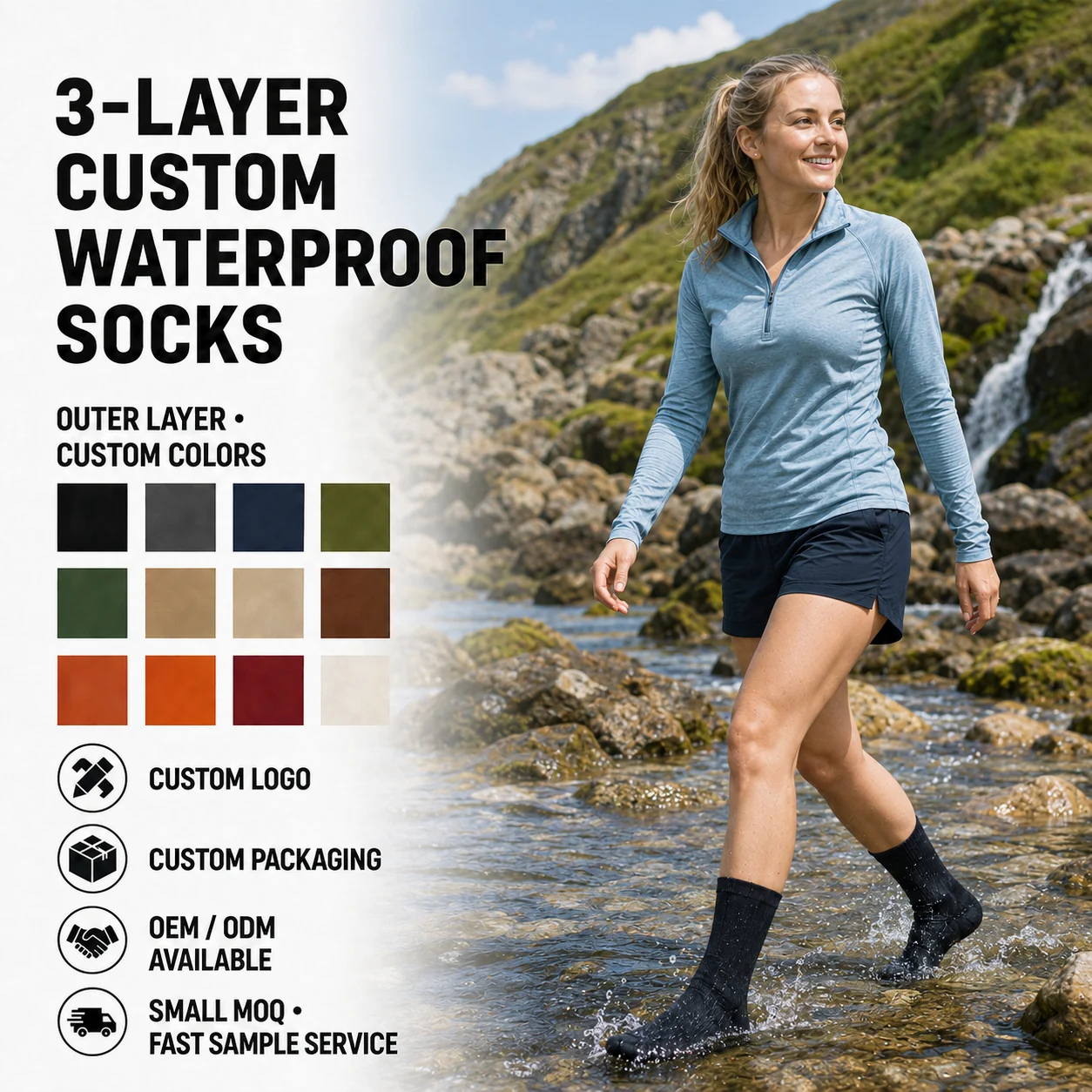
A factory-ready product brief for custom three-layer waterproof socks
A logo file and a target price are not enough to define custom waterproof socks. The factory also needs to understand where the socks will be used, which footwear they must fit, how warm and thick they should feel, which sizes and colors are needed, and what must be approved before production. A structured tech pack keeps the quote, sample and bulk order aligned to one written specification.
- Custom logo
- Discuss jacquard branding, woven labels, transfers or another feasible logo method.
- Custom colors and patterns
- Plan the base color, contrast areas, graphics and physical color references.
- Custom materials and lining
- Select the outer yarn, membrane route, lining feel, warmth and reinforcement direction.
- Custom height and sizes
- Develop ankle, crew, mid-calf, knee-high or project-specific sizing where feasible.
- Private-label packaging
- Prepare hang tags, sleeves, bags, boxes, barcodes, care text and carton marks.
- OEM/ODM sample development
- Confirm the specification, sample checks and approval route before bulk production.
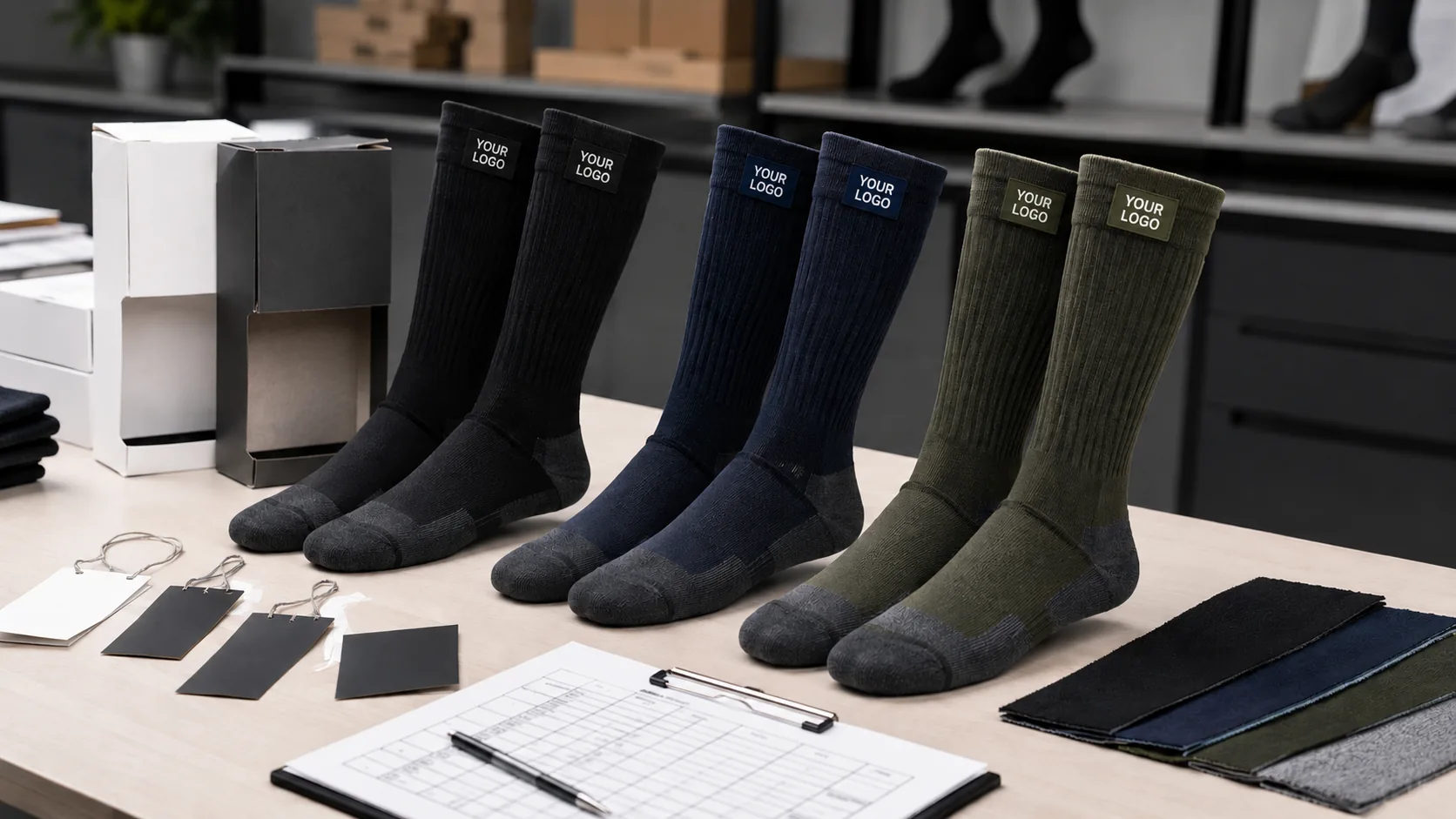
What is a custom waterproof socks tech pack?
A tech pack is the working product specification shared by the buyer and factory. It combines written requirements, measurements, artwork, reference images, packaging instructions and approval criteria. It does not need to be a complicated fashion document at the first inquiry stage. A clear spreadsheet, annotated PDF or structured email can begin the feasibility review.
Before bulk production, however, all decisions should be consolidated into one controlled version. The final document and approved physical sample should identify the same construction, sizes, colors, logo, labels and packaging. This reduces the risk of one team quoting an early idea while another team approves a different one.
1. Start with the user, weather and footwear
Describe the main customer and activity before choosing materials. Waterproof socks for hiking boots, cycling shoes, fishing footwear, work boots and rainy commuting do not need the same balance of thickness, warmth, height and stretch. State the sales market, season, expected weather and primary use rather than asking for one product that claims to serve every possible condition.
Include the intended footwear type and available space inside the shoe or boot. A three-layer sock is normally thicker than a basic single-layer knit, so footwear fit should be tested with representative sizes. Also define the expected wet condition. Waterproof socks are designed for wet outdoor use, not swimming or continuous full submersion, and water can enter when it rises above the cuff.
2. Define the three-layer construction
A typical construction combines a knitted outer layer, a waterproof breathable membrane and a comfort lining. In the tech pack, describe the performance direction for the complete sock instead of selecting one membrane number in isolation. The outer yarn, bonding quality, lining, seams, cuff and finished shape all affect the wearer's experience.
Record any required material documentation or agreed finished-sock test method. Do not copy a waterproof or breathability claim from a material sheet directly onto packaging unless the evidence and claim scope have been checked. Buyers who need a deeper comparison can review how the three-layer waterproof sock structure works and the three-layer material guide.
3. Choose sock height, cuff and coverage
Specify whether the project needs ankle, crew, mid-calf, knee-high or another approved height. Add the intended cuff position on the leg and explain why that height fits the use case. Cycling and general outdoor programs may prioritize easy shoe compatibility, while fishing, wet grass and workwear programs may require more leg coverage.
The cuff brief should describe comfort, stretch and hold rather than only a flat width. If a grip treatment, strap or special top construction is requested, show its position and intended function. Coverage is still limited by the opening: even a taller sock can take in water from the top when the water level exceeds the cuff.
4. Select lining, warmth and thickness
State the target climate and skin feel, then identify the preferred lining direction. Options can include moisture-management yarns such as Coolmax, bamboo-derived textiles, merino wool blends, polyester or warmer terry constructions, subject to feasibility and the confirmed material specification. The waterproof sock lining guide explains the main trade-offs.
Avoid describing the product only as “thin” or “warm.” Give the factory a reference shoe, target season and comparative product when available. Identify areas where cushioning or reinforcement is wanted and areas that must stay lower bulk. A sock that feels comfortable in a hiking boot may be too thick for a close-fitting cycling shoe, even when both use a similar waterproof layer system.
5. Build the size range and measurement method
List the target foot ranges, market size labels and quantity planned for each size. Define the measurements that will be checked, such as relaxed foot length, leg height, cuff width and overall shape. The measuring method matters because stretching or flattening a knitted product differently changes the result.
Do not apply one visual scale factor to every part of the sock. Size grading must preserve fit, membrane integration and cuff comfort across the range. Agree how measurements are taken and what tolerance is acceptable before sample approval. See the waterproof sock size grading guide for a more detailed buyer checklist.
6. Mark colors, patterns and reinforcement zones
Provide color references that can be physically confirmed. Screen colors alone are not reliable for close matching, and a newly developed yarn shade may affect order planning differently from an available color. Separate the base color, contrast areas, logo color and packaging colors in the specification.
Annotate patterns and reinforcement zones on front, back, side and sole views. State whether a visual panel is decorative or must provide cushioning, abrasion resistance or support. Complex patterns, many color changes and special yarns should be reviewed for feasibility before final artwork is treated as approved.
7. Specify the logo method, size and placement
A logo instruction should include vector artwork, dimensions, colors, placement, orientation and method. Depending on the design and construction, branding may use a knitted or jacquard mark, woven label, printed transfer or another agreed solution. The best method depends on detail, stretch, surface texture, quantity and intended appearance.
Review the logo on a worn sample, not only while the sock lies flat. A mark can change shape when stretched, and placement near the cuff or ankle may look different inside footwear. The private-label branding guide covers logo and channel positioning in more detail.
8. List labels, packaging and barcode requirements
Attach the packaging format, dieline, artwork language, size label, barcode, care text, warning text, importer information and carton marks required for the project. Confirm which details come from the buyer and which the supplier is expected to prepare. Destination-market requirements should be checked with qualified local sources rather than assumed from another country's packaging.
Every SKU should connect to the correct sock, size label, barcode and package. Use version numbers so an outdated artwork file cannot be mistaken for the approved one. Refer to the private-label packaging guide and the labeling and export documentation guide when preparing the pack specification.
9. Add test methods and approval criteria
Write down what the sample must demonstrate. Checks may cover size and fit, cuff comfort, shoe compatibility, appearance, logo quality, pair matching, agreed water testing, wash evaluation, packaging and barcode accuracy. State the method, conditions and pass criteria instead of using broad words such as “high quality.”
The approval plan should match the intended claim. A membrane document does not replace a finished-sock check, and a short sample demonstration does not prove every possible use condition. The guide to testing waterproof socks before a bulk order can help buyers organize the evaluation.
10. Add the commercial details needed for an RFQ
A technical brief becomes a useful request for quotation when it also states the expected quantity by color and size, sales country, delivery destination, target arrival window, sample requirement, inspection plan and shipping preference. Mark each item as required, preferred or still open for factory recommendation.
Stock products can be evaluated from one pair. Custom projects do not have one universal strict MOQ; the practical route depends on construction, materials, colors, logo, size split and packaging. A complete brief lets the supplier explain the available options instead of giving a generic price that may describe a different product.
Copy-and-send custom waterproof socks brief
Buyers can copy the fields below into an email, spreadsheet or PDF. Add reference photos where they clarify the requirement, but explain which feature of each image should be followed.
- Target marketCountry, channel and customer profile.
- Main activityHiking, cycling, fishing, workwear, commuting or another use.
- Season and climateExpected temperature, rain, snow and wet-ground conditions.
- Footwear typeShoe or boot type and acceptable sock thickness.
- Sock height and cuffTarget height, cuff position and required top construction.
- Three-layer structureOuter knit, membrane direction and inner lining.
- Warmth and cushioningSeasonal feel and reinforcement zones.
- Size rangeFoot ranges, market labels and quantity by size.
- Colors and patternsPhysical references, color placement and design views.
- LogoVector file, method, dimensions, colors and placement.
- Labels and packagingDieline, languages, barcode, care text and carton marks.
- Order quantityPairs required by color, size and SKU.
- Sample approvalFit, appearance, water test and packaging checks.
- Testing or inspectionRequired methods, documents and third-party inspection.
- Delivery planDestination, target date and shipping preference.
- Reference filesPhotos, existing products, artwork and version numbers.
How the factory turns the brief into a sample plan
The factory first checks whether the requested construction, materials, design and order structure can work together. Open questions should be recorded rather than silently assumed. The buyer and supplier then confirm the quotation basis, which parts will be represented in the first sample and which items may use temporary colors or packaging during early development.
Once the specification is clear, the first custom sample is normally prepared in about 3–5 days; special materials, complex designs and additional testing can require more time, and shipping time is separate. Use numbered feedback and one decision owner on the buyer side. The full waterproof socks OEM development timeline explains the later approval, production and delivery gates.
What to approve before bulk production
Approve representative sizes in the intended footwear, including foot length, cuff comfort, thickness and inside feel. Compare the appearance, colors, logo, reinforcement and left-right pair against the written brief. Complete the agreed finished-sock water checks and confirm labels, barcode scans, retail packaging and carton marks.
Keep the final specification version, approved artwork and physical reference sample together. Bulk inspection should compare production with that same standard. The sample approval checklist and bulk-order quality control guide provide the next level of detail.
Custom Waterproof Socks Tech Pack FAQ
What can be customized on waterproof socks?
Buyers can discuss height, outer design, lining, thickness, sizes, colors, patterns,
reinforcement, logo, labels, packaging and carton marks. The final combination must
be reviewed for production feasibility.
Do buyers need a complete fashion tech pack for the first inquiry?
Not always. A structured brief and annotated reference images can start the review.
Before bulk production, both sides should use one final written specification and an
approved sample.
What information is needed for an accurate quotation?
Include the use case, height, construction, lining, size and color quantities, logo,
packaging, testing, destination and required delivery window.
What is the MOQ for custom waterproof socks?
There is no universal strict MOQ for every custom project. The workable starting
quantity depends on construction, materials, colors, size split, logo and packaging.
Stock products can be evaluated from one pair.
How long does a custom waterproof sock sample take?
The first custom sample normally takes about 3–5 days after the specification is
confirmed. Special materials, complex designs, testing and shipping can add time.
How should buyers test the sample?
Use representative sizes and the intended footwear. Check fit, thickness, cuff,
inside comfort, appearance and the agreed finished-sock waterproof method, then keep
a written approval record.
Does waterproof mean the foot stays dry in every condition?
No absolute claim should be made. Water pressure, duration, footwear, activity,
perspiration, wear and care all affect use. Water can also enter from the opening
when it rises above the cuff.