Connect the product specification with labels and shipping records
A technically correct waterproof sock can still be delayed or rejected when labels, barcodes, packing lists or carton marks are wrong. International buyers should treat product information and export documents as part of the order specification, while confirming destination requirements with qualified local sources.
Start with the destination and sales channel
Label and packaging requirements vary by country, retailer, marketplace and product claim. Before artwork begins, tell the factory where the goods will be sold, whether they enter retail stores or fulfillment centers, and which company will be shown as the brand owner, importer or responsible business where required.
This article provides a sourcing checklist rather than legal advice. Buyers should confirm current mandatory wording, language, symbols, fiber naming, origin marking and responsible-party information with official destination-market guidance or a qualified compliance adviser. Do not assume that one English package is suitable everywhere.
Use the actual fiber composition
Three-layer waterproof socks combine multiple textiles, so fiber content can be more complex than a standard sock. Outer knit, inner lining, reinforcement and elastic components may use different blends. The waterproof membrane may also require a specific way of being described depending on the market and label format.
Confirm the final bill of materials before printing packaging. Terms such as bamboo, merino wool or Coolmax should reflect the supplied yarn documentation and applicable naming rules. If the composition changes after sampling, update labels and product pages before production rather than using the old artwork.
Make size information consistent
The sewn or printed size mark, retail package, barcode database and online listing should use the same size code and shoe conversion. When EU, UK and US ranges appear together, check each conversion against the approved fit samples instead of copying a generic internet chart.
Height names should also match the product. A mid-calf sock should not be presented as knee-high merely for stronger search wording. Include a practical length or visual reference when it helps retailers and customers understand the difference.
Write care instructions for the tested product
Care instructions should protect the membrane, bonding and knitted layers. The wording may cover wash temperature, bleach, tumble drying, ironing, dry cleaning and drying method, but it should come from the actual material and finished-product evaluation. Do not use a competitor's care line without checking compatibility.
Clear instructions can reduce avoidable damage and returns. If the product needs to be dried inside and outside, explain the practical method in the product guide. Care symbols and written text should not contradict each other.
Control waterproof claims
The packaging can explain the knitted outer layer, waterproof breathable membrane and comfort lining. It should also state the use boundary: the sock body is designed to block external water, but water can enter through the open cuff if the level rises above it.
Avoid unsupported claims such as fully waterproof under all conditions, guaranteed sweat-free, antibacterial, medical, certified sustainable or suitable for swimming unless appropriate evidence and regulatory review support them. Accurate claims improve trust and are easier for sales teams and AI search systems to summarize correctly.
Prepare barcodes and retail artwork
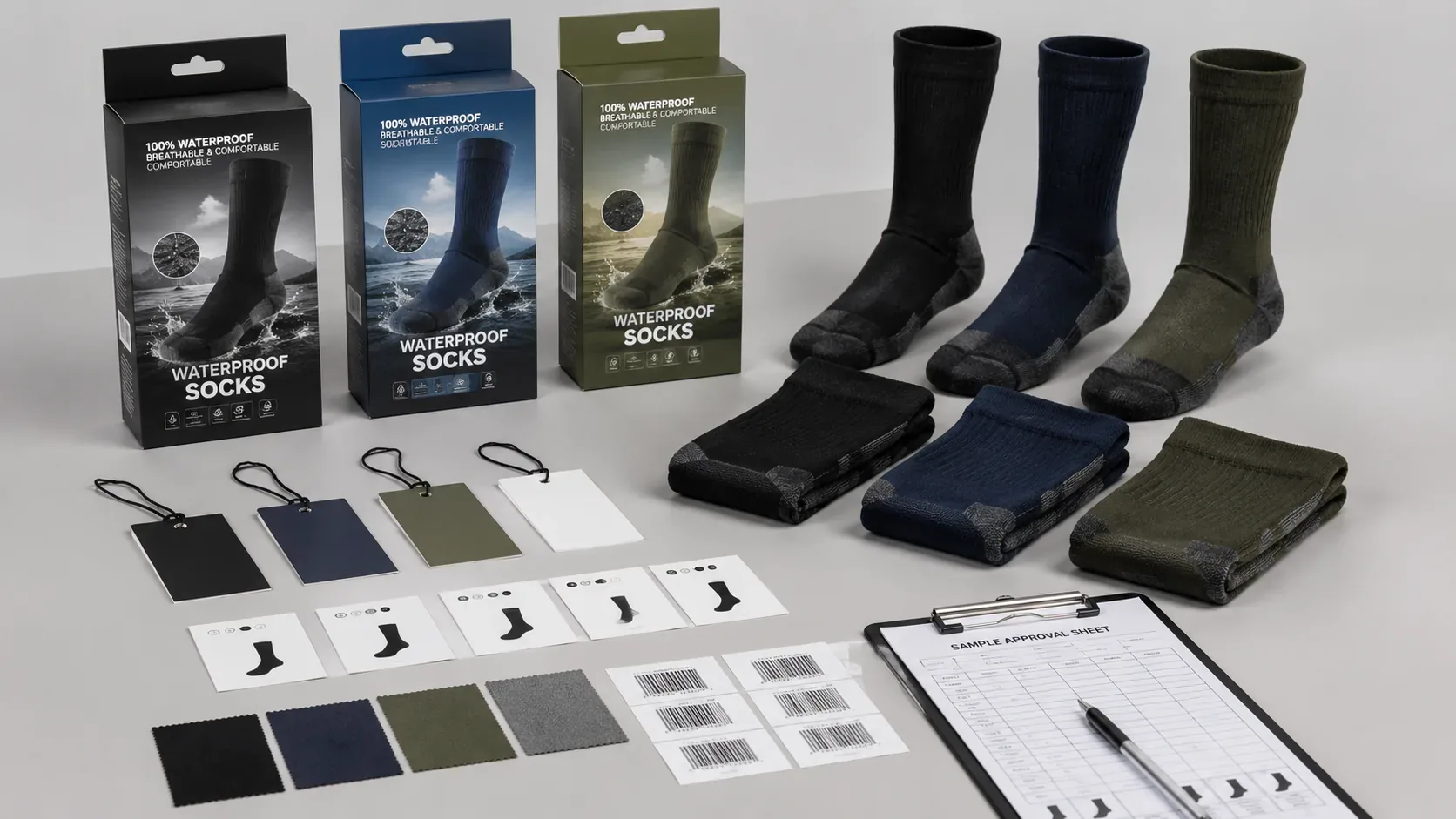
Each sellable SKU may need a unique barcode based on size, color and pack quantity. The buyer normally supplies or authorizes barcode data and should verify scan quality from the final printed package. Keep quiet zones, contrast and placement clear of folds or curved surfaces.
Approve the complete artwork proof, including logo, product name, size, color, material statement, care, warning or use notes, origin information and contact details where applicable. A visually attractive package still fails if the barcode belongs to another size or the label describes a different lining.
Align cartons and shipment documents
Carton marks should identify purchase order, SKU, color, size, quantity, carton number and destination information required by the buyer or warehouse. Packing lists should match the physical carton contents. Commercial invoices should use agreed product descriptions, quantities, values, terms and consignee details.
Transport documents and customs declarations depend on the shipment route and destination. Common express, air and sea options may be available, but the buyer, forwarder and factory need to confirm practical requirements for each country. Product classification and import duties should be checked with customs professionals rather than guessed from a product nickname.
Freeze documentation before packing
Create a final pack specification that links every SKU with the correct sock, size label, barcode, insert, package and carton mark. Ask for pre-production or packing photos where useful. Version control is especially important when several countries use different languages or importer details.
Zhuji Routing Knitting Co., Ltd. can support custom labels, pouches, sleeve cards, boxes and carton marks for private label waterproof socks. Buyers should supply destination and channel requirements early so the factory can quote the correct packaging and avoid last-minute rework.
Waterproof Socks Labeling and Export Documents FAQ
Are waterproof sock labels the same in every country?
No. Required wording, language, fiber naming, origin information and responsible-party details can vary by destination and channel.
Who should confirm destination-market requirements?
The buyer should confirm current rules with official guidance or a qualified compliance adviser and give the factory the approved requirements.
Should bamboo or merino claims match material documents?
Yes. Fiber names and composition should reflect the final yarn and material documentation and applicable labeling rules.
What should carton marks include?
They commonly identify the purchase order, SKU, color, size, quantity, carton number and buyer or destination instructions.
Can the factory provide custom packaging?
Yes. Buyers can discuss labels, bags, pouches, sleeve cards, boxes, barcodes and carton marks for private label orders.