Why three-layer waterproof socks need their own fit plan
A waterproof sock size is not only a printed shoe range. The bonded three-layer structure changes stretch, thickness and the space used inside footwear. OEM buyers should approve foot dimensions, height, cuff fit and shoe compatibility for every proposed size group.
Do not copy an ordinary sock chart without testing
Regular knit socks can stretch easily and occupy little shoe volume. Three-layer waterproof socks include a membrane and bonded lining, so the same printed shoe range may feel different. A size chart copied from a thin sports sock can lead to toe pressure, heel movement or tight shoes.
Start with the target market's common shoe-size systems, then build the actual sock around foot dimensions and stretch behavior. EU, UK and US labels can be shown together for convenience, but the factory and buyer should agree on one internal size code so production and packaging remain consistent.
Define measurable points
Common control points include relaxed foot length, leg height, cuff width, ankle width and overall shape. The exact method matters because pulling or flattening the sock differently changes the number. The specification should state how the product is positioned and whether measurements are relaxed or under controlled tension.
Tolerances need to reflect material behavior and production reality without allowing poor fit. Measure several samples of each size during development. If the smallest and largest feet in one proposed size group experience very different pressure, the range may be too wide and should be divided.
Grade the heel, toe and instep together
A larger size needs more than extra foot length. Heel pocket position, toe volume, instep circumference and ankle transition must still align with the wearer. If only length changes, the heel may sit under the arch or the membrane may crease inside the shoe.
The bonded layers should stretch together without excessive stress. Evaluate whether the lining pulls, the outer knit becomes transparent-looking under tension or the cuff becomes restrictive. Consistent grading supports comfort and also protects the membrane from unnecessary localized strain.
Include height and cuff fit
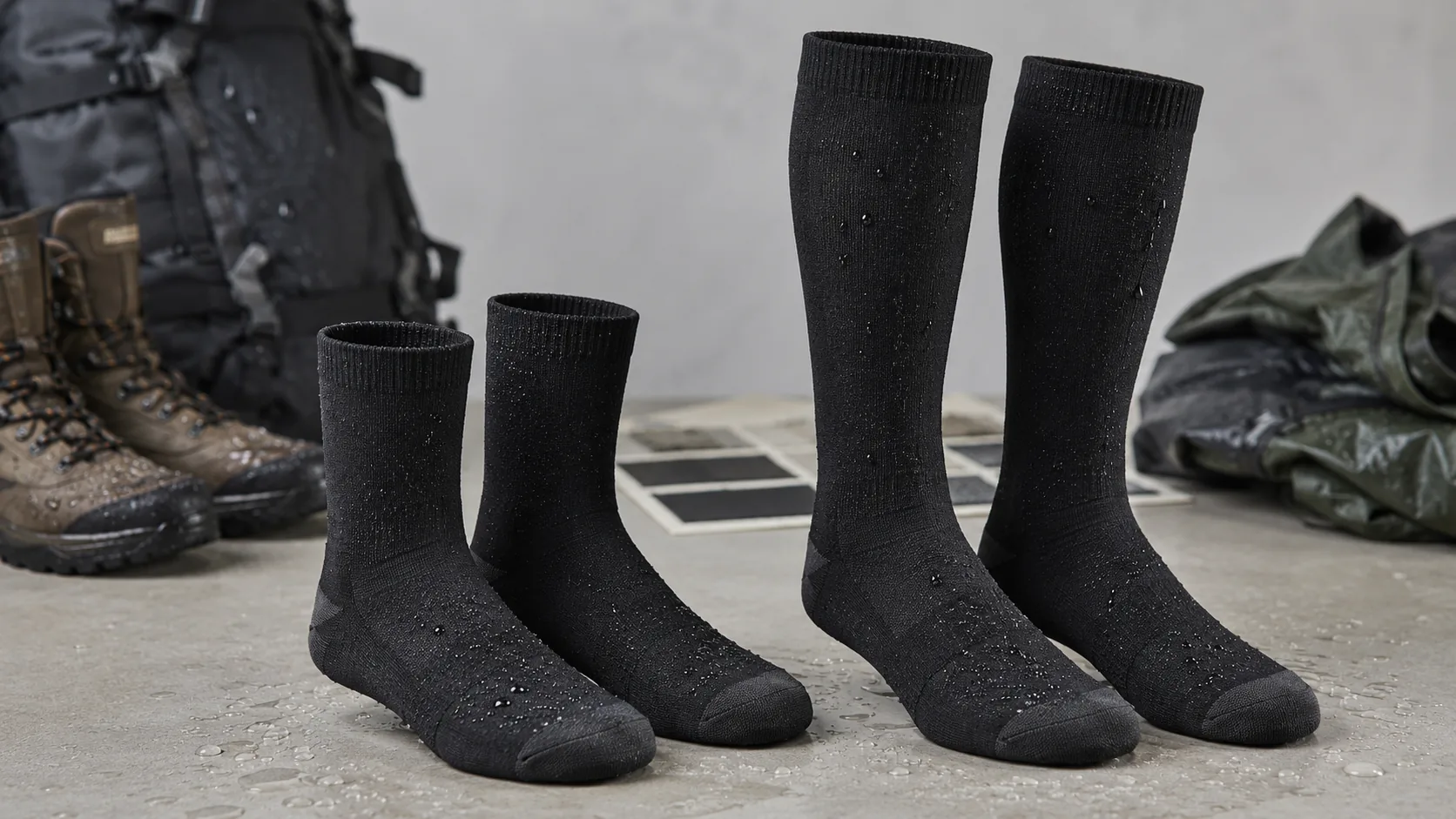
No-show, mid-calf and knee-high products have different leg measurements and use cases. Taller socks provide a higher membrane area and may suit boots, fishing, hunting or snow, but the top remains open. A higher sock does not remove the need to explain cuff entry.
Cuff fit should keep the sock in place without creating excessive pressure. Test on different calf shapes within the size group, especially for knee-high products. A wide foot does not always correspond to a large calf, so one simple scale-up may not work for every market.
Test the sock inside real footwear
Waterproof socks are normally worn inside shoes or boots. Fit approval should therefore include the planned footwear categories. A product that feels comfortable without shoes may become too tight in a cycling shoe, safety boot or fitted hiking boot.
Ask testers to note toe room, pressure over the instep, heel slip, seam feel and heat during movement. If the product is intentionally thick and warm, the size guide may need to advise customers about footwear room. Clear guidance can reduce returns more effectively than making the sock excessively loose.
Build a commercial size ratio
The order quantity should be split by the actual retail sizes, colors and channels. Historical sales from comparable outdoor socks can provide a starting ratio, but a new brand should keep enough flexibility to learn from trial sales. Ready-stock samples can help evaluate demand before custom production.
The typical custom MOQ is 50 pairs per color per size. This means adding many size groups or colors increases the total order quickly. A focused opening range with well-tested core sizes may be more practical than a broad range that leaves slow-moving inventory.
Make labels and listings consistent
The sock size label, retail package, barcode record, carton mark and online listing should all use the same conversion. Avoid showing one shoe range on the product and a different range on the website. If a style has a deliberately close performance fit, explain that rather than silently changing the label.
Include height measurements where they help buyers distinguish mid-calf and knee-high versions. Product photography should show the actual style on a wearer without stretching it into an unrealistic position. Accurate content supports both SEO and customer understanding.
Approve every size before bulk production
Approving only the middle size leaves risk at both ends of the range. Review at least representative small, medium and large samples, and check every size if the grading or materials are new. The first custom version normally takes 3-5 days after details are confirmed.
Send the waterproof socks factory the target shoe systems, foot ranges, height, lining, thickness direction and intended footwear. Zhuji Routing Knitting Co., Ltd. can then prepare samples and size specifications for a private label range instead of treating sizing as an artwork-only decision.
Waterproof Socks Sizing and OEM Size Grading FAQ
Do waterproof socks fit like regular socks?
Not always. The three-layer construction changes stretch and shoe volume, so the actual product should be fitted and tested.
What measurements should buyers confirm?
Confirm foot length, leg height, cuff and ankle width, heel position, toe volume and the agreed measurement method.
Should every size be sampled?
Representative small, medium and large sizes should be reviewed, and every size is preferable when the grading or materials are new.
Why should footwear be included in fit tests?
Waterproof socks are worn inside footwear, where thickness and pressure can change comfort substantially.
How does MOQ affect the size range?
Custom production typically starts at 50 pairs per color per size, so each added size or color increases the total order.