A milestone plan for custom three-layer waterproof socks
The fastest waterproof socks project is usually the one with the clearest decisions. Buyers can reduce avoidable revisions by separating product, branding and packaging approvals, recording each approved version and releasing bulk production only after the specification is stable.
A timeline is an approval plan, not a universal number
Development time changes with material availability, construction complexity, custom colors, sample quantity, testing, packaging and order size. Shipment timing also depends on the destination and transport route. A supplier can provide a useful schedule only after these inputs are known.
Build the project around decision gates: brief accepted, construction confirmed, materials approved, sample approved, packaging approved, bulk specification released, inspection passed and shipment booked. Give each gate an owner and date. This makes delays visible before they affect the final delivery window.
Stage 1: send a complete product brief
The opening brief should state the target market, end use, order quantity, size range, sock height, warmth direction, lining preference, colors, logo, packaging, destination and expected launch window. Include the target footwear type because three-layer waterproof socks need enough room inside the shoe or boot.
Separate firm requirements from preferences. For example, a required barcode format should not be mixed with an optional color idea. If an existing product or competitor sample is used as a reference, explain which characteristics matter rather than asking for an exact copy of protected branding or design.
Stage 2: confirm feasibility and the base specification
The buyer and factory next align the outer knit, waterproof membrane, lining, reinforcements, height, cuff, size grade and intended performance checks. Existing material routes may be easier to schedule than newly sourced yarns or a completely new construction, but the final choice should still match the product brief.
Record the agreed direction in one working specification. It should identify all items that remain open, such as a final logo size or packaging language. Resolving structural questions before design work helps prevent artwork from being prepared for dimensions that later change.
Stage 3: approve materials and colors
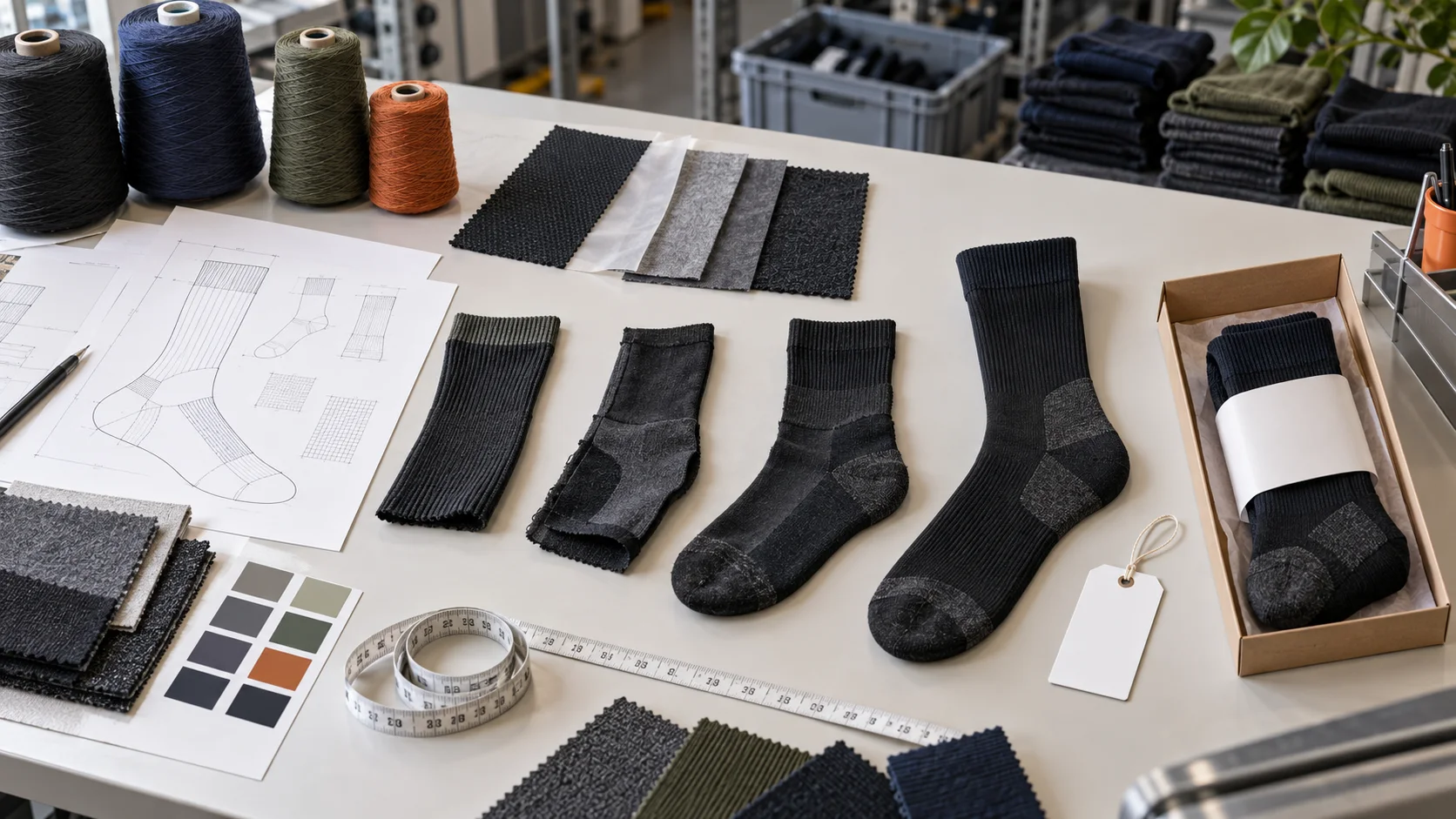
Material confirmation can involve yarn cards, fabric swatches, lining options, membrane data and physical color references. Digital colors on a monitor are not enough for close color matching. Confirm whether the buyer will accept a standard available shade or requires a new custom route with its own MOQ and timing.
Ask which materials must be reserved before sampling and which are ordered only after bulk approval. Special yarns, custom dye lots and packaging materials can affect the critical path. If a substitute is proposed, evaluate its effect on stretch, warmth, thickness, appearance, wash behavior and footwear fit.
Stage 4: develop product, logo and packaging samples
The product sample verifies construction, fit and function. A logo sample verifies scale, position, color and method. A packaging proof verifies artwork, dieline, warnings, care information, barcode and legal text. These are connected, but treating them as separate approvals makes feedback more precise.
Confirm what each sample is intended to approve. An early fit sample may use available colors and temporary packaging, while a later pre-production sample may represent the complete product. Buyers should not assume that every early sample is a finished retail presentation.
Stage 5: test, fit and consolidate feedback
Evaluate representative sizes inside the intended footwear. Review foot length, calf fit, cuff position, thickness, mobility, inside feel and signs of pressure. Perform the agreed finished-sock water checks and any wash or durability evaluation that belongs in the approval plan.
Collect comments from product, branding, sales and compliance teams into one numbered feedback document. Contradictory messages from several contacts create unnecessary sample rounds. State what is accepted, what must change and whether the next sample is a partial correction or a full approval sample.
Stage 6: freeze the pre-production standard
Before bulk production, approve the final specification, size chart, bill of materials direction, colors, logo, labels, packaging and carton marks. Identify the physical sample or approved reference set that represents the order. Both sides should use the same version number and approval date.
This is the point to close unresolved commercial details as well: order quantity by SKU, size ratio, packing ratio, inspection requirement, shipping terms and destination documents. Changes after this gate may require new materials, revised samples or production rescheduling, so they should be evaluated for cost and timing before acceptance.
Stage 7: reserve materials and production capacity
Bulk preparation can include yarn and membrane ordering, knitting, lamination or bonding, assembly, finishing, labeling and packing. The exact sequence depends on the construction. Material arrival and capacity availability must be confirmed against the approved specification rather than estimated from an earlier draft.
Buyers can ask for milestone updates without trying to manage every factory operation. Useful checkpoints include materials ready, bulk production started, first production output reviewed, packing started and goods ready for inspection. Reported dates should show whether the original ship window remains achievable.
Stage 8: inspect the bulk order
Quality control should compare production with the approved sample and written specification. Review construction, measurements, water performance, workmanship, pair matching, colors, labels, packaging and carton information. If an independent inspection is required, book it early enough to match the factory completion plan.
Agree on sample quantities, defect categories and acceptance rules before inspection. When a problem appears, record the SKU, size, batch, quantity and evidence so the factory can determine the scope and corrective action. The bulk order inspection guide provides a more detailed checklist.
Stage 9: release documents and shipment
Confirm carton count, dimensions, weight, packing list, commercial invoice requirements, shipping marks and any destination-specific documentation. The buyer or forwarder should reserve transport according to the agreed shipping terms. Factory-ready date and final arrival date are not the same milestone.
Allow time for cargo handover, export procedures, transit, customs clearance and local delivery. Seasonal congestion and changes in freight capacity can affect transport even when production finishes on time. Build the launch plan around the destination delivery requirement, then work backward to the necessary shipment and production dates.
Common causes of avoidable delay
Frequent causes include incomplete artwork, an unconfirmed size ratio, repeated color changes, late barcode data, changing the product after packaging begins, unavailable custom materials, additional testing and inspection bookings made too late. Slow internal buyer approvals can be as important as factory production time.
Compress the schedule safely by using proven materials where appropriate, making key decisions early, preparing non-dependent packaging work in parallel and sending consolidated feedback. Do not remove necessary testing or bulk approval gates simply to produce a shorter date on a planning sheet.
Information needed for a useful schedule
Send the product application, target market, quantity by style, size range, construction direction, colors, logo files, packaging format, test requirements, delivery destination, shipping preference and required arrival date. Mention any retailer onboarding or compliance deadline that cannot move.
For the first discussion, the private-label sample checklist, packaging guide and labeling and export guide help reveal missing decisions. The factory can then estimate a project-specific route instead of offering an unreliable generic answer.
Waterproof Socks OEM Timeline FAQ
How long does a waterproof socks OEM project take?
There is no single reliable duration. Timing depends on the approved construction, material availability, sample rounds, testing, packaging, quantity, inspection and shipping route.
Should the product sample be approved before bulk production?
Yes. Release bulk production only after the required product, sizing, branding and packaging details are recorded and approved.
Can packaging development run in parallel?
Some work can run in parallel after dimensions and requirements are stable, but final labels, artwork and packing details must match the approved product.
What usually delays the schedule?
Late artwork, repeated changes, unavailable custom materials, unconfirmed size ratios, extra test revisions, inspection timing and freight booking are common causes.
What should a buyer send to receive a project schedule?
Send a complete brief with application, market, quantity, sizes, materials, colors, branding, packaging, tests, destination and required arrival date.