Building a reliable kids waterproof sock range
Children meet wet conditions everywhere: puddles on the school run, damp grass at camp, rainy playgrounds, slushy winter paths and family hikes. A well-developed kids waterproof sock keeps the foot area protected while remaining soft, flexible and easy to explain to parents.
1. Start with a true 3-layer construction
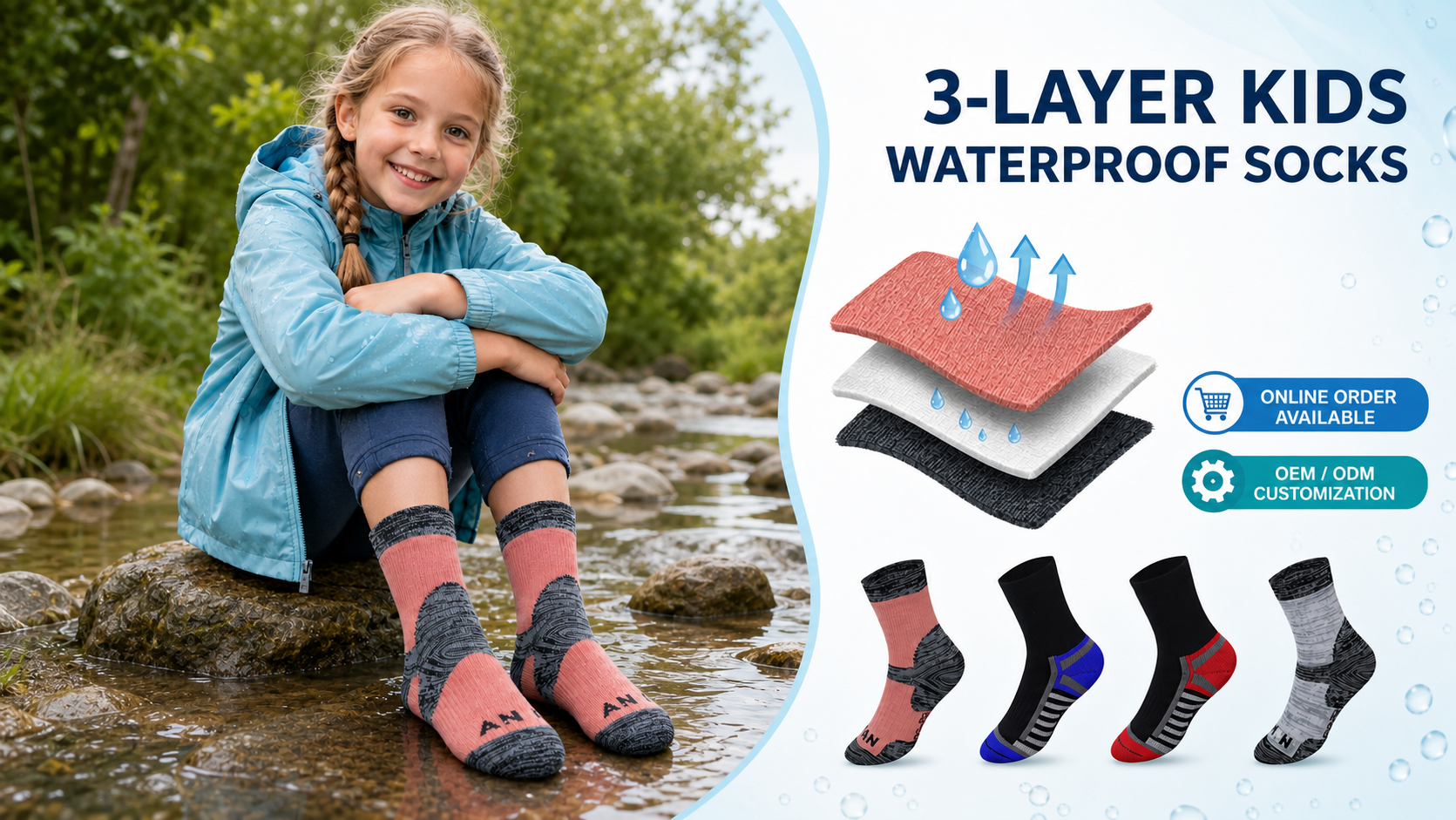
A typical waterproof sock combines a durable knitted outer layer, a waterproof breathable membrane and a soft inner lining. The outer knit provides abrasion resistance and color design, the membrane forms the water barrier, and the lining manages next-to-skin comfort.
Buyers should approve the finished sock, not only a membrane specification. Lamination quality, seams, sizing and the cuff opening all affect real-world performance.
2. Grade sizes around growing feet
Children's footwear sizes vary by market, so a private label brief should identify the target age group, regional shoe-size system and expected shoe types. The factory can then develop size bands using foot length, circumference, ankle stretch and sock height.
A fit trial should check heel position, toe room, bunching and cuff pressure. Avoid an overly broad “one size” range: a sock that is too large can fold inside a boot, while a tight sock may reduce comfort and be difficult for a child to put on.
3. Prioritize soft feel and easy movement
Kids waterproof socks should flex during running, crouching and climbing. A smooth inner lining, flat-feeling toe area and balanced cuff help reduce distractions during longer wear. Merino blends suit cool-weather outdoor ranges, while quick-dry or moisture-managing linings can fit active and milder-season programs.
Because 3-layer socks are usually thicker than ordinary socks, samples should be tested inside the actual school shoes, rain boots, hiking shoes or winter boots planned for the market.
4. Match height and thickness to the use case
Crew and mid-calf styles are versatile for school travel, playground use and light hiking. Taller versions provide more coverage for wet grass, snow play and boots. However, water can still enter through the open cuff if the child steps into water above the sock or if rain runs down the leg.
Lightweight constructions work better with close-fitting footwear; warmer constructions suit cold-season retail. A small collection can include one everyday style and one warmer outdoor style instead of forcing one product to cover every condition.
5. Build safety and care information into the brief
Parents need clear size, fiber, care and use instructions. Packaging should state that waterproof socks are not flotation or protective safety equipment and are not intended for prolonged full submersion. Any anti-slip claim should be supported by the actual construction and relevant testing.
Confirm applicable labeling and chemical requirements for each destination market with a qualified compliance specialist. Keep traceable material records and avoid unsupported claims such as “100% breathable” or guaranteed dryness in every situation.
6. Test samples like children will use them
Begin with a finished-product water test, then evaluate fit during walking, running and repeated bending. Check the socks inside intended footwear, inspect the membrane and seams after use, and repeat performance checks after the planned wash cycles.
- FitHeel alignment, toe room, cuff comfort and easy on/off.
- Wet usePuddles, wet grass and rainy walking below cuff height.
- DurabilityAbrasion, stretch recovery and repeated washing.
- FootwearCompatibility with boots, school shoes and outdoor shoes.
- PackagingSize conversion, fiber content, care symbols and honest use limits.
7. Plan child-friendly private label options
OEM options may include custom colors, knitted patterns, logo placement, size labels, hangtags, retail boxes and multi-pair sets. Clear color blocking can help families match sizes or distinguish siblings' socks, while outdoor graphics can support hiking, camping or school-focused collections.
Before bulk production, approve a sealed sample and confirm the size ratio, color standard, logo artwork, packaging text, barcode data and carton marks. For an accurate quotation, provide the target market, size range, quantity by color and size, lining preference and delivery destination.
Buyer conclusion
A successful kids waterproof sock program combines a dependable 3-layer barrier with child-specific fit, soft comfort, footwear compatibility and clear parent-facing instructions. Real wear tests and after-wash checks matter more than broad marketing claims.
Zhuji Routing Knitting Co., Ltd. supports OEM, ODM, wholesale and private label waterproof sock projects with material selection, size development, custom colors, logos, packaging, samples and bulk production planning.
Develop a kids waterproof sock range