
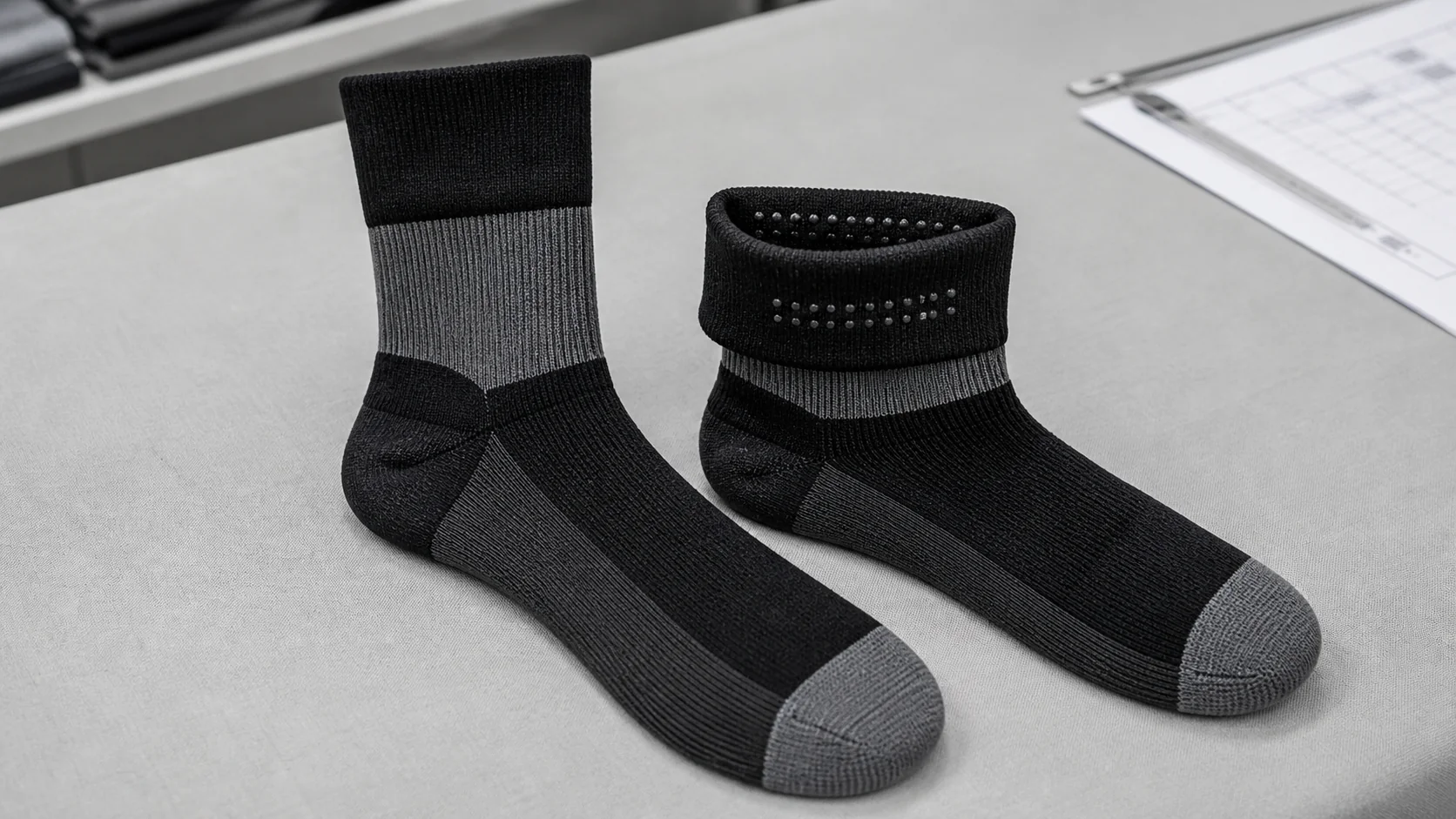
When buyers need silicone grip inside a waterproof sock cuff
Waterproof socks with silicone grip cuffs use small silicone dots, lines or bands on the inside of the upper cuff to increase contact with the leg or base layer. This integrated anti-slip feature is useful when a buyer wants the sock to stay in position during walking, cycling, fishing, work or repeated movement inside boots.
The silicone grip controls movement, not water
A three-layer waterproof sock body includes an outer knit, a waterproof breathable membrane and a comfort lining. The membrane is the waterproof barrier. Silicone at the cuff is an additional grip feature that helps reduce downward movement, folding or rotation around the leg.
The top opening is still not sealed. Rain, splashes or wading water can enter when they travel over the cuff. Product pages should therefore use wording such as “silicone anti-slip cuff” or “stay-up grip dots” rather than “waterproof cuff seal.”
Common silicone point and strip patterns
Small grip dots: distribute contact across the inner cuff while keeping spaces between silicone points. This is a practical choice when the buyer wants controlled grip without covering the entire cuff surface.
Wave or broken lines: provide more continuous contact while still allowing the cuff knit to flex. Parallel grip bands: create a stronger stay-up direction but may feel firmer on the leg. Pattern width, spacing, silicone thickness and cuff elasticity should be approved together.
Integrated grip compared with a detachable cuff strap
Silicone dots are applied inside the cuff and remain part of the sock. They are discreet, need no separate accessory and mainly reduce sock slippage. A detachable cuff strap wraps around the outside and allows the user to adjust pressure for short splash-heavy activities.
These products solve different problems. A silicone grip cuff is a stay-up feature. An external strap is a more visible adjustable accessory intended to improve cuff control. Neither route should be described as a permanent seal for swimming or deep-water use.
Where anti-slip cuffs can add value
Knee-high and over-calf waterproof socks benefit most when the long leg section needs help staying upright. Silicone grip can also support cycling, trail running, motorcycling, fishing, hunting and workwear programs where repeated ankle and knee movement may pull the sock downward inside footwear.
Mid-calf products may use a lighter dot pattern when the market wants a cleaner cuff position. The feature is less useful when the cuff is already very tight or when the target user expects a soft, pressure-free opening. Sampling should decide whether the added grip improves the real product.
Cuff size and pressure need careful grading
Silicone adds friction, so the cuff should not be made tight simply to create more grip. Buyers should confirm relaxed cuff circumference, stretched circumference, cuff height and leg fit for every size group. A pattern approved on one size may need adjustment when the sock is graded for a larger calf.
Wear trials should include the intended user profile and activity. Check for pressure marks, rolling, pinching and movement after walking. The target is stable positioning without uncomfortable compression. Waterproof socks should not be marketed as medical compression products unless separately designed and tested for that purpose.
Skin contact and base-layer compatibility
The inner cuff may contact bare skin, leggings or a base layer. Silicone compound, surface area, edge shape and cuff tension all influence comfort. Buyers should request the available material documentation and confirm any destination-market requirements for skin-contact components.
Test the cuff on dry and damp skin and over common base-layer fabrics. A grip pattern that works well on smooth leggings may feel different on bare skin. Product care information should also reflect the approved silicone and knit construction.
Wash durability and production quality checks
Inspect dot size, line spacing, placement height and left-right consistency before bulk approval. Silicone should remain inside the cuff area without random overflow onto the visible outer leg. After washing, check adhesion, cracking, peeling, excessive tack, discoloration and changes in cuff stretch.
The buyer should agree on a practical wash evaluation for the intended market. Finished-sock samples are more useful than a grip sample on loose fabric because the real cuff repeatedly stretches over the foot and calf during use.
Waterproof and footwear tests remain necessary
Silicone point application does not replace the standard sample checklist. Test the waterproof sock body, membrane integrity, toe comfort, size, thickness and shoe compatibility. Confirm that folding the cuff during donning does not damage the grip pattern or create uncomfortable bulk.
For fishing, hiking and workwear, evaluate the sock with the intended boot. For cycling and motorcycling, test repeated ankle movement. The approved result should combine waterproof performance, stable cuff position and acceptable comfort.
Accurate retail claims reduce complaints
Useful packaging language includes silicone grip dots inside cuff, anti-slip cuff detail, improved stay-up fit or grip bands to reduce cuff movement. Avoid absolute claims such as never slips, waterproof sealed opening or prevents all water entry.
Images should show that the silicone is on the inside. A close-up diagram or sample photo can explain the feature without suggesting that the whole sock has a rubber coating. The sock body remains a knitted three-layer product.
OEM quantities, samples and price factors
Custom waterproof socks generally start from 50 pairs per color and per size. The first sample normally takes 3-5 days after the sock height, cuff size, silicone pattern, colors, logo and packaging are confirmed. Sample fees can be refunded after a bulk order under the agreed terms.
Price depends on height, order quantity, color and size breakdown, silicone pattern coverage, application requirements, lining, membrane, outer knit, logo, packaging and inspection. More silicone coverage is not automatically better; the approved pattern should balance grip, stretch, comfort and cost.
Information to provide for a quotation
Send the target sock height, cuff circumference, size range, silicone dot or line preference, required quantity per color and size, intended activity, lining, branding and packaging. If the product will touch bare skin, state the destination market and any documentation requirements at the beginning of sampling.