
Water-repellent waterproof socks: why the outer shell matters in winter
Waterproof socks and water-repellent waterproof socks solve related but different problems. A waterproof membrane helps stop outside water from reaching the foot. A water-repellent outer treatment helps droplets bead up and shed from the sock surface before the outer layer becomes heavily wet. For winter buyers, this difference is important.
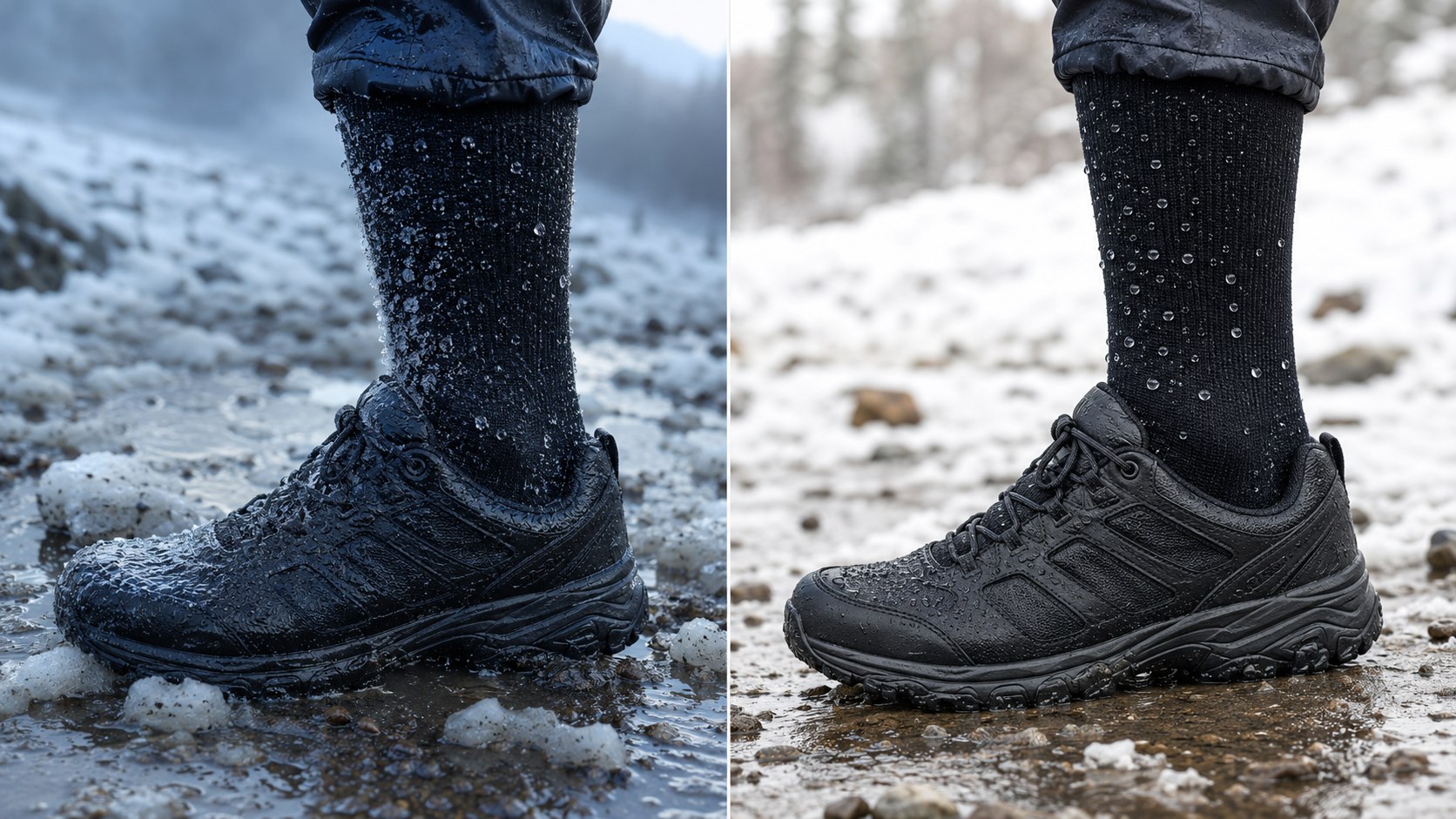
Waterproof is not the same as water-repellent
A regular three-layer waterproof sock usually includes an outer layer, a waterproof breathable membrane and an inner lining. The membrane is the layer that helps keep water out. However, the outer layer can still absorb or hold water on the surface, especially after long exposure to rain, wet snow, puddles or slush.
Water-repellent waterproof socks add another performance point: the outer surface is treated or selected to reduce water pickup. Instead of water spreading through the outside knit, droplets are more likely to bead and roll away. Buyers often describe this effect as similar to water rolling off a lotus leaf.
Why this matters more in winter
In mild rain, a standard waterproof sock may be enough for many users. In winter, the situation changes. If the sock's outer surface stays wet and the temperature drops below freezing, moisture on the outside can turn into a cold layer of ice. The membrane may still be blocking water, but the frozen outer layer can draw heat away from the foot and create a colder wearing experience.
This is why water-repellent waterproof socks are especially useful for winter hiking, wet snow walking, cold fishing, outdoor work, winter commuting and camping near freezing conditions. The benefit is not only dry feet. It is also reducing how much cold wet material sits on the outside of the sock.
What DWR outer treatment can do
DWR means durable water repellent. In a waterproof sock program, a DWR-style outer treatment can help the sock surface shed water faster. This can reduce surface wetting, reduce cold cling, and make the sock easier to position for winter outdoor retail.
DWR does not replace the waterproof membrane. It works with the membrane. The membrane is still responsible for the waterproof barrier, while the outer treatment helps manage the water sitting on top of the textile surface.
Useful channels for water-repellent waterproof socks
Winter hiking and trekking:
Useful when trails include wet snow, slush, frozen grass and cold puddles. Buyers
can position the product as a winter upgrade over standard waterproof socks.
Fishing and outdoor work:
Cold water splash, wet decks, muddy ground and long standing time make surface
wetting a comfort issue. A water-repellent outer shell can help reduce the cold
feel caused by soaked outside yarns.
Cycling and commuting:
Winter cyclists and rainy commuters may wear tighter shoes. Buyers can combine a
thinner waterproof construction with water-repellent outer finishing for a more
practical cold-rain product.
Camping and hunting:
Morning dew, wet grass, snow melt and low temperatures make water-repellent
waterproof socks useful for outdoor retail sets and private label winter programs.
What OEM buyers should confirm before production
For a winter waterproof sock program, buyers should not only ask whether the sock is waterproof. They should also ask how the outer surface behaves when it meets rain, wet snow and low temperature. Request sample testing for water beading, surface wetting, drying speed, warmth, shoe fit and wash durability.
Buyers should also confirm whether the product uses a warm inner lining, an ultra-thin quick-dry inner layer, merino wool blend, terry lining or another comfort structure. A water-repellent outer shell is only one part of the winter product. The final wearing experience depends on the full sock construction.
Packaging language should be clear
Product pages and packaging should explain the difference clearly: water-repellent on the outside, waterproof barrier inside the sock structure, and comfort lining against the foot. This helps customers understand why the product is positioned for winter and why it may cost more than a standard waterproof sock.
It is also important to keep the usual care message: waterproof socks should be worn inside footwear, the cuff/top opening is not sealed, and long-term washing should be gentle. Water-repellent performance can reduce after repeated abrasion or washing, so buyers should confirm durability expectations during sampling.
Buyer conclusion
Water-repellent waterproof socks are a stronger story for winter markets than standard waterproof socks alone. They help buyers explain a real use problem: in cold weather, surface water can stay on the outside of the sock, freeze, and make the foot feel colder even when the waterproof membrane is still working.
For OEM, private label and wholesale programs, water-repellent waterproof socks can be positioned as a winter upgrade for hiking, fishing, cycling, camping, commuting and outdoor work channels. The key is to match DWR-style outer surface performance with the right membrane, lining, height, shoe fit and packaging claim.