
Build a motorcycle sock around the boot and weather
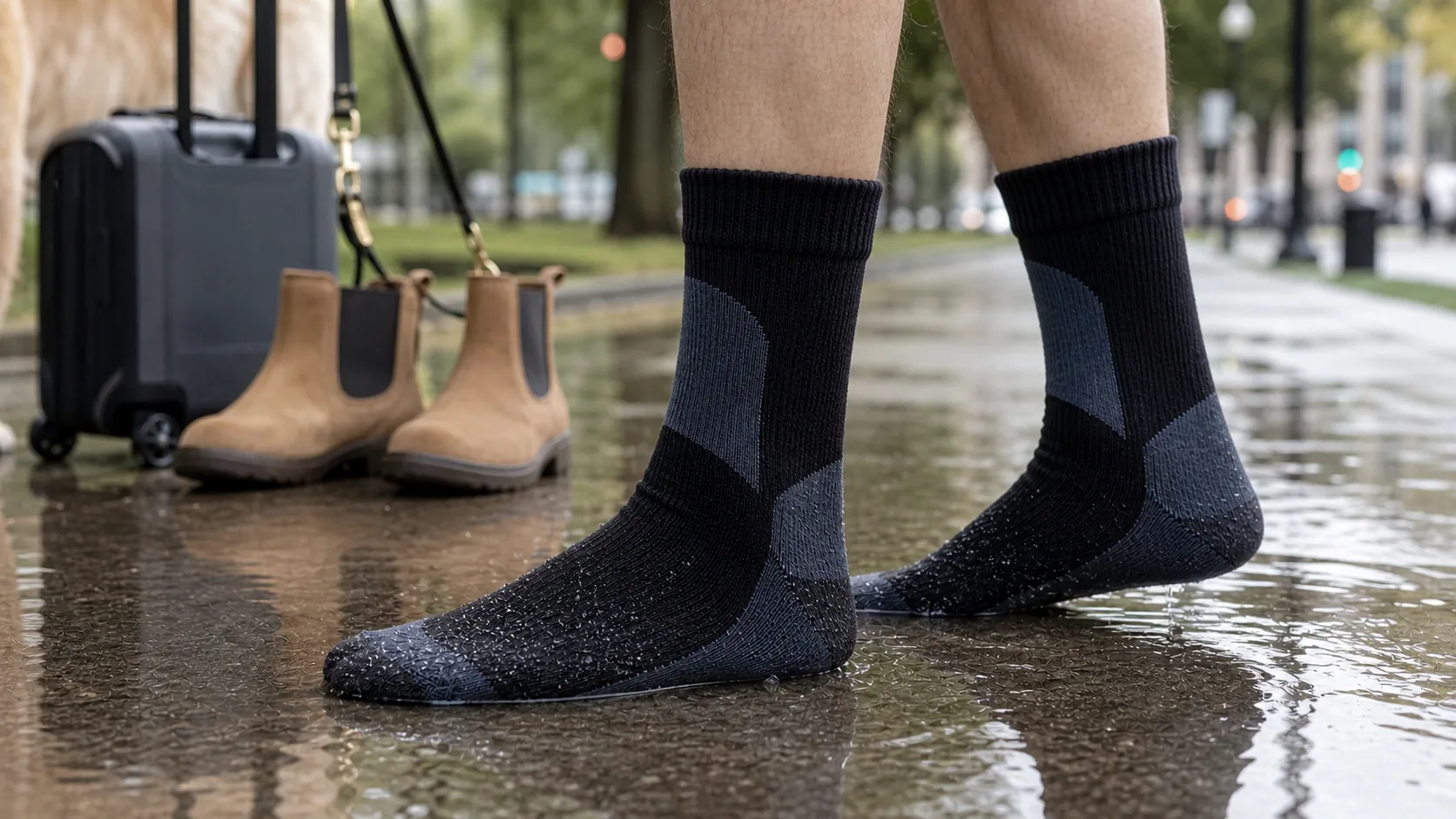
Motorcycle waterproof socks can provide a second water barrier inside riding footwear during rain and wet commutes. Product planning should consider boot height, available space, riding position, temperature, cuff placement and drying after the journey.
Use waterproof socks as a layered solution
Riders may encounter rain that enters through boot openings, closures or worn footwear. A three-layer waterproof sock can help block water that reaches the sock body, but it does not repair the boot or seal every entry path. It works best as part of a considered rainwear system.
The product description should avoid promising dry feet under every riding condition. Wind-driven rain, water running down trousers and prolonged exposure can challenge the cuff area. Accurate positioning builds trust with motorcycle retailers and reduces customer misunderstanding.
Choose height around the riding boot
Mid-calf socks may fit urban boots and shorter commutes. Knee-high socks provide a higher membrane area and can work with taller touring or adventure boots. The cuff should finish in a comfortable position that does not bunch under armor, trousers or the boot edge.
A taller sock still has an open top. Rain can run down the leg and enter above the cuff. Riders may need trousers or gaiters that direct water over the outside of the boot, and the product guide should explain this interaction clearly.
Control thickness and pressure points
Motorcycle boots can be close fitting, especially around the toe, ankle and shin. A thick warm sock may suit cold touring but can create pressure in a boot sized for a thin everyday sock. A thinner three-layer construction may suit urban riding and moderate weather.
Sample testing should include the riding position because ankle flex and boot pressure differ from standing. Test gear changes, braking movement, walking at stops and longer wear. Note seam feel, heel stability and any pressure that increases as the foot warms.
Balance warmth with moisture management
Cold rain and wind can make warmth important, while summer rain makes overheating a concern. Merino wool or warm terry can support colder product lines. Coolmax or another lighter moisture-managing lining may suit active commuters and warmer conditions.
The membrane is breathable, but comfort still depends on boot ventilation, activity and lining thickness. Riders should not expect the sock to remove all sweat from a waterproof boot. Product ranges can offer separate light and warm versions instead of forcing one construction into every season.
Plan durability for controls and walking
Riding footwear creates localized friction at the heel, toe, ankle and areas used for gear controls. Reinforcement can protect the membrane, but it should not form hard ridges. The sock also needs enough flexibility for walking when the rider leaves the motorcycle.
Wear trials should include repeated rides and normal walking, followed by inspection and washing. Look for thinning, pilling, layer movement and loss of stretch. A short water demonstration does not replace durability testing for a product intended for regular commuting.
Make drying practical during travel
A wet outer knit can hold surface moisture even when the inner side remains protected. Riders should remove the sock after the journey and dry it fully according to the care instructions. On multi-day trips, carrying a second pair allows rotation while the first pair dries.
Retail packaging can include a compact care card with washing, inside-and-out drying and heat restrictions. Clear instructions are especially useful for touring customers who may be drying gear in hotels or campsites without a normal home laundry setup.
Build retailer-ready sizes and packaging
Size labels should match the tested shoe range and account for three-layer thickness. Packaging can show the intended boot categories, sock height, warmth direction, three-layer diagram and cuff limitation. Avoid using motorcycle brand logos or claiming platform endorsement without authorization.
For a multi-season line, distinguish lightweight commuter, warm touring and knee-high adventure directions through clear product names and color accents. Barcodes, carton marks and online descriptions should use the same SKU definitions.
Develop an OEM motorcycle sock program
Send the waterproof socks factory the target riding style, climate, boot type, height, lining, color, size range, quantity, logo and packaging. The first custom sample normally takes 3-5 days after details are confirmed, and custom production typically starts at 50 pairs per color per size.
Zhuji Routing Knitting Co., Ltd. welcomes motorcycle retailers, distributors and private label brands. Samples should be tested in real riding boots before bulk approval, and the final quotation will reflect height, materials, order quantity and packaging.
Waterproof Socks for Motorcycling and Rainy Rides FAQ
Do waterproof socks replace waterproof motorcycle boots?
No. They provide an additional water barrier inside suitable footwear but do not repair or seal the boot.
Which height is best for motorcycle boots?
Mid-calf can suit urban boots, while knee-high can provide more coverage for taller touring or adventure boots.
Can rain enter through the top?
Yes. Water running down the leg can enter through the open cuff, so trousers and boot setup also matter.
Should samples be tested in the riding position?
Yes. Ankle flex and boot pressure during riding can reveal issues that standing fit tests miss.
What is the custom MOQ?
Custom production typically starts at 50 pairs per color per size.