Create clear differences between waterproof sock SKUs
A strong waterproof socks product line gives each SKU a clear purpose. Instead of launching many colors with the same story, B2B buyers can organize the range by height, warmth, thickness, activity, size and price while keeping the three-layer construction easy to understand.
Start with customer problems, not color count
Customers may need a slim sock for cycling shoes, a warm sock for winter boots, a taller sock for fishing or an everyday sock for rainy commutes. These are meaningful product differences. Adding ten colors without changing use or fit creates inventory complexity but does not necessarily improve search coverage or customer choice.
List the main channels, climates, footwear and price positions before selecting SKUs. A specialty outdoor store may need technical comparisons, while a marketplace seller may begin with one versatile mid-calf style and add variations after collecting sales and return data.
Use height as the first range dimension
No-show, mid-calf and knee-high waterproof socks create clear physical differences. No-show products suit lower footwear and light exposure. Mid-calf is a broad outdoor and daily-use option. Knee-high provides a higher membrane area for boots, fishing, hunting and snow.
Each height has a different material requirement and price. The top opening remains a limitation across the range, so taller products should be described as higher coverage rather than completely sealed. This accurate language supports customer education and reduces cannibalization between SKUs.
Create light, everyday and warm constructions
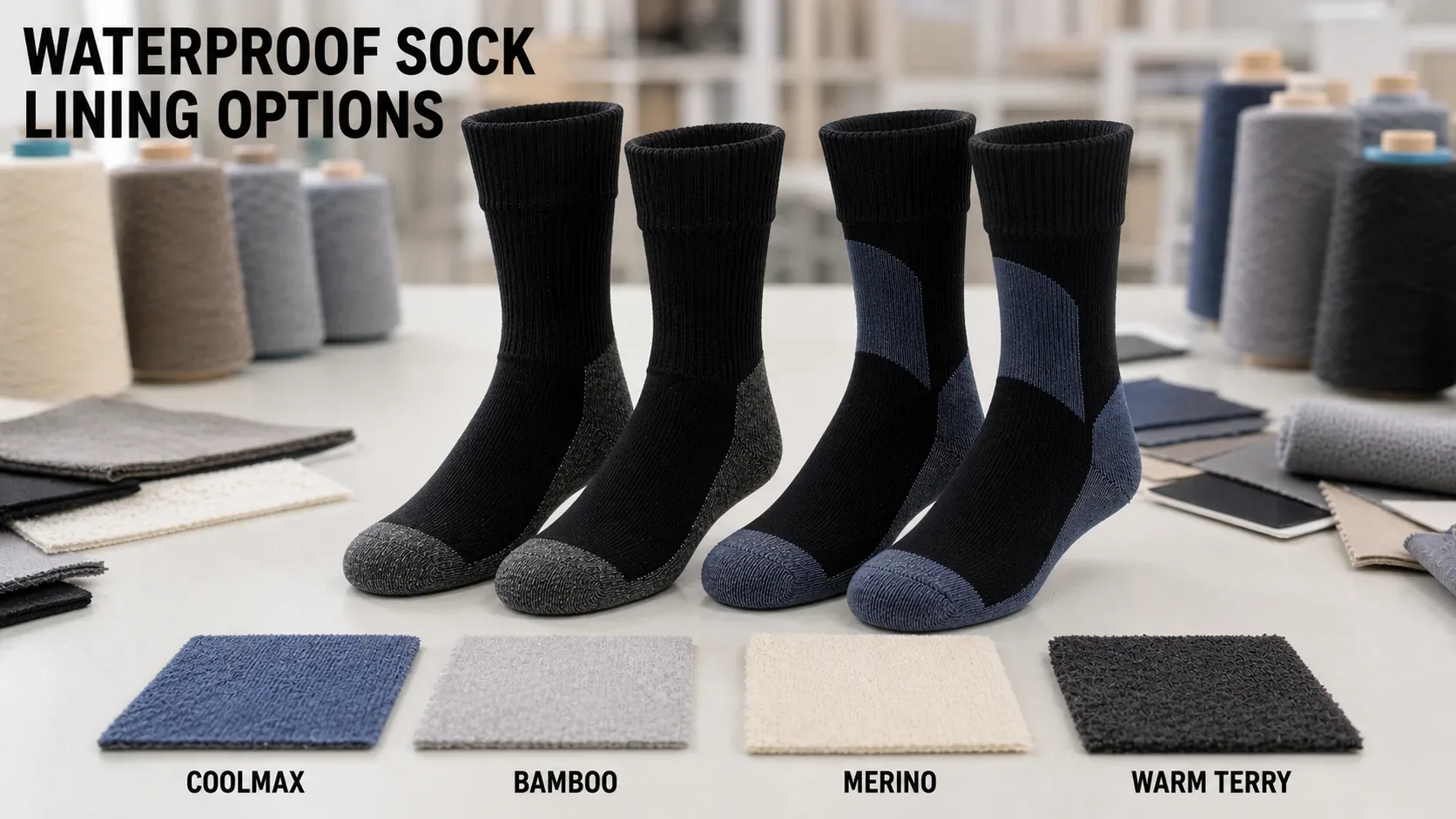
A lightweight product can use a slimmer outer and moisture-managing lining for cycling, travel and moderate weather. An everyday product can balance cushioning, durability and broad shoe compatibility. A warm product can use merino wool or warm terry for cold outdoor use.
The membrane remains the water barrier in all three directions. Lining names should describe comfort and thermal position, not imply that bamboo, merino or Coolmax is itself waterproof. Samples should confirm that each construction creates a noticeable and useful difference.
Map activities to products carefully
Hiking, cycling, fishing, hunting, workwear, motorcycling, commuting and snow can guide merchandising, but one sock may serve several related uses. Avoid creating a separate SKU for every keyword when the construction is identical. Instead, group genuine use cases around fit, height and warmth.
Product pages can explain secondary activities without changing the core product name. Internal links between guides and product pages help search engines and AI systems understand the range while keeping customer navigation simple.
Limit opening colors and size groups
Black, navy, grey, olive and selected brighter accents can cover many channels. Every added color and size creates a separate production and inventory decision. Because custom MOQ is typically 50 pairs per color per size, a wide launch can become much larger than expected.
Begin with core size groups validated through wear trials and a focused color palette. Ready-stock products with no MOQ can help test demand. Expand only when sales data shows where customers need more size, color or seasonal choice.
Build a price ladder from real cost differences
Height, material, reinforcement, lining, packaging and quantity influence cost. A premium price should correspond to a meaningful feature such as merino content, knee-high coverage, a lighter technical construction or stronger retail packaging, not only a different color name.
Ask for quotations on a small number of defined constructions so the buyer can compare landed margin and retail position. Production normally begins with a 30% deposit and the balance is paid before shipment. Delivery cost and customs treatment should be evaluated separately for the destination.
Keep packaging architecture consistent
Use a shared visual system for the brand, then make height, warmth and activity easy to scan. Each package should show the correct size, color, lining, care, three-layer explanation and cuff-use boundary. Barcodes must distinguish every sellable SKU.
Consistent naming supports retail shelves, warehouses, product feeds and SEO. For example, a range might use clear functional names such as Lightweight Mid-Calf, Everyday Mid-Calf and Warm Knee-High rather than unrelated marketing names that hide the differences.
Launch, measure and expand
Use sample feedback and initial sales to track size sell-through, return reasons, footwear complaints, warmth preference and activity. This evidence shows whether the next investment should be a new construction, another height or simply deeper inventory in a successful SKU.
Zhuji Routing Knitting Co., Ltd. can support product-line planning with stock samples, custom OEM/ODM development and private label packaging. Send the intended channels, core uses, heights, linings, sizes, colors and order quantities so the waterproof socks factory can propose a practical sampling sequence.
How to Build a 3-Layer Waterproof Socks Product Line FAQ
How many waterproof sock styles should a new brand launch?
A focused range of clearly different core products is usually easier to test and manage than many similar colors or constructions.
What are useful product line dimensions?
Height, thickness, warmth, lining, target footwear, activity, size range, color and price are useful dimensions.
Should every activity have a separate SKU?
No. Group related uses around genuine construction differences and explain secondary activities on the product page.
How does MOQ affect range planning?
Custom production typically starts at 50 pairs per color per size, so each added SKU increases the opening order.
Can stock samples be used before custom development?
Yes. Available stock has no MOQ and can help buyers test fit, demand and channel response.