Start with the activity, not the word “waterproof”
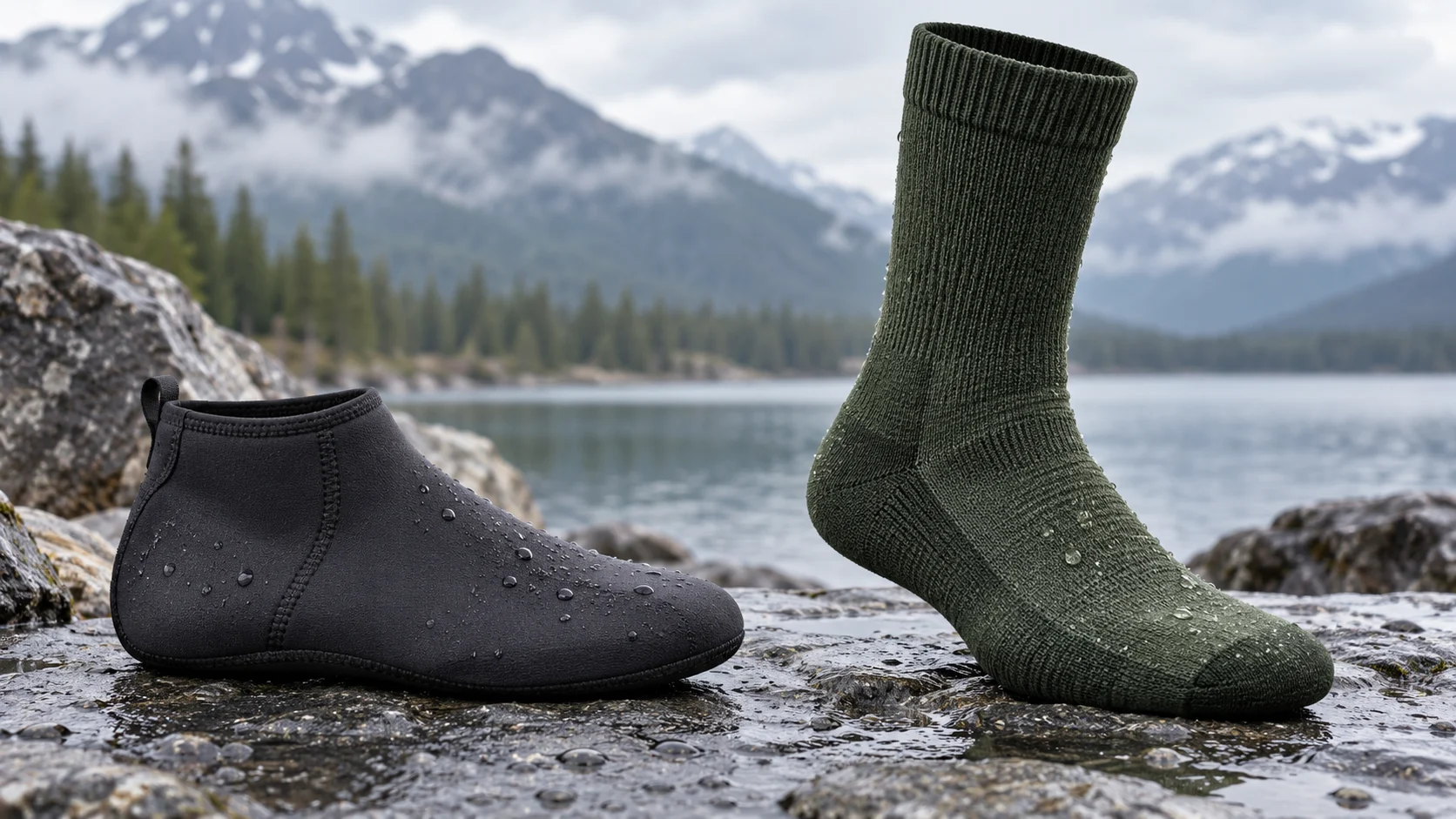
A neoprene water sock is normally selected for insulation, protection and close fit during wet activities. A three-layer waterproof sock is designed to feel more like a knitted sock while a membrane blocks external liquid below the cuff. Neither is the universal winner. The right sourcing decision depends on whether the user expects to be immersed, to walk in rain and mud, or to wear the product inside normal footwear.
- Neoprene direction
- Foam-based insulation and protection for wet-use environments.
- 3-layer direction
- Knitted outer, waterproof membrane and comfort lining for sock-like use.
- Primary question
- Will the user accept water inside, or is keeping the foot dry the priority?
- Footwear fit
- Confirm finished thickness and test in the actual shoe, boot or water footwear.
- Water entry limit
- An open cuff is not a watertight seal; water can enter from the top.
- Buyer control
- Approve construction, fit, claims and finished-product tests before bulk production.
What is a neoprene sock?
Neoprene is a closed-cell synthetic rubber foam used in many water-sport products. In a sock or bootie, it can provide cushioning, thermal insulation and a protective layer between the foot and equipment or rough surfaces. Thickness, panel shape, lining, seams, sole treatment and ankle opening all influence the finished product.
A standard neoprene water sock should not automatically be described as keeping the foot dry. Many wet-use designs allow some water to enter around the opening or through seams; warmth is supported by limiting water exchange and using the foam as insulation. Seam construction varies, so any “waterproof” claim must be based on the exact sample and an agreed test—not on the material name alone.
What is a three-layer waterproof sock?
A typical three-layer waterproof sock combines a durable knitted outer layer, a waterproof breathable membrane and a soft inner lining. The outer knit supplies the visible sock surface and abrasion resistance, the membrane creates the liquid-water barrier, and the lining manages next-to-skin comfort. Read the waterproof breathable membrane guide for a closer look at this construction.
This format is intended for rain, puddles, wet vegetation, mud and similar exposure while worn inside suitable footwear. Breathable does not mean that sweat disappears, and the knitted cuff is not a dry-suit seal. Liquid reaching above the cuff can flow into the sock. Claims should therefore describe the tested product, the area protected and the intended use with reasonable precision.
1. The two constructions manage water differently
Neoprene is often chosen for an activity in which getting wet is expected. The buyer focuses on warmth, protection, grip and secure fit even when the exterior is soaked. A three-layer waterproof sock follows a different strategy: it aims to stop outside liquid at the membrane while retaining a familiar knitted-sock experience.
This distinction should appear in the product brief. “For cold-water kayaking inside a wet boot” points toward a different construction than “for hiking in prolonged rain inside a trail shoe.” Without a use statement, factories may quote products from two different categories under the same informal name.
2. Warmth comes from different design choices
Neoprene thickness and foam construction are major warmth and bulk variables. A thicker option may suit colder water but can reduce flexibility and change footwear fit. The close fit also matters: large gaps encourage water movement, while an overly tight pattern can create pressure and restrict comfortable motion.
In a three-layer sock, warmth is affected by the inner yarn, knit density, terry coverage, overall thickness and the user’s footwear. A lightweight lining supports a lower-volume product, while merino-blend or terry directions can support cooler conditions. Compare the complete construction rather than treating “neoprene” or “three-layer” as a fixed warmth rating.
3. Breathability and moisture comfort are not the same as dryness
Neoprene has limited vapor movement compared with an open knitted structure. In active use, perspiration can remain inside even if external water entry is controlled.
A waterproof breathable membrane allows some water vapor to move through under the right conditions, but real comfort also depends on the lining, temperature, activity level and footwear ventilation. No supplier should promise a permanently dry inner climate. Buyers should wear-test both constructions at the intended intensity and evaluate dampness, temperature and recovery after use.
4. Bulk and footwear fit can decide the product before performance does
Neoprene compresses but still occupies space, and seams or reinforced soles can add local thickness. It can work well in fins, water shoes, dive boots or roomier footwear, depending on the pattern. A thick bootie placed in a close everyday shoe may create pressure, reduce toe room and make the comparison unfair.
Three-layer socks are also thicker than ordinary single-knit socks because they contain an outer, membrane and lining. Thin and warm versions fit differently. Send the factory the intended footwear type, target sock height and acceptable volume, then test the sample inside the real footwear. Our thin vs thick waterproof socks guide explains this choice in more detail.
5. Movement, surface protection and durability priorities differ
Neoprene products can be patterned for close contact with water-sport equipment and can include textured or reinforced soles. Some are sock-like layers meant for use inside other equipment; others are booties intended for limited direct contact with wet surfaces. The buyer must state which one is needed because sole construction, seam exposure and abrasion expectations will change.
Three-layer products are socks, not standalone shoes. Suitable footwear should protect the outer knit, and sample testing should reproduce the intended shoe and surface.
6. The cuff is the boundary buyers must explain
Neither category should be sold as an unlimited immersion solution simply because its main body resists water. Water can enter through the top opening when the user steps deeper than the cuff, is hit by spray from above or wears the product with a poor clothing overlap. A higher sock increases coverage but does not create a certified watertight seal by itself.
For a three-layer product, a close or grip-enhanced cuff can help reduce movement and incidental entry, but it must remain comfortable and should not be presented as a dry-suit gasket. For neoprene, cuff fit, seam route and any closure system should be reviewed as one assembly. Product instructions should tell users the tested use limits.
Which construction fits each application?
- Hiking, cycling and commuting in rain Three-layer knitted socks usually offer the more familiar sock feel and a clearer dry-foot proposition below the cuff.
- Kayaking, paddleboarding and wet-deck use Choose neoprene when wet-use warmth and protection lead; choose three-layer socks when splash protection inside footwear and sock-like comfort lead.
- Cold-water immersion Neoprene is commonly the more relevant direction, but thickness, seams and compatible equipment must be specified and tested.
- Fishing, wading and wet banks Three-layer socks can suit rain, mud and shallow exposure inside boots; deeper water above the cuff requires a different system.
- Workwear and outdoor retail Start from footwear, movement, wash frequency and the customer’s exact water exposure rather than selecting by category name.
- Multi-activity collections Consider separate wet-sport and rain-use SKUs instead of forcing one construction to make conflicting claims.
Buyers developing a paddle-sport range can also review our kayaking, boating and paddleboarding guide, while angling programs can use the fishing and wading buyer guide.
Build two different OEM specifications
For neoprene socks, define the wet activity, foam thickness, lining, pattern, seams, height, opening, sole treatment and compatible equipment. State whether direct ground contact is expected. Ask which components resist water and what claims the complete sock can support.
For three-layer socks, define height, outer yarn, membrane, lining, thickness, size chart, stretch, reinforcement, cuff, colors and branding. Membrane data describes a material; it does not automatically prove finished-sock performance. Approve the assembled sample and testing route.
Use a practical sample and testing plan
First review construction and sizing on the bench, then wear-test the sample in the intended footwear and activity. Record the user, foot size, shoe model, temperature, duration and exposure so feedback can be repeated. Evaluate pressure points, heel movement, toe room, warmth, internal moisture, cuff comfort and drying after use.
Agree on a finished-product water test before bulk production. The method, water level, duration, sample conditioning and pass criteria should reflect the claim being made. Add stretch recovery, seam inspection, abrasion and laundering checks where relevant. The waterproof sock testing guide provides a structured starting point, but the buyer and supplier should document the final protocol for the specific SKU.
OEM customization, MOQ and cost considerations
Neoprene pricing changes with foam, panels, seams and sole treatment. Three-layer pricing changes with height, knit, membrane, lining and SKU fragmentation. Branding, packaging, tests and delivery terms affect both.
MOQ feasibility also depends on material and color minimums, pattern development, size count and decoration. Ask each supplier to quote the same construction and SKU breakdown. If two product directions are still under review, request separate samples and quotations rather than combining them into one vague “waterproof sock” request.
B2B decision checklist
- Define the water exposureRain, splash, shallow standing water or expected immersion require different product strategies.
- State the primary promiseDecide whether dryness, thermal insulation, protection, low bulk or familiar sock feel comes first.
- Name the footwearProvide the shoe, boot, fin or water-shoe type and test the finished sample inside it.
- Set realistic claim boundariesExplain cuff entry, sweat and intended use instead of using an unlimited “100% waterproof” message.
- Approve the exact constructionRecord materials, dimensions, seams, reinforcement, colors, branding and packaging.
- Test the finished articleUse an agreed protocol and an approved reference sample before authorizing bulk production.
- Compare like with likeReview MOQ, unit cost, sample cost, testing and delivery against the same written brief.
- Plan user instructionsInclude footwear, care, drying and water-entry limitations appropriate to the product.
Neoprene vs Waterproof Socks FAQ
Are neoprene socks waterproof?
Neoprene foam resists water, but a finished sock may allow entry around the cuff or
through its seams. Many designs are intended to insulate and protect while wet, so
the exact construction and test must support any dry-foot claim.
Do three-layer waterproof socks keep feet completely dry?
Their membrane is designed to block external liquid through the protected body, but
water can enter over the cuff and perspiration can create internal moisture. Fit,
footwear, activity and care also affect the experience.
Which type is warmer?
It depends on the specification. Neoprene is widely used for wet-use insulation,
while a three-layer sock can be built with a light or warm lining. Compare thickness,
fit, activity and conditions rather than the category name alone.
Which type is better for hiking shoes?
A three-layer knitted waterproof sock is usually the more natural starting point for
rain and wet-trail use inside hiking footwear. The sample still needs an in-shoe fit
test because waterproof socks are thicker than ordinary socks.
Which type is better for kayaking?
Neoprene often suits users who expect wet feet and prioritize warmth. A three-layer
sock can suit splash protection and a dry-foot objective inside compatible footwear.
Water depth, temperature and the rest of the equipment should guide the choice.
Can buyers customize both categories?
Materials, colors, sizing, logos and packaging can be reviewed for both, but the
available methods and minimum quantities depend on the construction. Approve a
physical sample before confirming the bulk order.
What should an OEM buyer test first?
Test fit in the intended footwear, comfort during the real activity, water behavior,
cuff limitations, durability and care. The finished-product water test should match
the claim used on the label and sales page.