Waterproof socks for kayaking, boating and paddleboarding
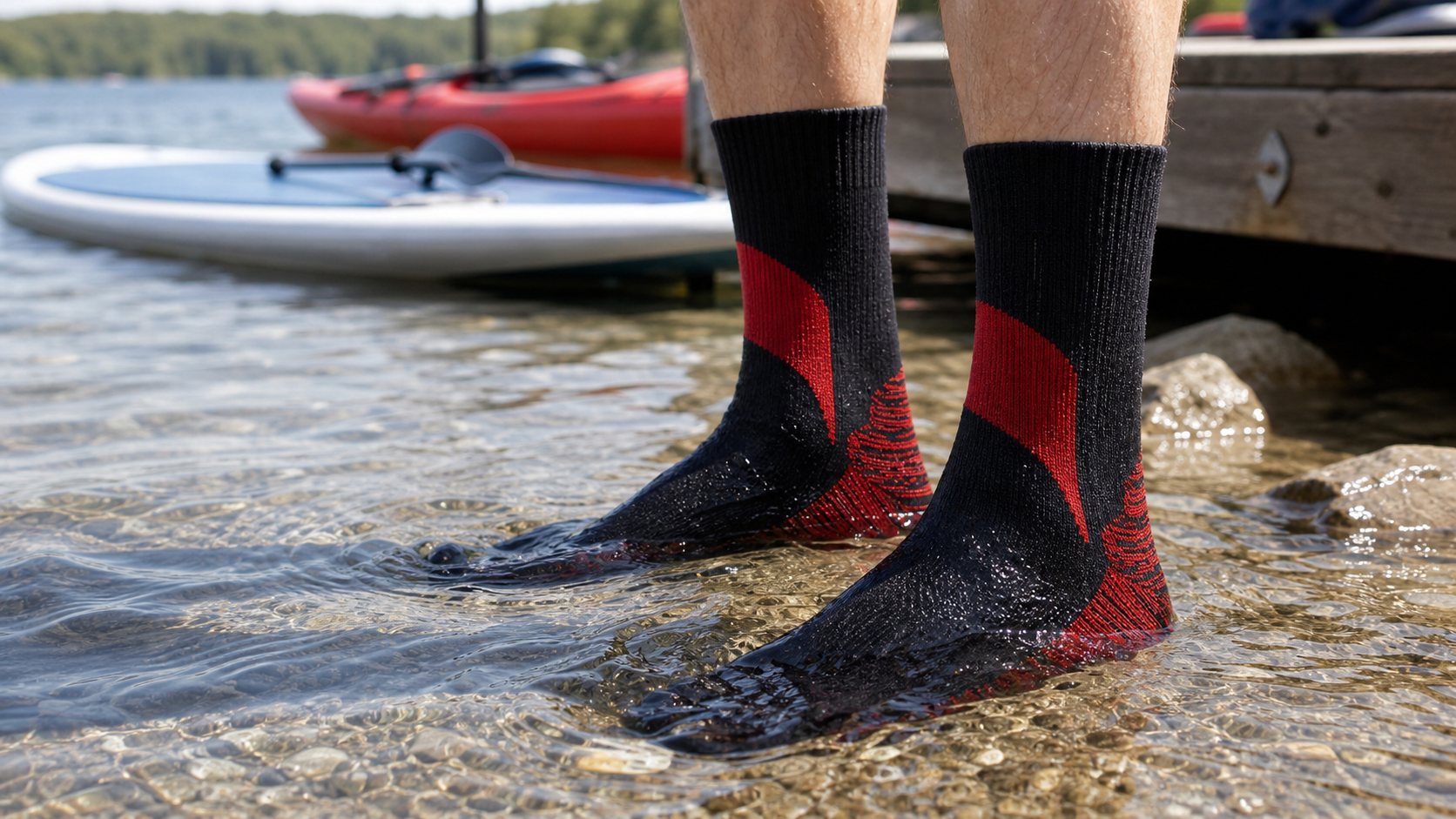
Kayaking, boating and paddleboarding create a different kind of wet condition from hiking or daily commuting. Users may stand on wet decks, launch from shallow water, carry boards across wet shorelines, receive paddle splash and step into shoes that are already damp. For B2B buyers, the goal is to build a waterproof sock program that protects against splash and deck moisture while explaining the product limits clearly.
1. Why water sports buyers consider waterproof socks
Water sports customers often accept that their gear will get wet, but they still want comfort during shore walks, setup, rental use, cool-weather paddling and long periods on wet decks. Ordinary socks can become heavy and cold once water enters shoes or deck footwear.
Waterproof socks give retailers a practical accessory story: keep feet more comfortable during splash-heavy activity, wet launches, marina walking and cool deck conditions. This makes them useful as a private label add-on for outdoor, boating, paddling and travel retail programs.
2. Define the exact water exposure
Buyers should separate splash protection from full submersion. Waterproof socks are suitable for paddle splash, wet decks, puddled boats, wet shorelines, rain and damp footwear. They are not designed as diving socks or a replacement for sealed waders.
The cuff opening is the key limit. If water enters from above the cuff, the sock can feel wet inside even when the waterproof membrane is working correctly. This needs to be explained in packaging, product pages and distributor training.
3. Choose the right sock height for paddle sports
Mid-calf waterproof socks are often a practical option for kayaking and boating because they cover more of the lower leg than crew socks without feeling too warm or restrictive. They work well for splash, rain, deck use and shallow launch conditions.
Knee-high waterproof socks can be useful for colder shorelines, fishing boats, wet grass near launch points and more demanding outdoor programs. Buyers should choose height based on the likely water line, footwear type and climate.
4. Footwear compatibility is different on water
Kayaking, boating and paddleboarding customers may wear water shoes, deck shoes, sandals with closed toes, lightweight boots or old trainers. Waterproof socks must be tested inside the actual footwear category because volume, grip and drainage differ from normal hiking shoes.
If the shoe drains water quickly, the sock still needs enough space to avoid pressure. If the shoe holds water, customers need to understand that the sock is protecting the foot from outside water but the surrounding footwear may remain wet.
5. Lining choices for wet deck comfort
For warm-season paddleboarding and boating, a lighter quick-dry lining can make the product easier to wear inside close-fitting water shoes. For colder lakes, fishing boats or early-season kayaking, buyers may choose a warmer lining or merino blend for better comfort in cool wind and wet conditions.
The best lining depends on the channel. Rental centers and broad outdoor retailers often need easy-care comfort, while premium water sports brands may focus on warmth, fit and technical storytelling.
6. Grip and safety messaging should stay realistic
Waterproof socks are worn inside footwear. They should not be marketed as a deck grip product by themselves unless the sock has a specific anti-slip sole design and has been tested for that purpose. For most three-layer waterproof socks, grip comes from the shoe or water sports footwear, not from the sock.
Clear safety language protects the buyer's brand. Recommend wearing the socks with suitable footwear on boats, docks, ramps, wet rocks and paddleboards.
7. Packaging claims for water sports retail
Strong packaging messages can include waterproof breathable membrane, three-layer construction, splash protection, wet deck comfort, kayaking, boating, paddleboarding, marina use, rain protection and private label support.
For SEO and buyer education, the article can naturally use terms such as waterproof socks factory, OEM waterproof socks, 3-layer waterproof socks, wholesale waterproof socks, private label waterproof socks, waterproof sock manufacturer, sample testing, MOQ and bulk order when those terms support real sourcing decisions.
Avoid claiming that the product is suitable for swimming, diving or full underwater use. A better claim is: designed for splash-heavy wet conditions when worn with suitable footwear.
8. Private label opportunities
Waterproof socks can be sold as a water sports accessory, a boating add-on, a paddleboard shop item, a cool-weather kayaking accessory or part of an outdoor gift set. Private label buyers can customize sock color, logo placement, packaging, hangtags and product education according to their retail channel.
For distributors, this category can sit beside waterproof socks for fishing, camping, hiking and travel. The buyer can build a complete wet-weather accessory range instead of treating each use case as a separate product story.
9. Sample testing before bulk orders
Buyers should test samples during real water sports routines: shore launch, paddle splash, wet deck standing, short walks on dock surfaces, travel to and from the water, and use inside the intended footwear. Review cuff comfort, shoe fit, internal moisture feeling, lining movement and waterproof performance after washing.
It is also useful to test samples in both warm and cool conditions. The same sock may feel perfect for spring boating but too warm for summer paddleboarding, or too thin for cold-weather kayaking.
Buyer conclusion
Waterproof socks for kayaking, boating and paddleboarding work best when the product promise is precise: splash and wet deck protection, not full submersion. The right OEM program should match height, lining, thickness, footwear compatibility and packaging language to the target water sports channel.
Zhuji Routing Knitting Co., Ltd. can support water sports waterproof sock programs as a waterproof socks factory with OEM development, private label packaging, custom logo, color options, sample testing, MOQ planning and wholesale supply for paddling, boating and outdoor retail channels.
Develop a water sports sock program