
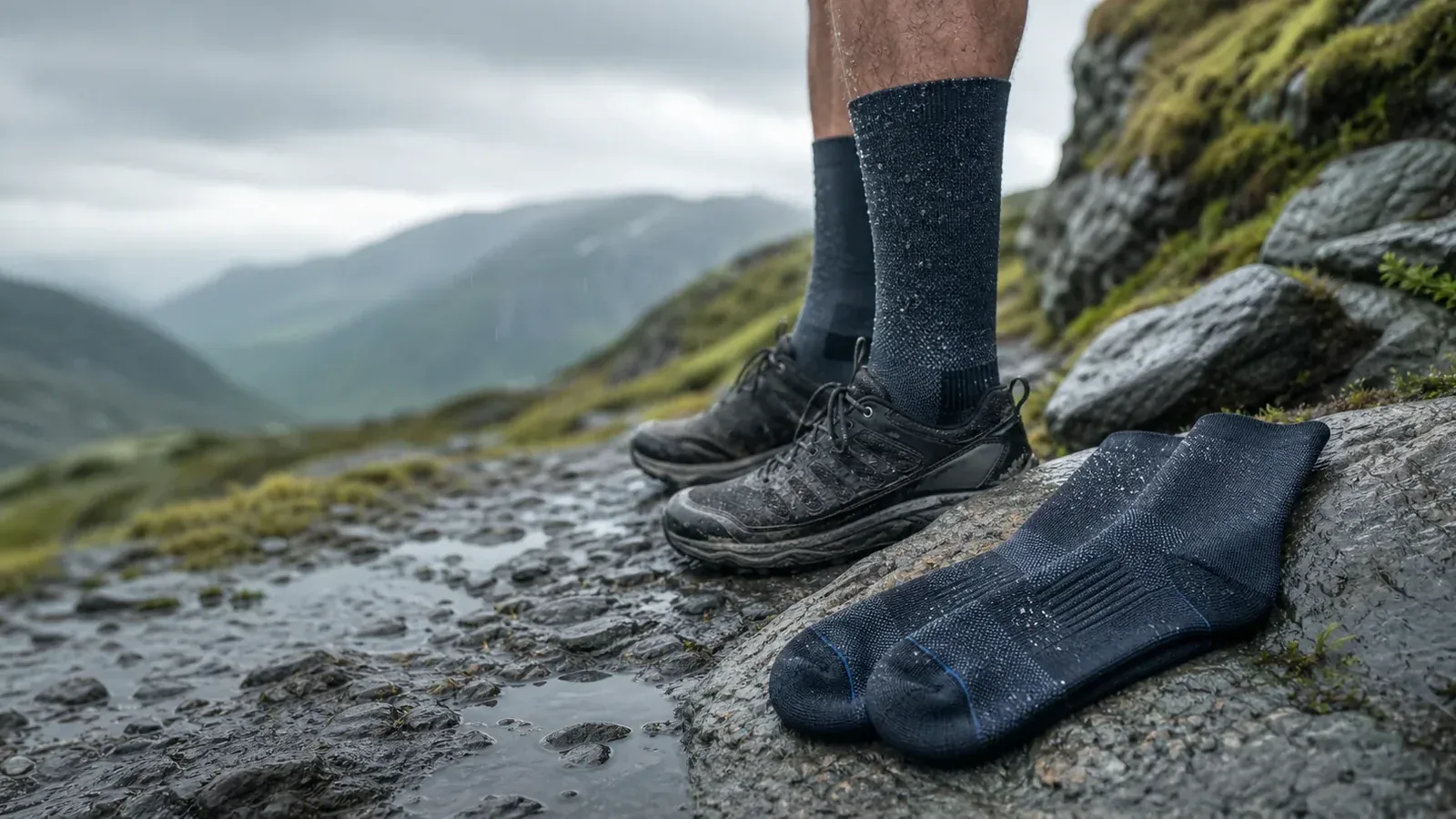
Plan waterproof work socks around boots, shifts and wet exposure
Waterproof work socks can support people who spend time in wet grass, rain, mud, outdoor maintenance, agriculture or damp job sites. B2B buyers should match the three-layer construction with the actual boot, shift length, climate and care routine instead of treating every work environment as the same.
Define the wet-work scenario
Outdoor maintenance, landscaping, agriculture, delivery work and construction support can expose footwear to rain, wet grass, puddles and mud. The buyer should identify how long the exposure lasts, whether workers wear safety boots or rubber boots, and whether the product is for occasional rain or repeated daily use.
Waterproof socks are not a substitute for required protective footwear. They can add a water barrier and comfort layer inside suitable boots, but they should not be marketed as certified safety equipment unless the complete claim is supported by the relevant assessment.
Match thickness to the boot
A warm terry or merino lining may suit cold outdoor work, but the added thickness can reduce toe room in safety footwear. A thinner moisture-managing lining may fit closer boots and warmer seasons. The correct choice depends on boot volume, shift activity and climate.
Fit trials should use the actual boot models or representative categories. Test standing, walking, climbing and kneeling where appropriate. Pressure at the toe cap, instep or heel can become uncomfortable over a long shift even when a short showroom fitting feels acceptable.
Protect high-abrasion zones
Work socks experience repeated rubbing at the heel, toe, ankle and boot collar. The outer knit should protect the membrane, and reinforcement can improve durability in these zones. More reinforcement is not always better if it creates excessive bulk or restricts movement.
Ask samples to be tested through realistic wear, not only water exposure. Inspect pilling, thinning, hard folds, heel movement and seam feel. A product that remains waterproof in a static test but wears uncomfortably inside the boot will not succeed as a repeat-purchase workwear item.
Choose the right height
Mid-calf socks can work with many general work boots, while knee-high socks offer a higher protected body area for tall boots and wet vegetation. The cuff must sit where it does not rub against the boot edge or bunch under trousers.
The top remains open in both versions. Rain running down the leg or water deeper than the sock height can enter through the cuff. Product training should explain how trousers, gaiters and boot height interact with the sock rather than promising unlimited immersion.
Balance external water and internal moisture
The membrane blocks external water through the sock body, while the wearer creates sweat inside. Activity level, boot ventilation, lining choice and drying opportunities influence comfort. A breathable construction helps manage vapor but does not make a sealed boot feel like an open shoe.
For long shifts, buyers may recommend rotating pairs so each sock can dry fully. Clear washing and drying instructions matter for uniforms and rental programs. The product should be dry before reuse, including the inner layer, to avoid persistent dampness and odor complaints.
Create simple workplace care instructions
Care information should be easy to follow at home or in a managed laundry setting. Confirm wash temperature and prohibited treatments with the approved construction. Harsh heat, bleach or unsuitable drying can damage materials or bonding.
If the buyer supplies socks to teams, include a short guide explaining intended use, cuff limits, inspection and drying. Workers should stop using damaged socks when holes, separation or severe wear can compromise performance. A clear replacement process supports consistent field use.
Plan colors, sizes and replacements
Black, navy, grey and olive can suit workwear channels, while high-visibility accents may help product identification. Color is a commercial choice, not a safety certification. Size ranges should be tested with work boots and should account for the three-layer thickness.
For a company program, estimate issue quantity per worker, spare pairs, replacement cycle and storage. Custom production typically starts at 50 pairs per color per size. Ready-stock styles with no MOQ can support evaluation before the buyer commits to a uniform or retail range.
Source from a specialist waterproof socks factory
A supplier should explain outer durability, membrane function, lining choices, height, boot fit and care boundaries. Ask for samples in the intended sizes and test them with representative workers before placing a bulk order.
Zhuji Routing Knitting Co., Ltd. is a waterproof socks factory in Zhuji, Zhejiang. We support OEM, private label and wholesale workwear programs with custom colors, sizes, logos and packaging, while final price depends on height, quantity, materials and pack type.
3-Layer Waterproof Work Socks for B2B Buyers FAQ
Are waterproof work socks safety equipment?
They are not a substitute for required protective footwear and should not be presented as certified safety equipment without supporting assessment.
Which lining is suitable for work boots?
Warm linings can suit cold conditions, while thinner moisture-managing linings may fit closer boots and warmer shifts.
Can water enter through the cuff?
Yes. Rain runoff or water above the sock height can enter through the open top.
Should workwear samples be tested in actual boots?
Yes. Long-shift comfort, toe room, heel movement and abrasion depend heavily on the footwear.
Can buyers start with stock samples?
Yes. Available stock has no MOQ and can be used for evaluation before custom production.